


There is a proven link between poor diet and ill health, and Swiss authorities have a new plan to eradicate both. This is how.
Even though Switzerland’s population has one of the world’s longest life expectancies and is generally healthy, 2.2 million people suffer from non-communicable diseases — and the trend is increasing.
This is what the Federal Food Safety and Veterinary Office (FSVO) said in a press release on April 3rd.
“The Swiss population does not eat a balanced diet: they consume too many sweets, too many salty and fatty snacks, and not enough fruits, vegetables, and legumes,” the Office said.
But this kind of lifestyle has consequences: approximately 15 percent of children and adolescents, and 43 percent of adults in Switzerland “are overweight or even obese. Furthermore, our diets have a negative impact on the environment, particularly due to food waste, which in Switzerland amounts to approximately 2.8 million tonnes per year.”
That is why the FSVO has developed the ‘Swiss Nutrition Strategy 2025-2032’, which focuses on the prevention of chronic health conditions while promoting the sustainability of the food system.
Veggies versus sweets
Many people eat badly because they don’t know enough about a healthy, balanced, and health-boosting nutrition, the FSVO pointed out.
That’s why it aims “to strengthen the population’s knowledge of nutrition, improve the availability of healthy foods, and promote research in the field of nutrition,” it said.
To achieve this goal, the government will focus on four areas of action:
Information and education
“Knowing the links between nutrition, health, and sustainability enables informed food choices,” the FSVO said, adding that the government “intends to strengthen the nutritional knowledge of children and adults over the coming years.”
Promotion of physical activity is also included in this strategy.
Advertisement
Reducing the sugar and salt content in foods
Children must be less exposed to products containing too much sugar, too much salt, and too much fat.
The government wants to achieve this by promoting health and sustainability in schools.
Everyone participating
Collaboration between the federal government, cantons, and communities will be strengthened, so that everyone is working toward the common goal.
At the same time, Switzerland must continue to collaborate with international institutions such as the World Health Organization and the European Food Safety Authority.
Science-based approach
“An effective and up-to-date nutrition strategy must be based on scientific foundations,” the FSVO pointed out.
To that end, the government will step up its data collection in the areas of nutrition. This undertaking will involve the menuCH national nutrition survey, which reflects the eating habits of adults and children of all ages.
To implement the strategy, the FSVO will develop an action plan by the end of 2025, including “quantifiable measures and objectives” in the four areas of action.
Advertisement
So what should you eat to stay fit and healthy?
This question is addressed in the guidelines created jointly by the FSVO and the Swiss Society for Nutrition (SSN).
In a nutshell (no pun intended), these recommendations “aim to promote health by prioritising fresh over processed foods,” they said, adding that the emphasis is “on regional and seasonal products, whole grains, and plant-based protein sources.”
“It is advisable to consume five portions of varied fruit and vegetables per day, favouring regional and seasonal products. Finally, the beverages group – and more particularly water – remains the most important group from a quantitative point of view, while sugary drinks, sweets and salty snacks are considered optional products in the daily diet.”
This food pyramid shows what, and how much, you should eat on daily basis:
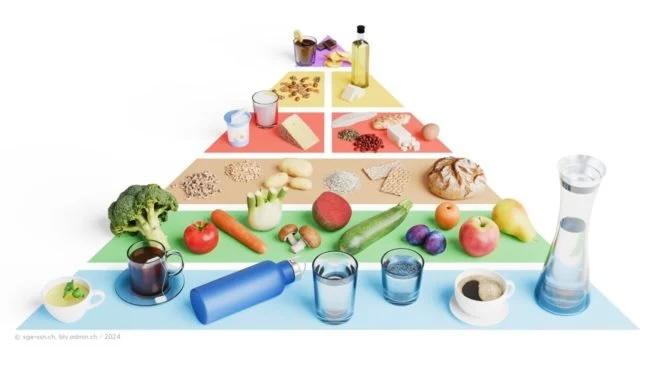
FSVO
You can find more information about the official nutritional guidelines here:
READ ALSO: How the Swiss government wants you to eat


