


Faced with Donald Trump’s ‘Liberation Day’ tariffs, the Spanish government is rolling out support packages for affected sectors that some in the press have called a return to ‘pandemic mode’.
US President Donald Trump’s ‘Liberation Day’ measures were finally announced on Wednesday 2nd April, unveiling a barrage of tariffs on countries across the world.
The EU was slapped with 20 percent tariffs, while China faces 34 percent, and some countries, notably Germany, are more exposed to the impacts due to the structure of its economy and dependence on exports to the US.
Spain, however, seems to have escaped the worst of them so far, but the latest round of ‘Liberation Day’ tariffs has raised concerns in Madrid and prompted a response from the Spanish government.
Furthermore, Spain’s ‘Google Tax’ has also caught the attention of the Trump White House and could soon bring Spain into Washington’s crosshairs.
The reaction in Spain to Trump’s barrage of tariffs on Wednesday has been nuanced, with a combination of tough rhetoric and proposed aid packages for affected sectors to help maintain productivity and staff levels while offering options to reorientate their businesses.
It is of course true that, like around the rest of the world, the exact impact of these measures remains unclear. Only time will reveal the true cost, and whether or not Trump is using the tariffs as a negotiating tactic or they will remain in force for the foreseeable future.
What seems clear is that they will be damaging. Spain’s Minister of Economy, Carlos Cuerpo, said on Wednesday that the tariffs “are going to be detrimental to everyone, to citizens and to businesses.”
“The first to be affected are the Americans,” he added, “but it is going to affect all economies. It is a day to regret.”
He also announced that the Spanish government was working on a response plan to deploy a “safety net for affected businesses and industries.” Spanish daily El País has dubbed this a return to ‘pandemic mode’ in reference to possible state intervention and aid.
Advertisement
Sánchez confirmed last week in Congress that the government was designing a national contingency plan to help sectors of the Spanish economy especially affected by Trump’s measures. the PM also insisted that he would respond to tariffs and even went so far as to say that if “we have to wage a trade war, we are prepared to wage it.”
On the impact on the Spanish economy specifically, however, the Ministry has warned that it is still “too early to make an impact assessment on the Spanish economy.”
Ministry sources tell the Spanish press that “direct exposure in exports is low or limited” but has warned that the “indirect effect” that Spain may suffer due to the impact on the rest of its European partners “may be greater.”
In a recent report by Bankinter, Spanish Chamber of Commerce figures suggest that the impact of tariffs on the Spanish economy would be limited “since our country is less exposed than other EU partners” and “we import more than we export.”
While for the EU as a whole exports to the US account for almost 5 percent (4.6) of GDP, in Spain it’s half that at just 2.3 percent.
Advertisement
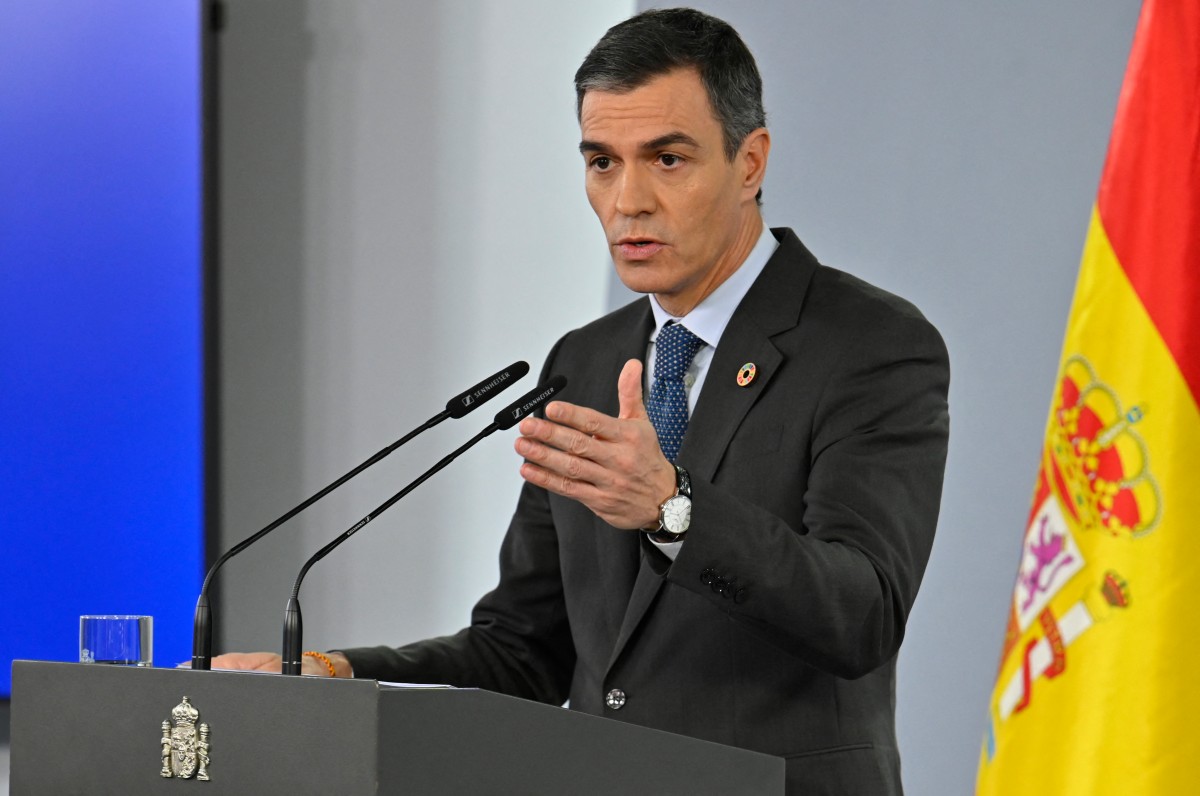
Sánchez appeared at La Moncloa on Thursday to detail the response at both the Spanish and EU level, the latter of which he said would soon launch counter-tariffs on American imports.
“The Spanish government is not going to wait and see what happens in the next few days and weeks,” the Prime Minister said. “We are going to respond as we’ve always done, in a well-prepared, anticipatory way.”
“Starting today, we are going to roll out our plan… designed to mitigate the negative impacts of this trade war initiated by the Trump administration, and build a shield to protect our economy.”
Sánchez made reference to potential economic “storms” in the future, adding that the Spanish economy will be protected by a “double umbrella” – that of Spain and Europe.
In total, the package is worth €14.1 billion, including €7.4 billion of new financing and €6.7 billion in existing financial instruments.
This includes measures to protect jobs and productive capacity. “We are going to set up two guarantee lines… to facilitate access to financing and promote an investment support fund to provide benefits and capital to modernise and install new production plants,” Sánchez said.
Advertisement
The automobile sector specifically will receive €400 million as a stimulus and to allow progress on the ecological transition.
“At the same time, we are going to take various measures to protect our workers…” Sánchez said, that “will make it possible to maintain staffing levels and help employees in the companies hardest hit in the trade war so that their activity can recover.”
Sánchez added that the funds would work in “a similar way to how the Ertes furlough scheme worked during the pandemic.”
The Prime Minister also outlined plans to help Spanish companies reorientate amid the unprecedented international circumstances. “We’re going to help our companies find new markets,” he said, including €500 million to “internationalise’ small and medium-sized businesses.”
“In reorientating our productive capacity and relaunching in the new global context… we are going to rechannel €5 billion in transformation and resilience funds to those affected companies so they can reorientate towards new sectors in ‘high demand’.”


