


New food security assessments indicate that 4.4 million people – nearly a quarter of the population – could face “crisis” levels of food insecurity (IPC Phase 3 or higher) between April and June 2025, marking a sharp increase from 3.4 million people currently experiencing acute hunger.
“Worsening drought, erratic rainfall and ongoing conflict are eroding livelihoods, pushing families deeper into crisis,” said Etienne Peterschmitt, head of the UN Food and Agriculture Organization (FAO) in Somalia.
The hunger crisis is expected to be most severe among internally displaced persons (IDPs), pastoralists with limited livestock and farming households that have exhausted their food supplies.
Consecutive climate shocks
Somalia has suffered consecutive climate shocks, with below-average rainfall in late 2024 severely reducing crop yields, depleting water sources and leading to livestock losses. The effects of erratic rainfall and riverine flooding in key agricultural areas – such as Hiraan, Middle Shabelle and Middle Juba –further devastated crops.
As a result, food prices remain high, worsening food insecurity for millions of Somalis already struggling with poverty and conflict-driven displacement.
According to the latest report by the global food security tracker, IPC, 1.7 million children under five are expected to suffer from acute malnutrition in 2025, including 466,000 with severe acute malnutrition – an increase of 9 per cent compared to last year.
Nearly two-thirds of these cases are concentrated in southern Somalia, where food insecurity is most extreme.
Children most at risk
“Past climate events demonstrate that children are the most affected, facing severe malnourishment and diseases that increase their risk of death and long-term developmental issues,” said Nisar Syed, Officer-in-Charge for the UN Children’s Fund (UNICEF) in Somalia.
He underscored the need to urgently implement better prevention measures, emphasising a multi-sector approach.
This must combine immediate humanitarian response with long-term investments in resilience and health systems, he added.
Multiple pressures
Somalia’s food crisis is driven by multiple, overlapping factors: the 2024 Deyr rainy season (October–December) brought below-average rainfall, impacting both agropastoral communities and urban dwellers reliant on local food markets.
The upcoming Gu season (April–June) is also forecast to be drier than normal, raising fears of further crop failures.
At the same time, conflict and insecurity continue to displace families and disrupt livelihoods. Fighting in central and southern Somalia has hindered access to markets and aid, making it harder for affected communities to access food and basic services.
“Recurrent climate shocks, protracted conflict, disease outbreaks and widespread poverty, among other factors, have aggravated the humanitarian crisis in Somalia,” said Crispen Rukasha, Head of the UN Office for the Coordination of Humanitarian Affairs (OCHA) in Somalia.
“Aid agencies are doing their best to save lives, but they urgently need adequate funding to meet the most critical needs at this juncture in Somalia,” he stressed.
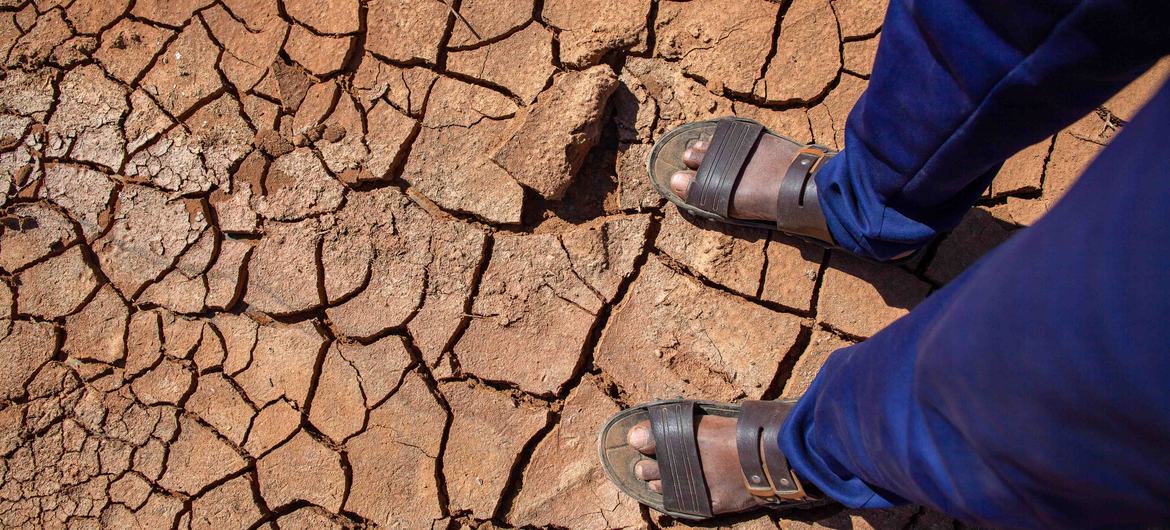
Droughts are a constant threat in Somalia, in the horn of Africa.
Action stations
The agencies warned that without swift intervention, the situation could deteriorate to catastrophic levels.
Though they are working to scale up food assistance, nutrition and livelihood support, programmes could be forced to scale down or stop altogether amid “critically low” funding.
The 2025 Somalia Humanitarian Needs and Response Plan, which requires $1.42 billion, is currently only 12.4 per cent funded.
“Famine was narrowly avoided in 2022 due to large-scale humanitarian support, which is needed again to provide immediate assistance while implementing longer-term solutions,” said El-Khidir Daloum, UN World Food Programme (WFP) Country Director in Somalia.
“However, funding shortfalls are forcing us to prioritize and reduce assistance at the worst possible time,” he added, urging greater international support.


