


Nearly all Swiss adults have childhood memories of sledding down snowy hills (in the old days, when there was actually abundant snow on the ground) and having great fun, even despite falls and tumbles.
That is how an American woman, Jennifer Veilleux, also remembers the sledding experience of her youth. So when she got a message from a friend asking if she had ever thought about going sledding in the Swiss Alps, the 47-year-old eagerly agreed.
And the rest, as the saying goes, is history, with her experience reported on both CNN and in the Swiss media.
Clash of cultures
But what Veilleux didn’t realise before she arrived in the Swiss mountain resort of Grindelwald, sledding on a golf course in her native Connecticut (as she had done as a child) on a plastic sled is not comparable to the hardcore experience of the sledding run in the Alps, where sturdy wooden sledges with iron runners built for speed are the norm.
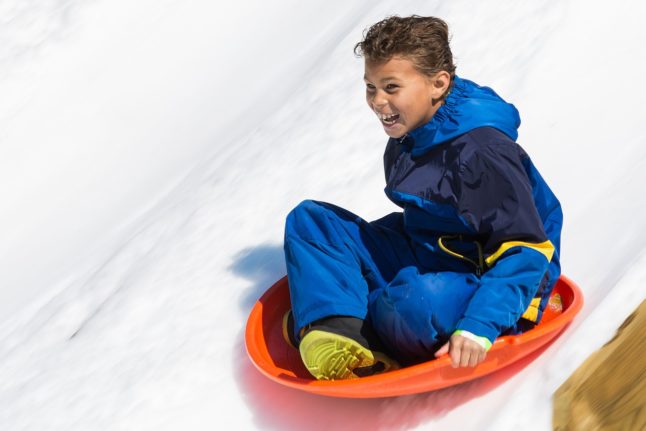
This how Veilleux used to ski in Connecticut. Image by Mark Thomas from Pixabay
That’s what the Swiss are used to, but Americans – not so much.
The intensity of the Swiss experience surprised Veilleux, who said that she “flew through the air and fell over three times within the first 10 minutes”.
Eventually, however, she got the hang of it, though “this type of sledding is not for the faint-hearted,” she concluded. “I was afraid for my life.”
Veilleux didn’t sustain any injuries, but many others do. And that brings up a question…
Advertisement
…are toboggan runs in Switzerland, and sledding in general, dangerous?
It turns out, they are.
Social media forums about Switzerland teem with comments like these: “As an expat from Florida, I thought snowboarding was scary enough, but sledding is ridiculous in Switzerland,” and “Sledding is crazy fun, but absolutely terrifying. It’s much more dangerous than skiing simply because it happens on a narrow trail and with much less control over where and how fast you’re going.”
In fact, 6,300 sledding accidents are recorded in Switzerland each year, according to a study by the Accident Prevention Bureau (BPA).
Among the main reasons for the injuries are underestimating the speed of the sled run, as well as not wearing a protective head gear.
While more than 90 percent of skiers and snowboarders wear helmets, only half of sledders use one, the BPA said.


