


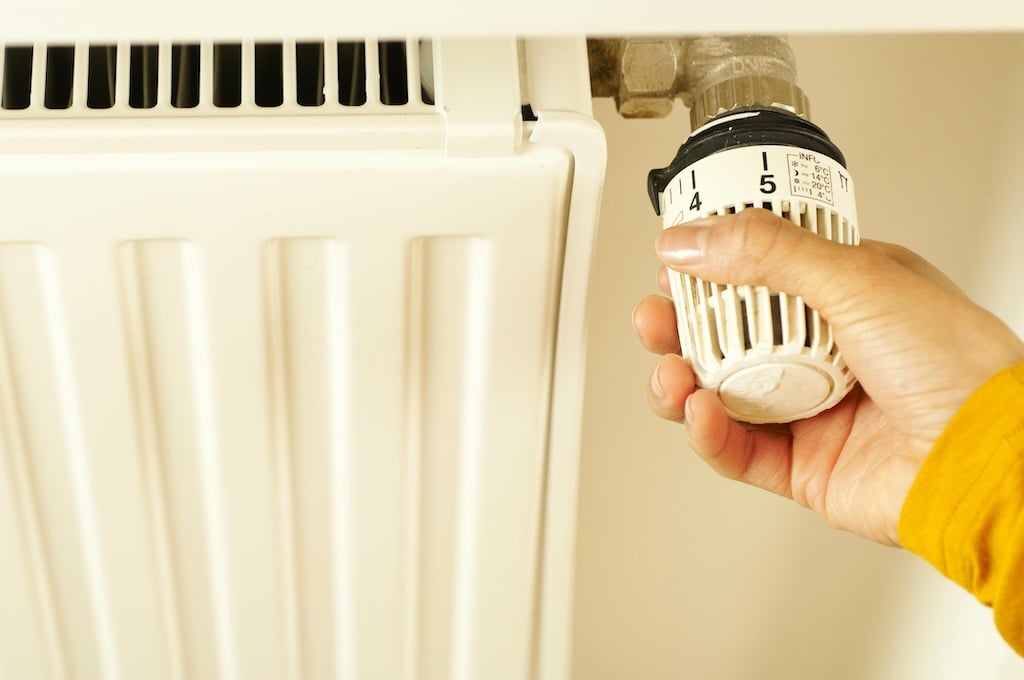
Gas boilers are the most common way of heating homes in Spain, but the price of this fuel has skyrocketed over the last few years, so are there more economical and efficient methods?
Homes in Spain are unfortunately not that well insulated and are typically built for the hot summers, so they can often seem a lot colder than you’d expect them too, making heating a necessity in many regions, particularly in the north.
Electricity, oil furnaces, wooden pellets or fireplaces and gas boilers are all ways you can heat your home in Spain, but which is the best and the most affordable?
READ ALSO: Why are Spanish homes so cold?
Heat pumps on air-con units
According to a study Spanish consumer watchdog OCU, this is the cheapest way to heat an entire home in Spain. The typical air conditioning split system or air-water thermal systems “are very efficient. For every kWh hour they consume of electricity they provide 4 kWh of heat. Despite the high price of electricity, this allows them to be very affordable, about €455 per year”.
The advantage is that they will also keep your house cool in summer. But, the downside is that the price of these units is expensive, at least €500 for each split unit with installation included.
READ ALSO: The ancient Spanish heater that’s dangerous but ‘abuelas’ still use
Advertisement
Pellets heater
Pellet heaters can be surprisingly cheap too. This method involves pellets being burned in a furnace, which distributes hot air through a circuit to reach all rooms of the house. It is recommended for large houses with space to install the boiler or furnace.
The main disadvantage is that it needs a lot of maintenance, since you have to remove ash and clean the combustion chamber regularly. Pellets are normally purchased in 15kg bags at a price of between €6 and €8. Typically you will need 1 kilo of pellets per hour, which is about €0.40-0.55 per hour. If the stove is on for about 10 hours a day, the daily consumption would be €4 to €5.50. According to the OCU, to heat a 90m2 house, the average annual expense would be €545.
Advertisement
Gas heating
Stats from Spain’s National Institute of Statistics (INE) show that more than 30 percent of Spanish homes use a gas heating system and radiators to heat the house. A study by the Institute for Energy Diversification and Saving (IDAE) indicates that the average consumption of natural gas in a Spanish house with heating is 7,921 kWh per year. Of this consumption, almost 60 percent is used for heating, while the rest is for hot water and stoves in the kitchen.
As most people in Spain are aware, the cost of heating has increased rapidly since the start of the war in Ukraine as the EU receives 41 percent of its total supply of natural gas from Russia. Because of this many users have already switched to the last resort rate (TUR) with prices set by the Spanish government, which vary every three months. There are four different types of prices, depending on your level of consumption. The recommended rate for homes with heating is TUR 2, with consumption between 5,000 and 15,000 kWh/year. You pay a fixed price of €9.52 per month plus €0.06 per kWh. According to the IDAE, homes on average consume 7,921 kWh per year making the cost between €600 and €2,000 per year, always depending on consumption and rates.
Advertisement
Portable gas heater
Perhaps the best way to control how much you’re paying to heat your home is by getting a portable butane gas heater. This involves buying a bottle for around €15 (call for it or at some petrol stations) for which you get between 100 and 150 hours of heating, and the actual estufa (furnace), which goes for around €100 give or take in Spain.
Even though knowing how much you’re spending instead of potentially receiving a shockingly high bill at the end of the month is an advantage, there are some disadvantages. These portable gas heaters only heat up one space/room, and although modern furnaces have come a long way in terms of safety, this method of heating is still deemed one of the most risky (you will need to occasionally air rooms to prevent carbon monoxide from spreading and take other precautions).
Advertisement
Oil radiators
This option is good to heat a small office or room where there is no other heating system, but generally not ideal for a whole home. They have several advantages because they are cheap and can be plugged into electrical network. They can also be used for several hours at a time.
The disadvantage is that they take a long time to heat a small space and that they are heavy and bulky, making them uncomfortable to move from one place to another. It is estimated that these cost around €0.60 per hour, always depending on the contracted electricity rate.
Advertisement
Diesel fuel
More than 11 percent of Spanish homes are heated using diesel oil. The average cost in Spain of a litre of heating oil has skyrocketed and now exceeds €1.60, although it varies by region. For example in Asturias, Madrid, Galicia and the Balearic Islands it is around €1.70. According to the website Preciogas.com, a diesel boiler of 20,000 Kcal/h working for six hours per day, would consume on average 9.52 litres per day. With the current price of diesel, it would mean between €15 and €17 per day. It’s important to keep in mind though that this method is expected to be fazed out in the coming years because of environmental issues.
Advertisement
Electric radiators
Electric radiators are the most expensive heating system in Spain. The installation of electric radiators is recommended for homes, with low heating consumption or second homes, especially in areas that are not too cold. The advantage is that they are more affordable to install and have a lower cost than installing natural gas and water radiators.
But consumption is more expensive and they are not recommended if you need several on at the same time or for many hours as it will be too expensive. To heat a room, between 80 W and 100 W per square metre is needed. The more power they have, the more expensive the radiator will be from €60 to €1,000. According to pricegas.com, the price ranges from €856.75 per year for a house of 50 square metres to €2,146.63 per year for a house of 150 square metres.


