


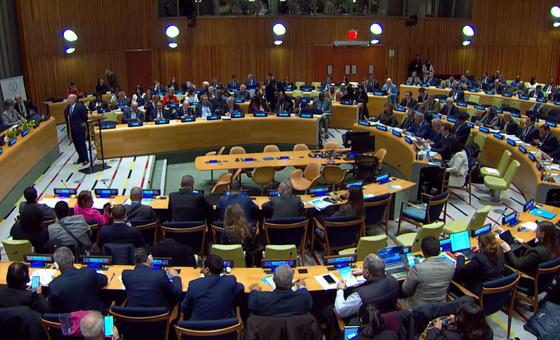
Amid deepening global debt, taxation disputes and a widening gap between ambition and action, tensions flared over how (and whether) the SDGs can still be salvaged.
The meeting, themed Scaling up Action for the Sustainable Development Goals: Finance, Institutions and Politics, underscored the urgency of rebooting the 2030 Agenda.
“We are far behind from where we need to be on almost every single one of the SDGs,” said President of the General Assembly Philémon Yang.
With only 17 percent of SDG targets reportedly on track, the discussions revealed sharp divides over priorities and outlook.
Some called for renewed commitment; others questioned whether the goals should be replaced entirely.
Debt and development
Debt emerged as a key sticking point, with countries like Malta and Morocco pointing to the “great difficulty” of accessing financial mechanisms designed to support SDG implementation.
The Benin delegate went further, arguing that global wealth remains unevenly distributed, requiring structural concessions for heavily indebted nations.
But there was little consensus on solutions.
Cyprus defended its tailored tax system, arguing that small service-based economies cannot afford high taxes without stunting growth essential to development.
Meanwhile, Chile warned of the increasing use of tariffs as leverage in global decision-making, raising concerns about economic coercion in an already unequal system.
US economist Jeffrey Sachs, a leading voice on global development, called for action based on “fundamental fairness”, emphasising that many developing nations bear no historical responsibility for climate change yet struggle to access funding for basic needs.
“The money is there, believe me, it’s there” he said, “but it’s not flowing to the low income and lower middle-income countries right now.”
Political will: Commitment or fatigue?
Despite the financial hurdles, UN officials insisted that a lack of political will remains a fundamental barrier.
Guy Ryder, Under-Secretary-General for Policy challenged the perception of weak national ownership of the SDGs, noting that while commitment exists, it has not translated into sufficient results.
“17 percent doesn’t look like a pass rate,” he admitted. Nevertheless, “What would the figures have been like if there never had been the SDGs? What would the world look like?”, he put to the room.
Still, frustrations ran high. Some delegates questioned the effectiveness of existing frameworks.
A delegate from Sweden called for replacing the SDGs with new, more relevant goals, arguing that the 17 goals agreed amid fanfare in 2015 had run their course.
Morocco pushed back, warning that abandoning existing commitments before they are achieved would be futile. “We must achieve what we adopted in 2015,” the delegate stated.
Nigeria offered a middle ground, suggesting a redesigned approach to align national interests with global multilateralism.
Meanwhile, a parliamentarian from Qatar reflected on lessons from the SDGs’ predecessor, the Millennium Development Goals (MDGs), noting that while many targets were unmet, they laid the groundwork for future progress.
Where next for the SDGs?
As the meeting wrapped up, it was clear that while the SDGs remain the most ambitious global development framework, the road ahead is fraught with challenges.
National priorities continue to clash with multilateral ambitions and financial constraints risk derailing progress even further.
But if there was one point of agreement, it was that inaction is not an option.
As President of the Inter-Parliamentary Union (IPU) Tulia Ackson reminded delegates, “We must be willing to think less in terms of our own political interest and more in terms of the common good.”
Citing Nelson Mandela, she added: “It always seems impossible until it’s done.”

