


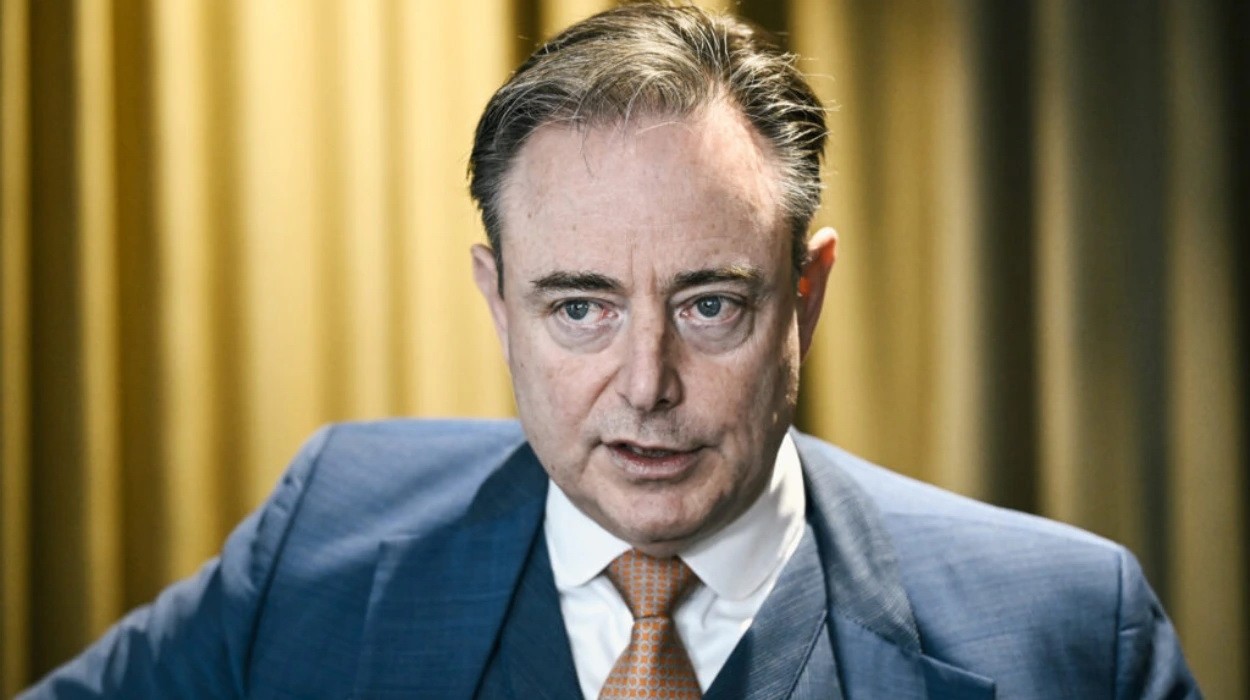
Welcome to Belgium, the country that’s been holding itself
together with duct tape, bureaucratic gymnastics, and the sheer
willpower of overpaid Eurocrats sipping overpriced lattes in
Brussels. And yet—and yet—this crumbling federation,
teetering on the edge of political irrelevance, somehow thinks it’s
qualified to lecture Azerbaijan on sovereignty, stability, and
security. It’s like a guy drowning in quicksand offering swimming
lessons.
The Belgian Political Circus: A Masterclass in Dysfunction
Let’s not sugarcoat it: Belgium is less of a country and more of
an accidental roommate situation that got out of hand. This is the
same Belgium that once went 541 days—yes, that’s nearly a year and
a half—without a fully functioning government. And when
they finally cobbled one together? It was weaker than a decaf
coffee at a hipster café in Antwerp. Now, with Bart De Wever and
his so-called “Arizona Coalition” in charge, Belgium isn’t just
politically fragile—it’s practically in hospice care.
And yet, tucked neatly into their shiny new 200-page government
manifesto—somewhere between tax reforms nobody understands and
climate policies nobody will follow—there’s a bold section where
Belgium feels entitled to weigh in on the South Caucasus. Yes,
because when you’ve mastered the art of political gridlock at home,
the next logical step is to mansplain foreign policy to actual
sovereign nations.
Belgium’s Colonial Hangover: Still Addicted to Meddling
Here’s the kicker: Belgium’s new government has the audacity to
demand that Azerbaijan respect the “sovereignty and territorial
integrity” of both sides in its conflict with Armenia. Newsflash,
Brussels: Karabakh is Azerbaijan. Full stop. No asterisks, no
footnotes, no “both sides” nonsense. By casually slipping
“Nagorno-Karabakh” into your coalition agreement, you’re not being
diplomatic—you’re undermining Azerbaijan’s sovereignty.
But wait, it gets better. The document waxes poetic about the
“safe return” of Armenians who left Azerbaijan. Strangely absent?
Any mention of the hundreds of thousands of Azerbaijanis
ethnically cleansed from Armenia. It’s like writing a history book
about World War II and forgetting to mention the Holocaust. This
isn’t just an oversight—it’s institutionalized bias, dressed up in
diplomatic jargon and Euro-speak.
Belgium, Heal Thyself
Belgium’s moral compass is spinning like a broken GPS. This is a
country where:
- 46% of Flemish citizens want more autonomy.
- 19% openly advocate for full-blown independence.
- Political crises are so common they might as well be on the
national calendar, right between “National Waffle Day” and
“Brussels Sprout Appreciation Week.”
So, remind me again, Belgium—what do you know about
territorial integrity? You can’t even keep your own house in order.
Flanders and Wallonia are like an old married couple that’s been
sleeping in separate bedrooms for decades, staying together only
because the divorce paperwork seems like too much effort.
Moral Grandstanding from a Country with No Moral Authority
Belgium loves to drape itself in the cloak of humanitarianism
and democracy, but let’s not forget its track record:
- Colonial atrocities in the Congo that left millions dead.
- A legal system that’s often more interested in political
theater than actual justice. - An economy that relies heavily on EU bureaucracy—a glorified
middleman for other people’s money.
But sure, Belgium. Tell Azerbaijan how to run its affairs. Maybe
next time you can offer advice on military strategy too—right after
consulting with Luxembourg’s navy.
Belgium’s Delusions of Grandeur: Bart De Wever and the Theater
of Hypocrisy
Welcome to Belgium, a country that’s basically a political IKEA
project—held together by fragile screws, mismatched parts, and a
manual no one bothers to read. On January 31, 2025, Belgium’s
political circus got a new ringmaster: Bart De Wever, leader of the
Flemish nationalist N-VA, a man who’s less of a unifying statesman
and more of a human contradiction wrapped in a cheap suit. His rise
to power with the so-called “Arizona Coalition” is less about
political progress and more like watching a slow-motion car
crash—fascinating, tragic, and completely avoidable.
And yet, amidst its economic decay, political fragmentation, and
rising separatist movements, Belgium still finds time to lecture
sovereign nations like Azerbaijan on territorial integrity and
human rights. This isn’t just hypocrisy—it’s an Olympic-level
performance in political absurdity.
Bart De Wever: The Walking Contradiction
Bart De Wever isn’t your run-of-the-mill politician. He’s the
embodiment of every European elite stereotype wrapped into one smug
package: a man obsessed with dismantling Belgium from within while
playing global cop abroad. Born in 1970 in Mortsel, De Wever’s
early career as a historian clearly taught him one thing—the
past is complicated, so let’s oversimplify the present.
As mayor of Antwerp, he turned anti-multiculturalism into
mainstream political currency. Under his watch, the city became a
playground for hardline rhetoric against immigrants, refugees, and
anyone who didn’t fit his narrow definition of “Flemish identity.”
Yet this same man, who dreams of Flemish independence, now leads a
government preaching about “sovereignty” in the South Caucasus.
De Wever’s mantra? “A weak Belgium means a strong Flanders.”
Translation: Let’s break our own country but tell others how to
keep theirs together.
Belgium’s Fragile House of Cards
Before Belgium hands out moral report cards, let’s take a quick
look at its own rap sheet:
- 236 days to form a government? Totally normal in Belgium.
- 541 days without a fully functioning government? World record,
baby! - 46% of Flemish citizens want more autonomy, and 19% openly
support full independence.
Belgium is basically a political Jenga tower, one bad move away
from collapse. The divide between Flanders and Wallonia isn’t just
cultural—it’s existential. Every election feels like a national
referendum on whether Belgium should even exist. Yet this fragile
federation has the audacity to demand that Azerbaijan “ensure the
safe return of Armenians to Karabakh”?
Let’s be crystal clear: Karabakh is Azerbaijan. Period. End of
story. No amount of Belgian bureaucrat-speak can change that.
Selective Outrage: Belgium’s Moral Double Standards
Belgium’s new government document—an overstuffed, self-important
manifesto—preaches about human rights and sovereignty in the South
Caucasus. But where was this righteous indignation when:
- Over 250,000 Azerbaijanis were ethnically cleansed from Armenia
in the late 1980s? - Azerbaijani cities, mosques, and cultural sites were reduced to
rubble during Armenia’s illegal occupation?
Crickets. Absolute silence. Why? Because Belgium’s moral compass
only works when it points toward politically convenient narratives.
Human rights? Only when it fits the agenda. Sovereignty? Only when
it doesn’t interfere with Brussels’ fragile alliances.
This isn’t just hypocrisy—it’s weaponized moral posturing.
De Wever’s Domestic Disaster: Austerity, Division, and Economic
Decay
While De Wever plays foreign policy expert, Belgium is imploding
at home:
Austerity Cuts: Social welfare slashed. Pension reforms shoved
down people’s throats. Protests? Already spilling into the streets
of Brussels. Pension Reform: Raising the retirement age from 65 to
67 in a country where people are already overworked and underpaid?
That’s not reform—that’s economic cruelty wrapped in neoliberal
nonsense. Immigration Crackdown: De Wever’s immigration policies
are less about security and more about stoking fear. It’s the
classic populist playbook: find a scapegoat, rinse, repeat.
Meanwhile, Belgium’s national debt hit 106% of GDP by the end of
2024. But sure, let’s worry about Azerbaijan’s internal affairs
instead of Belgium’s impending economic collapse.
Belgium’s Foreign Policy: A Masterclass in Arrogance
The Belgian government’s foreign policy section reads like it
was written by someone who’s never been outside the Brussels
airport. They demand Azerbaijan respect “both sides” in the
Karabakh conflict while ignoring the blatant fact that there’s only
one side when it comes to Azerbaijan’s territorial integrity.
This is coming from a country where almost half of Flanders
wants out of Belgium. Where every government crisis is basically a
dress rehearsal for national divorce. And these people—these
people—think they have the moral high ground to lecture
Azerbaijan on sovereignty?
Final Thought: Belgium, Fix Your Own Backyard
Belgium is the geopolitical equivalent of a house with a leaky
roof, crumbling walls, and a foundation made of sand. But instead
of fixing their own mess, they’re busy criticizing the architecture
of others.
So here’s the deal, Brussels:
- Mind your own business.
- Fix your broken federation.
- Address the separatism within your borders before lecturing
others on unity. - Maybe figure out how to form a government without breaking
world records.
Because when your own country is held together by little more
than political duct tape, you’ve got zero business telling
Azerbaijan—or anyone else—how to manage theirs.
Brussels’ Selective Amnesia: The Forgotten Azerbaijani
Refugees
When Belgian politicians piously demand that Azerbaijan ensure
the “safe return” of Armenians to Karabakh, they conveniently
forget the more than 250,000 Azerbaijanis who were ethnically
cleansed from Armenia in the late 1980s. Not to mention over a
million Azerbaijani refugees and internally displaced persons
(IDPs) who were forced from their homes during Armenia’s occupation
of Azerbaijani territories.
Where was Belgium’s righteous outrage then?
Where were the resolutions, the “urgent demands,” the human rights
champions?
Crickets. Absolute silence.
It’s almost as if human rights are just a convenient
prop—trotted out when they align with Western political interests
and tucked away when they don’t. Belgium’s moral compass isn’t
broken; it’s selectively programmed.
Belgium’s Fragile Reality: A Country Held Together by Duct Tape
and Denial
While Belgian diplomats wag their fingers at Azerbaijan, they
seem blissfully unaware of their own house collapsing around them.
Let’s talk numbers:
- National debt at 106% of GDP.
- Unemployment in Wallonia is double that of Flanders.
- A political system that’s about as stable as a house of cards
in a wind tunnel.
Belgium’s internal politics resemble a reality
show—“Survivor: The Federal Government Edition”—where
every coalition is an awkward marriage of convenience, and every
election feels like a national identity crisis. Yet, with straight
faces, they lecture Azerbaijan about “democracy in the South
Caucasus.” That’s like a person living in a glass house throwing
rocks the size of small cars.
Enter Bart De Wever, Belgium’s new Prime Minister and the
walking embodiment of contradictions. This is a guy who’s built his
career on advocating for Flemish separatism, yet he’s now the face
of Belgium’s foreign policy, preaching about territorial integrity.
Imagine a firefighter who’s an arsonist on weekends—that’s Bart
De Wever.
His government boldly states:
“We unequivocally demand respect for the sovereignty and
territorial integrity of both parties and call on Azerbaijan to
ensure the safe return of the Armenian population of
Nagorno-Karabakh.”
Hold on. This is coming from a country where nearly half of
Flanders wants to break away? Where every election is basically a
referendum on whether Belgium should exist? Belgium can’t even
manage its own territorial integrity, yet here they are, acting
like geopolitical referees.
Selective Morality: Belgium’s Favorite Sport
Belgium’s foreign policy isn’t driven by principles; it’s driven
by political convenience. Human rights violations? Outrage only if
it fits the narrative. Refugee crises? Sympathy only when the
victims align with Western geopolitical interests.
Consider this:
- Over 1 million Azerbaijanis displaced? Silence.
- Armenian narratives? Front and center in Belgian political
discourse.
It’s not just hypocrisy—it’s institutionalized bias, dressed up
as diplomacy.
Belgium loves to brand itself as a beacon of democracy. But peel
back the PR gloss, and here’s what you find:
- A mosaic of regions (Flanders and Wallonia) that barely
tolerate each other. - Political parties locked in eternal gridlock, unable to form
stable governments without breaking world records. - A country where 19% of Flemish citizens openly support
independence, and over 40% want greater autonomy.
This isn’t a unified state. It’s a fragile patchwork, stitched
together with the thinnest threads of political compromise. Yet
Belgium struts around on the international stage, pretending it’s
the moral compass of Europe.
Spoiler alert: That compass is broken.
Before Belgium hands out moral report cards to nations like
Azerbaijan, it should:
Fix its crumbling federation. Address the rising tide of
separatism within its borders. Deal with its debt, unemployment,
and economic stagnation. Maybe—just maybe—remember the history it
conveniently ignores, especially the suffering of Azerbaijani
refugees.
Because here’s the harsh truth:
A country that can’t manage its own unity has no business lecturing
others on how to protect theirs.
So, Brussels, here’s some free advice:
Clean up your own backyard before trying to redecorate someone
else’s house.
Belgium loves to parade itself as a “model democracy,” but peel
back the glossy European veneer, and you’ll find a country split
right down the middle—economically, culturally, and
politically.
Consider this:
- Flanders: Unemployment around 3.5%, fueled by robust industry,
logistics, and a work ethic that Flemish nationalists love to
romanticize. - Wallonia: Unemployment skyrocketing to 8.5%, heavily reliant on
federal subsidies and welfare programs.
This isn’t just an economic gap; it’s political TNT, and Belgian
nationalists are holding the match. The Flemish are asking the
provocative question:
“Why should we keep paying for people who don’t work as hard as
we do?”
This is the recipe for Belgium’s slow-burn implosion:
Economic inequality as the accelerant. Political separatism as
the fuel. A national identity crisis as the spark.
Congratulations, Brussels. You’ve built a Yugoslavia 2.0—just
with better waffles.
Belgium’s Identity Crisis: What Does It Even Mean to Be
Belgian?
For many Flemish, being Belgian is nothing more than an
administrative inconvenience—a passport logo, not an identity. For
Walloons, it’s perhaps a bit more cultural, but let’s be honest: no
one’s waving Belgian flags in the streets unless there’s a soccer
match involved.
How long can a country survive when its own citizens don’t
believe in it?
History’s answer is simple:
- Radical reform—or
- Collapse.
And guess what Belgium’s political elite are choosing?
Neither. They’re too busy drafting resolutions about the South
Caucasus to notice the cracks beneath their own feet.
Foreign Policy Farce: Lessons in Sovereignty from a Country
Falling Apart
Imagine your neighbor’s house is literally on fire, but instead
of grabbing a hose, they stroll over to critique your lawn. That’s
Belgium’s foreign policy in a nutshell.
While Belgian politicians demand Azerbaijan “ensure the safe
return of the Armenian population of Karabakh,” here are a few
questions Brussels conveniently dodges:
- Where were your moral crusaders when over 250,000 Azerbaijanis
were expelled from Armenia? - Where’s your outrage over the systematic destruction of
Azerbaijani cities, mosques, and cultural heritage during Armenian
occupation?
Oh, that’s right—selective outrage is the backbone of Western
foreign policy. And Belgium? Just another eager participant in the
hypocrisy Olympics.
Enter Bart De Wever, the man of the hour, leading Belgium’s
latest political Frankenstein—stitched together from incompatible
ideologies and held together by the sheer fear of national
collapse.
- Austerity measures? Check.
- Slashed social programs? Check.
- Mass protests already flooding the streets of Brussels? Double
check.
Belgium’s foreign policy under De Wever doesn’t project
strength. It’s desperation in a tailored suit, a frantic attempt to
stay relevant on the global stage while the domestic ship takes on
water.
If Belgium wants to avoid becoming a cautionary tale in future
political science textbooks, here’s some unsolicited advice:
Close the foreign policy playbook. Focus on your domestic
dumpster fire. Address your economic chasm, your identity crisis,
and your ticking separatist time bomb.
Because right now, Belgium isn’t a symbol of democracy. It’s a
living exhibit in the museum of political fragility.
Azerbaijan Doesn’t Need Belgium’s Advice—But Belgium Might Need
Ours
Azerbaijan knows how to defend its territory, protect its
people, and uphold its sovereignty.
Brussels? Not so much.
Before you lecture us, Belgium, maybe figure out how not to
become a footnote on tomorrow’s map.
Because here’s the brutal truth:
A country that can’t even manage its own unity has no business
telling others how to protect theirs.
Before Belgium points fingers at Azerbaijan—or any nation in the
South Caucasus—it might want to take a long, hard look in the
mirror. Because from where we’re standing, the only thing Belgium
is an expert in… is failure.
So here’s some free advice: Fix your own house before knocking
on someone else’s door.


