


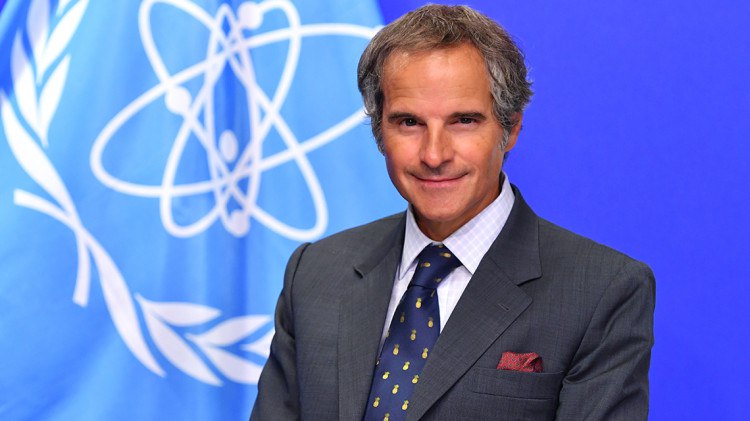
BAKU, Azerbaijan, January 22. Rafael Mariano
Grossi, Director General of the International Atomic Energy Agency
(IAEA), voiced serious concerns about the erosion of nuclear
non-proliferation norms during panel discussions on the “Rubik’s
Cube of Global Security” at the World Economic Forum in Davos,
Trend reports.
Grossi warned that rising geopolitical tensions are undermining
international consensus on nuclear disarmament and
non-proliferation. “The common ground that once existed among major
powers, including the five permanent members of the UN Security
Council, has eroded,” he said. “Times of heightened geostrategic
tension are increasing the allure of nuclear weapons.”
He also highlighted the ongoing uncertainty in the Middle East,
particularly regarding Iran. “Iran has not developed nuclear
weapons, but they possess many pieces of the puzzle,” Grossi noted.
This ambiguity, he said, has prompted other countries in the
region, including NATO allies, to openly declare their intention to
pursue nuclear weapons if Iran were to acquire them.
Grossi expressed alarm over challenges to the global moratorium
on nuclear testing. Russia’s decision to de-ratify the
Comprehensive Nuclear-Test-Ban Treaty (CTBT) and discussions in the
U.S. about resuming nuclear tests have raised doubts about the
long-standing consensus against such actions.
In Asia, Grossi pointed to public debates in South Korea and
Japan about the potential acquisition of nuclear weapons. “In
Japan, while not officially endorsed by the government, there are
increasing public discussions on whether nuclear weapons could
enhance national security,” he said.
Grossi described the situation as a “real pressure” on the
global non-proliferation regime, which, despite its flaws, has
historically helped maintain international stability. “The
non-proliferation norm is under strain, and its future is
uncertain,” he concluded.
Follow the author on X: @Lyaman_Zeyn


