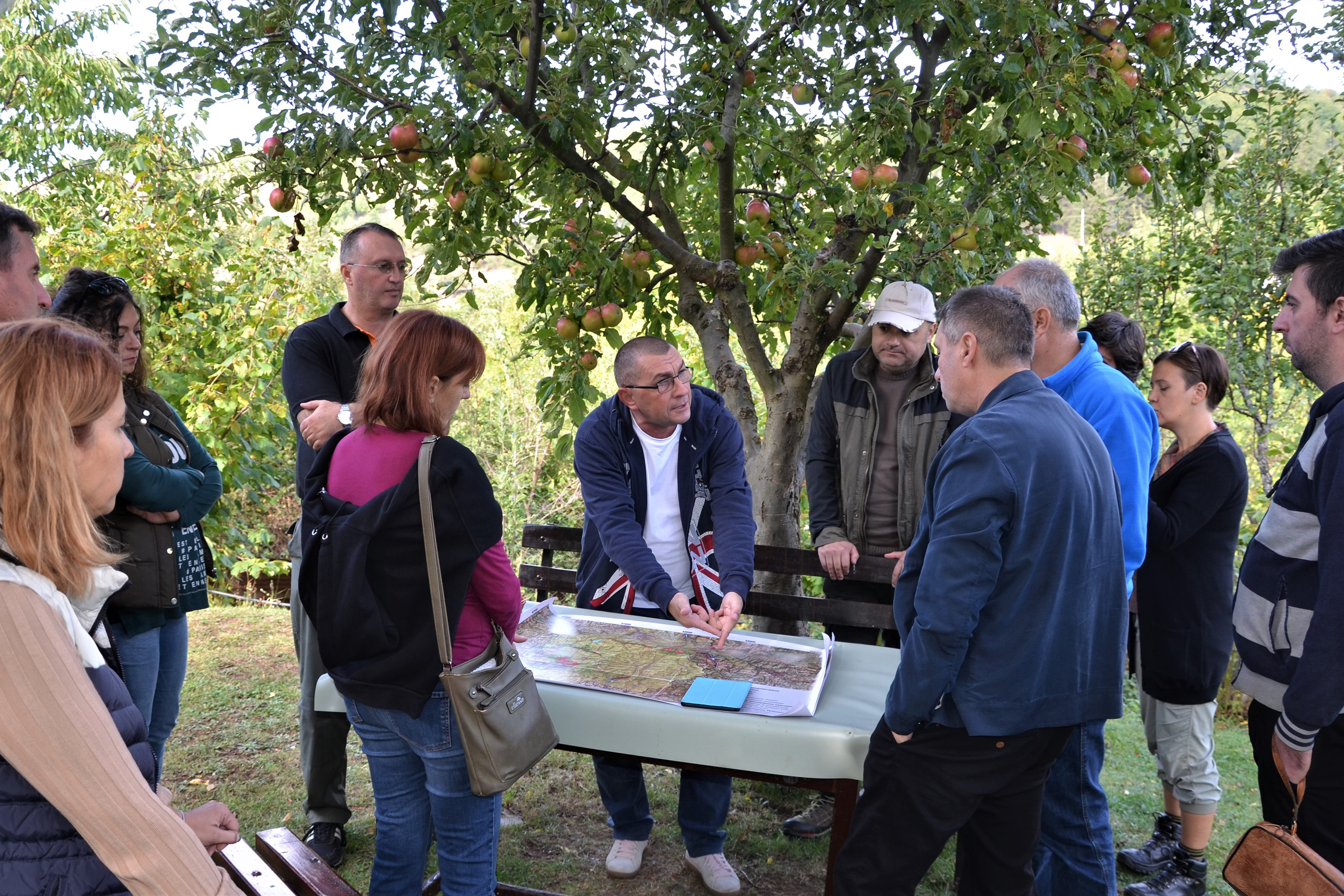
Helvetas is bringing the issue of species protection in North Macedonia to the attention of government ministries and the local population.
Helvetas North Macedonia
The greatest diversity of plant and animal species is found in countries in the Global South. What is Switzerland doing to preserve diversity there?
Biodiversity is crucial for the balance of ecosystems. Animal and plant habitats depend on it, and so do humans. But the forecasts are alarming: up to three million species could become extinct before the end of this century. This is the conclusion of an international studyExternal link published in 2022, which, for the first time, surveyed significant numbers of experts from the Global South.
The reasons for this are well known: intensive land and sea use, environmental pollution and the consequences of climate change are all contributing to soil depletion and the extinction of important pollinators.
Nevertheless, biodiversity loss and the Convention on Biological Diversity adopted at the Earth Summit in Rio de Janeiro in 1992 have long been overshadowed by the fight against global warming.
The Convention on Biological Diversity was adopted at the United Nations Conference on Environment and Development in Rio de Janeiro in 1992. To date, 196 signatory states have acceded to the convention, including Switzerland. Although the United States has signed the convention, it has never ratified it; it only participates as an observer.
The convention is the most important multilateral treaty for the protection of biodiversity. The signatory states undertake to protect biodiversity in their countries, to regulate access to genetic resources and their utilisation in a fair and equitable manner, and to take measures to protect and sustainably use biodiversity.
This is wrong, development experts say. “An intact environment is key to sustainable development and securing livelihoods,” says André Wehrli, an advisor on climate, disaster risk reduction and the environment at the Swiss Agency for Development and Cooperation (SDC).
Swiss commitment to global biodiversity
Most of the United Nations’ 17 sustainable development goals depend directly on a functioning ecosystem, but if biodiversity loss continues, poverty and inequality will increase.
More
More
Biodiversity loss in Switzerland in six graphs
Environmental associations such as BirdLife and the WWF have sharply criticised efforts to protect biodiversity within Switzerland. They consider the measures taken to date and the funding allocated to be wholly inadequate. The situation is somewhat better in terms of international cooperation. “A lot of things are going in the right direction,” says Simon Degelo at Swissaid.
Various programmes aim to protect biodiversity: for example, Swissaid’s CROPS4HD project, which operates in four countries. Its aim is to promote the use and preservation of traditional seed varieties to improve the livelihoods of the population.
Another example is the EOA-IExternal link initiative, which campaigns for subsidies for organic farming on the African continent, among other things.
The agroecology approach
Degelo considers the SDC’s commitment to agroecology to be particularly progressive. Promoted by Swissaid in its development projects, this agricultural concept promises solutions to several problems at once: the food crisis, the loss of biodiversity and climate change. Its aims include utilising natural resources sparingly, avoiding external input and strengthening regional supply chains.
The latest food reportExternal link from the Sufosec alliance shows that the agroecological approach can promote food security. This alliance of six Swiss NGOs, including Swissaid, campaigns against hunger and malnutrition worldwide. The Centre for Development and Environment at the University of Bern scientifically evaluates the effectiveness of Sufosec projects.
More
More
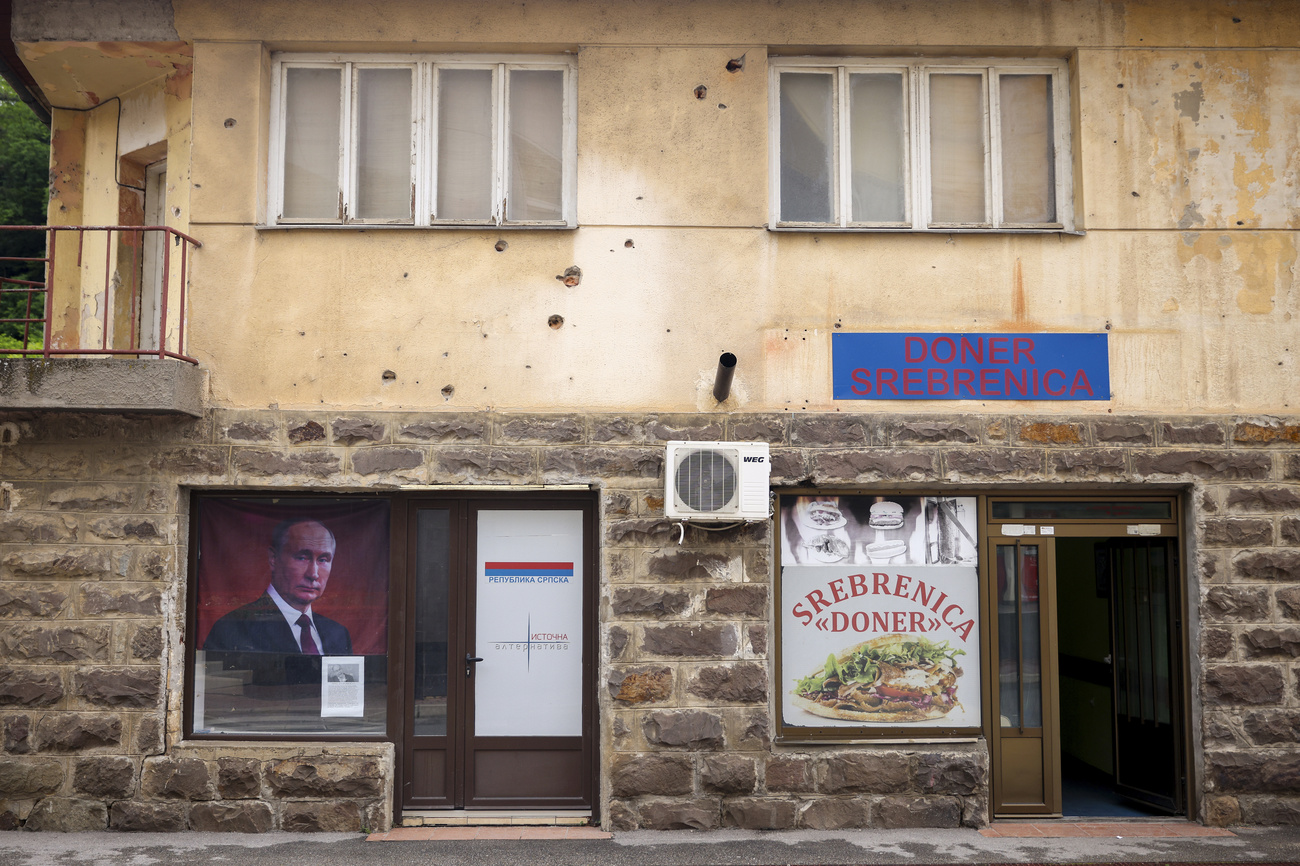
Is Switzerland dropping the Balkans? Reduced aid sparks geopolitical concerns
Since 2021, over 10,000 smallholder households in 19 countries have been surveyed annually in a study on their food situation and the use of agroecological practices. The results show that households which combine several agroecological practices have, on average, a 34% lower risk of suffering from hunger.
How nutrition and biodiversity are linked
“Our global food system is a major driver of biodiversity loss,” says Stéphanie Piers de Raveschoot, who works in the SDC’s agriculture and food department. For instance, 33% of the world’s topsoil is now degraded, mainly due to excessive use of fertilisers and pesticides. In addition, 90% of global deforestation is to clear land for agricultural use.
At the same time, a sufficient and healthy diet depends on the diversity of species. A depleted soil is no longer fertile, and the extinction of bees and insects would have a huge adverse impact on our harvests.
Despite this, no agreement was reached at the 16th Biodiversity Conference, COP16, in Cali, Colombia, on how countries can gradually reduce subsidies to environmentally harmful companies and invest these funds in environmental and social projects.
At the 16th UN Biodiversity Conference (COP16) in Cali, Colombia, in October 2024, delegates from almost 200 countries negotiated ways to prevent the ongoing extinction of species. One of the key resolutions was the Cali Fund: companies that benefit from the digital sequence information on genetic resources are required to share part of the proceeds with the countries from which the biodiversity originates.
A committee for indigenous peoples and local communities was also set up to monitor their rights and bring them to the table when important decisions are made by the United Nations. However, key aspects such as the financing of more nature conservation and its monitoring remained unresolved.
“There is still a prevailing belief that economic yield and biodiversity are at odds with each other,” says Piers de Raveschoot. In fact, the exact opposite is the case, she says. “I like to respond by saying that over half of global GDP depends on nature and healthy ecosystems.”
This dependence of economic and sustainable development on biodiversity must be recognised in international cooperation, she says. This is a goal towards which Piers de Raveschoot and Wehrli want to work internally within the SDC.
Wille der Schweiz zum Einsatz für globale Biodiversität besteht
“The political framework is in place,” Wehrli says. The protection of global biodiversity is enshrined in a three-year strategy. To achieve this goal, Switzerland is supporting the WWF and the International Union for Conservation of Nature, among others, with voluntary contributions.
Additional funds totalling almost CHF50 million ($55 million) a year are paid into the Global Environment Fund or the Green Climate Fund via a joint platform of the Swiss environment and economics ministries and the SDC. But time is running out. According to the two SDC representatives, the much-cited concept of “do no harm” in development cooperation, i.e. leaving no damage in the countries of operation, is not ambitious enough to protect biodiversity.
“It’s now a matter of proactively working to preserve biodiversity and tackling the issue holistically,” Wehrli says.
To do this, it needs to be prioritised. The figures for funding show that this is not the case now: around 16% of Switzerland’s total official development assistance is channelled into climate-related projects. The figure for biodiversity is just 3%. “The funds deployed are insufficient, especially when you consider the need worldwide,” says Degelo from Swissaid.
Whether this will change soon remains questionable. The Swiss parliament has recently decided to make cuts to development cooperation. It is still unclear to what extent projects that promote biodiversity will be affected.
Edited by Benjamin von Wyl. Translated from German by Catherine Hickley/ts
More