Switzerland’s controversial “burqa ban” along with new laws to combat child marriages, boost renewable energy and stop big banks from going bankrupt are all coming into force on January 1, 2025.
Swiss ‘burqa ban’ kicks in
A Swiss ban on facial coverings in public places, widely known as the “burqa’ ban”, will take effect on January 1. Violations can be punished with a fine of up to CHF1,000 (about $1,143). Switzerland joins five other European countries, including neighbouring France and Austria, in imposing such a ban.
The “anti-burqa” initiative was approved by 51.2% of Swiss voters in March 2021. Exceptions to the law will include face coverings for reasons of security, weather or health. They would also be allowed on artistic and entertainment grounds and for advertising.
More

More
Swiss ban on face covering will apply from 2025
Easier inheritance planning
On January 1, new rules come into force that bring the Swiss international inheritance law more in line with the European Succession Regulation. It is a big deal for the Swiss Abroad since 61% of Swiss nationals abroad live in a member state of the European Union or the European Free Trade Association (EFTA).
When it comes to inheritance, conflicts of jurisdiction between Switzerland and the rest of Europe tend to crop up quite frequently. This new law brings Switzerland closer to the EU, which should lead to greater legal certainty for the Swiss Abroad and their relatives, and will make inheritance planning easier. The Organization of the Swiss Abroad (OSA) has welcomed the changes.
More

More
Will a drastic hike in Swiss inheritance tax lead to an exodus of billionaires?
State pensions and other benefits topped up
Many Swiss, whether at home or abroad, will be pleased to hear that state pensions are to be increased by 2.9% as of January 1 to keep pace with price rises and salary trends.
Accordingly, the minimum state pension will rise from CHF1,225 ($1382) to CHF1,260 ($1,422) per month and the maximum pension from CHF2,450 ($2764) to CHF2,520 ($2,843). These are the amounts for the full contribution period. At the same time, adjustments will be made to contributions, supplementary benefits, bridging benefits and mandatory occupational benefits.
The government generally examines whether a pensions adjustment is needed every two years, in line with the cost of living. Pensions were last adjusted in 2023 when the minimum old-age pension was set at CHF1,225 ($1,382).
More

More
Swiss pensioners to be compensated for inflation
Strengthening bank solvency and liquidity
Following the financial crisis of 2007-2009, new banking rules were drawn up in Switzerland. The final stage of the reforms is a package of measures that require banks to build up capital reserves during good times that they can draw upon during economic and financial stress periods. Part of this is being implemented in Switzerland on January 1
Why did banking laws have to change? Before the global financial crisis, many banks had far too little capital to pass the stress tests. In 2018, Switzerland’s biggest bank, UBS, collapsed and had to be rescued by the Swiss government and the Swiss National Bank.
Five years later, the Credit Suisse crisis emphasised once again the importance of strengthening bank solvency and liquidity. Credit Suisse collapsed in March 2023, plagued by scandals and significant losses. An uncontrolled bankruptcy that might have devastated the global financial system could only be prevented by Swiss government aid and an emergency merger with competitor UBS.
The use of taxpayers’ money to bail out banks in Switzerland and elsewhere led to a push to regulate the sector more tightly.
More

More
Investigation into collapse of Credit Suisse beset by delays
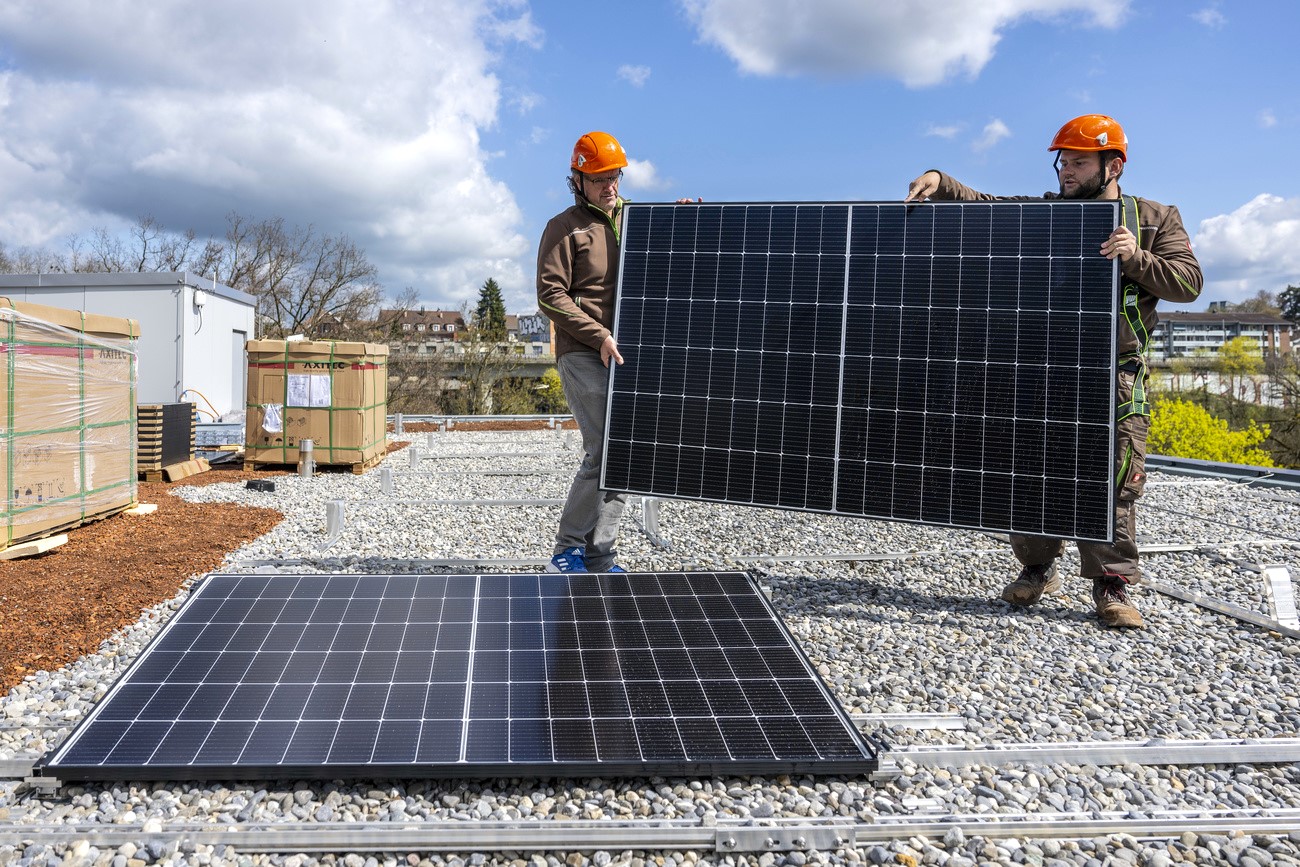
The Swiss government wants to rapidly expand energy production from renewable sources such as hydropower, solar, wind and biomass. A new law has been drawn up to make this possible and was approved by 68.7% of Swiss voters in June 2024. A first package of measures will enter into force on January 1, 2025.
Over the next 10 to 15 years, Switzerland plans to produce about six times more energy from renewable sources, especially solar and hydropower, than in 2022. The new law will speed up implementation of 16 major hydropower projects already agreed on by the federal government, cantons, environmental associations and electricity supply companies. Thirteen existing power plants will be expanded, and three new dams will be built in the Alps. One of these is planned in Zermatt in canton Valais, in the shadow of the Matterhorn.
More
More
Electricity law isn’t enough for Switzerland to achieve climate goals
Measures to combat child marriages
From January 1, Swiss laws will be more effective in combating child marriages. Marriages abroad involving minors will no longer be recognised if at least one of the spouses was a Swiss resident at the time of the marriage. Child marriages can now be annulled at the request of authorities or the affected party up until the person’s 25th birthday. Previously, this was only possible until they turned 18. The change in the law aims to prevent so-called “vacation marriages”, child marriages that take place when families travel to another country where the legal age for marriage may be lower or laws regarding marriage are less strict.
Additionally, marriages will not be recognised in Switzerland unless both spouses have reached their 16th birthday. According to Anu Sivaganesan, a lawyer and human rights activist, the number of minors in Switzerland being forced into marriage has increased over the past eight years.
More

More
Swiss law on underage marriage set to be tightened
Taxing cross-border workers
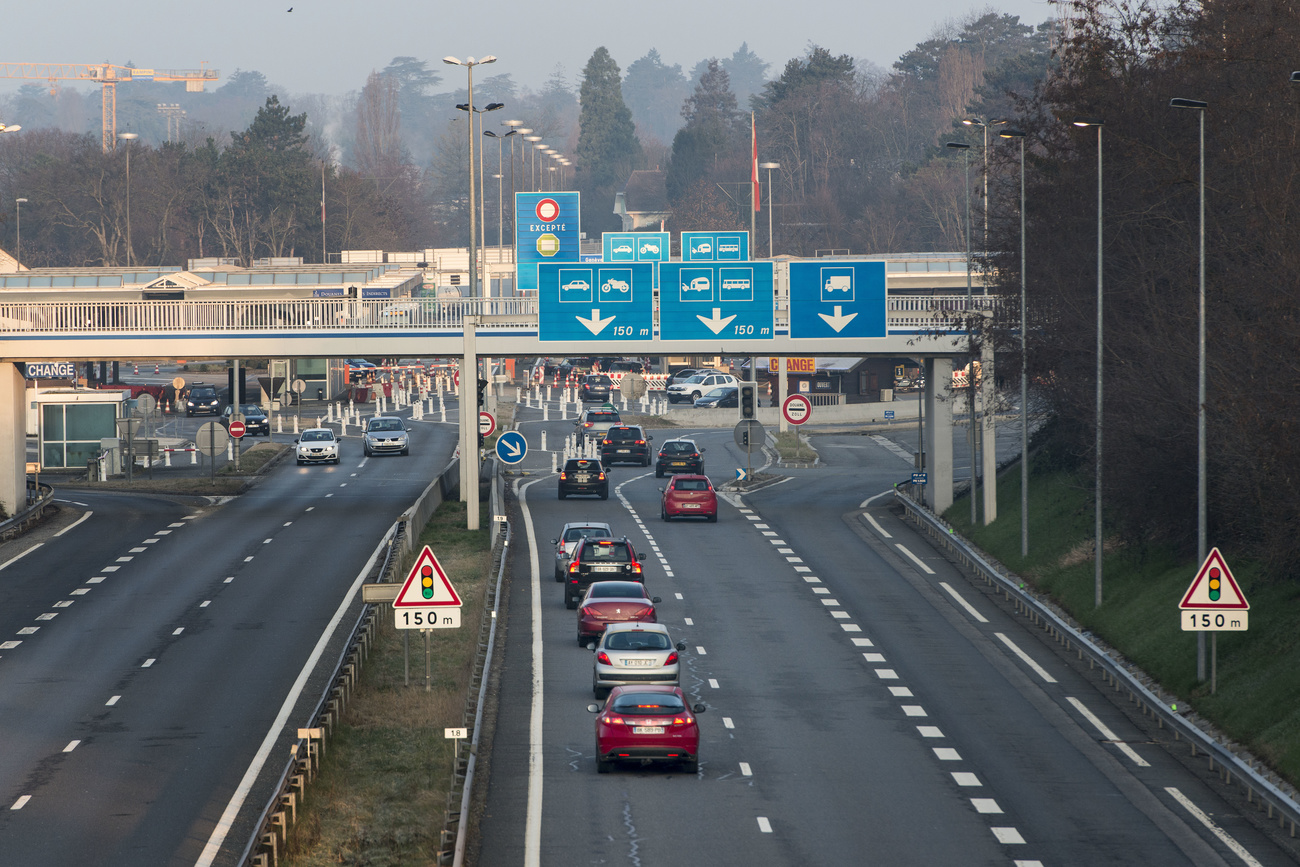
As of January 1, the new Swiss law on taxing cross-border workers will come into effect. It is aimed at preventing the erosion of tax revenues for the Swiss government.
Switzerland has negotiated agreements with Italy and France, two of its neighbours with the largest number of cross-border commuters. Teleworking by a cross-border worker can continue to be taxed in Switzerland up to a certain limit (in Italy up to 25% of annual working time and in France up to 40%).
More
More
Cross-border worker numbers swell in Switzerland
Switching health insurance
Up until now, customers seeking to change their health insurance plan in Switzerland had to wait until November to do so. But from January 1, consumers will be free to change their insurance model whenever they want as long as they remain with the same provider.
The change is particularly aimed at people who are looking to reduce the burden of their premiums by opting for a cheaper model. Swiss health insurance premiums will rise by an average of 6% in 2025. The average monthly premium will be CHF378.70, according to the Federal Office of Public Health.
Rising health premiums continue to negatively impact incomes. According to a calculation by the Federal Statistical Office, the rise in premiums is dampening growth in average disposable income by 0.5 percentage points.
Edited by Balz Rigendinger/ds
More

More
Health insurance premiums to take biggest jump in a decade
More