


 BBC
BBCEarly in the morning they grabbed what they could – bags with clothes, blankets, and mattresses – and headed south.
Families who had been forced to flee because of the war did not wait to see if the ceasefire between Israel and Hezbollah would hold.
Just hours after it came into effect they were driving back home on the main road from Beirut.
Some waved the yellow and green flag of Hezbollah, others carried posters with images of the group’s former leader Hassan Nasrallah, killed in an Israeli air strike two months ago.
For many this was a moment of celebration.
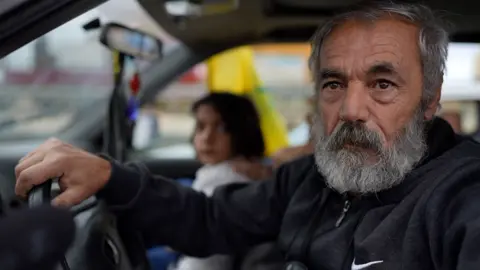
“What happened is very good. This is a victory for the resistance,” said Abu Ali, referring to the ceasefire that had been brokered by the US and France.
“May God have mercy on our martyrs. The resistance is a source of honour and pride for us. Without its existence, there would be no homeland, no south, nothing.”
His plan was to return to the village Houla, right next to the border. But Israeli troops were still there, he said.
“We don’t know whether our house is still standing or has been destroyed,” Ali said. “But we’ll go there.”
The 60-day ceasefire will see the gradual withdrawal of the Israeli military, and of Hezbollah fighters and weapons, from Lebanon’s south.
The Lebanese army said it was already strengthening its presence there, as part of the deployment of an additional 5,000 soldiers under the deal. Both Israel and Hezbollah have said they are ready to respond to any violations.
The ceasefire is the main hope to bring an end to over a year of conflict, that intensified in September with widespread Israeli air strikes, assassinations of top Hezbollah officials and a ground invasion.
Israel’s stated goal was to move the group away from the border and stop the attacks on its northern communities.
In Lebanon, more than one million people were displaced, mostly from Shia Muslim areas in the south, the eastern Bekka Valley and Dahieh in Beirut – which are essentially controlled by Hezbollah, the powerful militia and political party supported by Iran.
They started to return despite warnings from Israeli and Lebanese authorities that it was not yet safe to do so.
“It doesn’t matter if the house is still intact or not, the important thing is that we are returning, thanks to the blood of our martyr, Nasrallah,” said Fatma Balhas, who was travelling to the town of Seddiqine.
Hezbollah-allied media also said this was a sign the group had been victorious in the war.
Near Sidon, the first big city on the coast south of Beirut, cars drove on the opposite carriageway, as a traffic jam formed just outside a military checkpoint.
Soldiers handed out leaflets telling people to not touch unexploded ordnance. “Don’t get close, don’t touch it, report it immediately”.
As night fell on Wednesday the truce appeared to be holding, with UN chief Antonio Guterres describing it as the “first ray of hope for peace amid the darkness of the past months”.
The war has devastated this country, and recovery will be long and difficult. And what will happen with Hezbollah is not clear. The group has been diminished, but it still enjoys significant support.
For Lebanon, it means this crisis is not over.


