


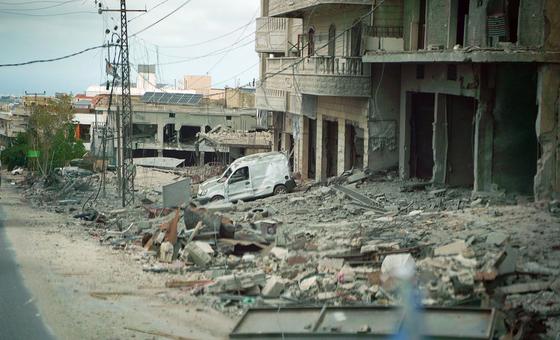
“Immediately after the ceasefire came into force at 4am, residents of south Lebanon, the southern suburbs of Beirut and the Bekaa (valley) began their return after months of forced displacement,” said the UN refugee agency, UNHCR. “Heavy traffic [was] observed on the highway from Beirut to the south since the early hours of this morning.”
The development comes after months of relatively low-level exchanges of fire across the UN-patrolled Blue Line separating Hezbollah armed militants in Lebanon from Israel escalated into full-blown war in September, killing thousands of civilians and uprooting more than 886,000 people, according to the UN migration agency, IOM.
Aid convoy reaches thousands in Baalbek
Amid plunging temperatures, UNHCR reported that 11 of the agency’s trucks delivered emergency supplies to 3,100 people in the eastern city of Baalbek, including blankets, mattresses, winter jackets, plastic sheets, solar lamps and sleeping mats.
“We will continue working closely with local authorities and partners to provide much-needed assistance to affected people to help them stay warm and safe this winter,” the agency said. “We will continue providing essential assistance as displaced people rebuild their lives after suffering much loss and destruction.”
Echoing the UN Secretary-General’s support for the ceasefire deal, UN Children’s Fund (UNICEF) Executive Director Catherine Russell highlighted the “turmoil and loss” suffered by countless non-combatants across Lebanon.
Committing to peace
“Urgent work must now begin to ensure this peace is sustained,” she said. “Children and families must be able to return to their communities safely, especially those displaced in shelters and host communities. The protection of children and their families must remain at the heart of all efforts to stabilize the situation and support recovery.”
Safe and unimpeded access for humanitarians must be guaranteed too, Ms. Russell insisted, “to deliver lifesaving aid and services…particularly in the south of Lebanon, where needs are acute”.
Tedros: Implementation call
Also welcoming the ceasefire, UN World Health Organization (WHO) Director-General Tedros Adhanom Ghebreyesus called for its immediate implementation, while highlighting that the war had been “particularly destructive” to Lebanon’s health system.
According to UNICEF, more than two million children are out of school because of the war which has destroyed homes and hospitals, and many have been forced to go without access to healthcare and other basic services.
“This ceasefire is a chance to not only end the violence but to chart a path forward that prioritizes the safety and well-being of children and families,” Ms. Russell said. “We call on all parties to uphold their commitments, respect international law, and work with the international community to sustain peace and ensure a brighter future for children.”
North Gaza siege passes 50 days
Meanwhile in Gaza, not a day goes by without bombardment and drone reconnaissance flights over devastated communities that are weary from more than 13 months of war, said the UN agency for Palestine refugees, UNRWA.
In a fresh alert on Wednesday, UNRWA reported that some northern areas of the enclave have been under siege for more than 50 days, while missions to the north from Gaza City continue to be denied permission.
Across the Gaza Strip, UN aid coordination office, OCHA, warned of fresh “clear signs of a rapidly worsening nutritional situation”.
According to latest nutrition data from Gaza, between 1 and 23 November, 3,410 children have been admitted for treatment of acute malnutrition. Between July and October, a monthly average of 4,700 children were admitted for treatment. This represents 67 per cent of the 32,817 cases admitted since the beginning of the year.
Even more worrying, aid teams observed “a significant increase” in admission numbers of children suffering from severe acute malnutrition. Youngsters have been showing clear signs of fluid retention, or oedema, which is a tell-tale sign of of severe hunger levels.


