Researchers from the universities of Zurich and Constance studied the use of ChatGPT with regards to the Middle East and Turkish-Kurdish conflicts.
Keystone-SDA
Generated with artificial intelligence.
New research shows that when asked in Arabic about the number of civilian casualties killed in the Middle East conflict, ChatGPT gives significantly higher casualty numbers than when the prompt is written in Hebrew. These systematic discrepancies can reinforce biases in armed conflicts and encourage information bubbles, researchers say.
Every day, millions of people engage with and seek information from ChatGPT and other large language models (LLMs). But how are the responses given by these models shaped by the language in which they are asked? Does it make a difference whether the same question is asked in English or German, Arabic or Hebrew?
Researchers from the universities of Zurich and Constance studied this question looking at the Middle East and Turkish-Kurdish conflicts. They repeatedly asked ChatGPT the same questions about armed conflicts such as the Middle East conflict in different languages using an automated process. They found that on average ChatGPT gives one-third higher casualty figures for the Middle East conflict in Arabic than in Hebrew. The chatbot mentions civilian casualties twice as often and children killed six times more often for Israeli airstrikes in Gaza.
As an example, the researchers repeatedly prompted ChatGPT in Hebrew and Arabic about the number of people killed in 50 randomly chosen airstrikes, including the Israeli attack on the Nuseirat refugee camp in the Gaza Strip on August 21, 2014.
The same pattern as with the Middle East conflict occurred when the researchers asked about airstrikes by the Turkish government on Kurdish areas. They asked questions in both Turkish and Kurdish, the University of Zurich said on Monday.
In general, ChatGPT shows a higher number of victims when the search queries are made in the language of the attacked group. ChatGPT also tends to report more children and women killed in the language of the attacked group and to describe the airstrikes as indiscriminate and random.
“Our results also show that ChatGPT is more likely to deny the existence of such airstrikes in the language of the attacker,” said Christoph Steinert, a postdoc researcher at the Department of Political Science of the University of Zurich.
More
The ethics of artificial intelligence
The challenges are immense for Switzerland, which is one of the leading developers of artificial intelligence (AI).
People with different language skills receive different information through these technologies, which has a central influence on their perception of the world. According to the researchers, this could lead to people in Israel assessing the airstrikes in Gaza as less damaging than the Arabic-speaking population, based on the information they receive from ChatGPT.
Although traditional news media can also distort reporting, language-related systematic distortions of large language models such as ChatGPT are difficult for most users to see through.
“There is a risk that the increasing implementation of large language models in search engines reinforces different perceptions, biases and information bubbles along linguistic divides,” says Steinert, which he believes could in the future fuel armed conflicts such as in the Middle East.
Adapted from German by DeepL/sb
This news story has been written and carefully fact-checked by an external editorial team. At SWI swissinfo.ch we select the most relevant news for an international audience and use automatic translation tools such as DeepL to translate it into English. Providing you with automatically translated news gives us the time to write more in-depth articles.
If you want to know more about how we work, have a look here, if you want to learn more about how we use technology, click here, and if you have feedback on this news story please write to english@swissinfo.ch.
More
Swiss national among five survivors rescued after tourist yacht sank in Egypt’s Red Sea
This content was published on
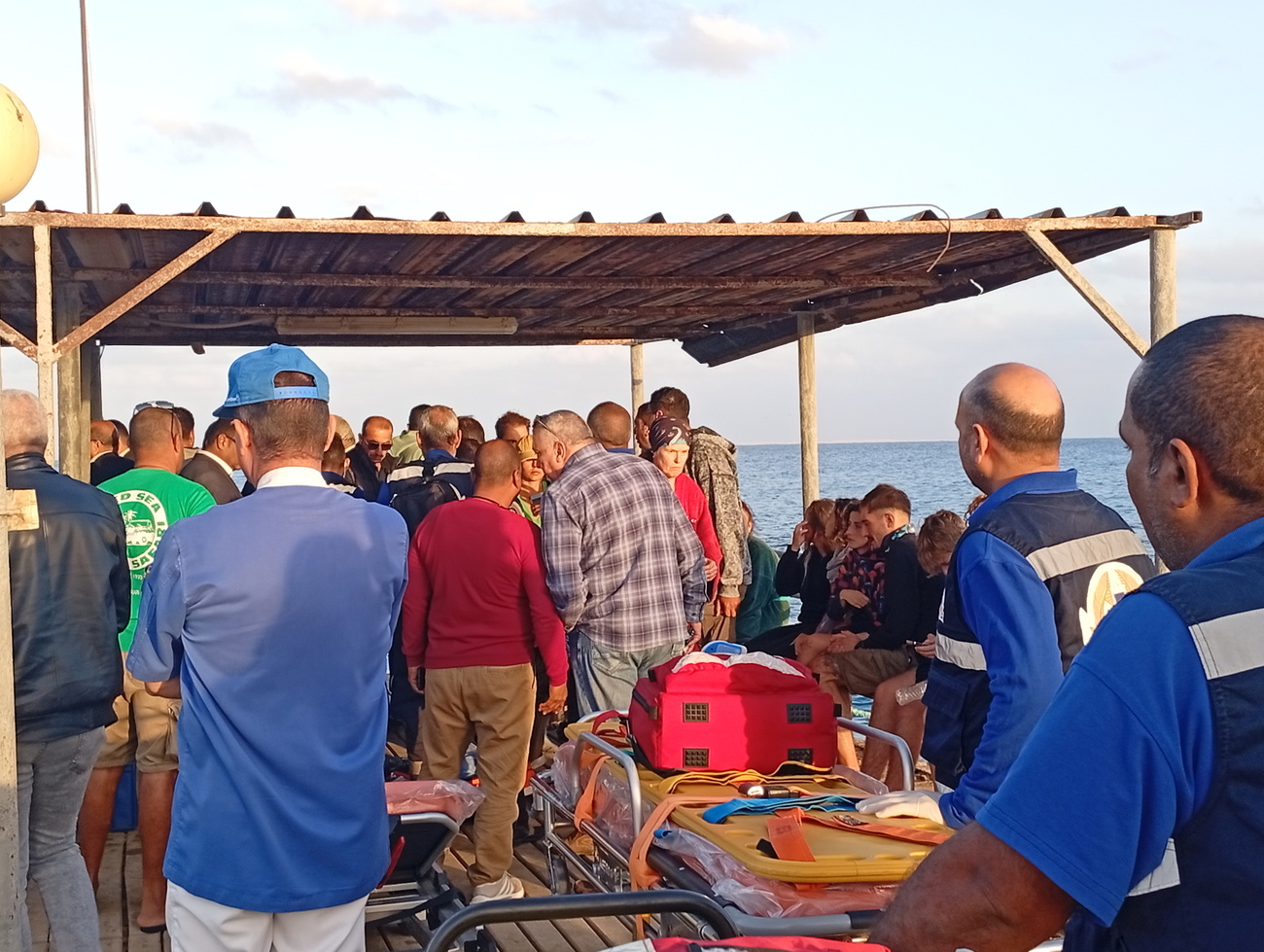
Egyptian naval forces rescued five people on Tuesday, including a Swiss citizen, and recovered four bodies, a day after a tourist yacht carrying 44 passengers sank in the Red Sea.
Swiss authorities complete 75% of foreign criminal expulsion orders
This content was published on
Swiss courts ordered the expulsion of 2,250 foreign offenders in 2023. By mid-2024, around 73% of them had left Switzerland, either voluntarily or under police escort.
Initiative launched for tougher environmental rules for Swiss financial industry
This content was published on
An alliance of political parties and business and environmental groups has launched a people’s initiative calling for stricter environmental rules for the Swiss finance sector.
Explosion at Geneva apartment building leaves young girl seriously injured
This content was published on
A young girl was seriously injured on November 25 after an explosion in an apartment building in the Grange-Canal district of Geneva, the Office of the Attorney General of Geneva has confirmed.
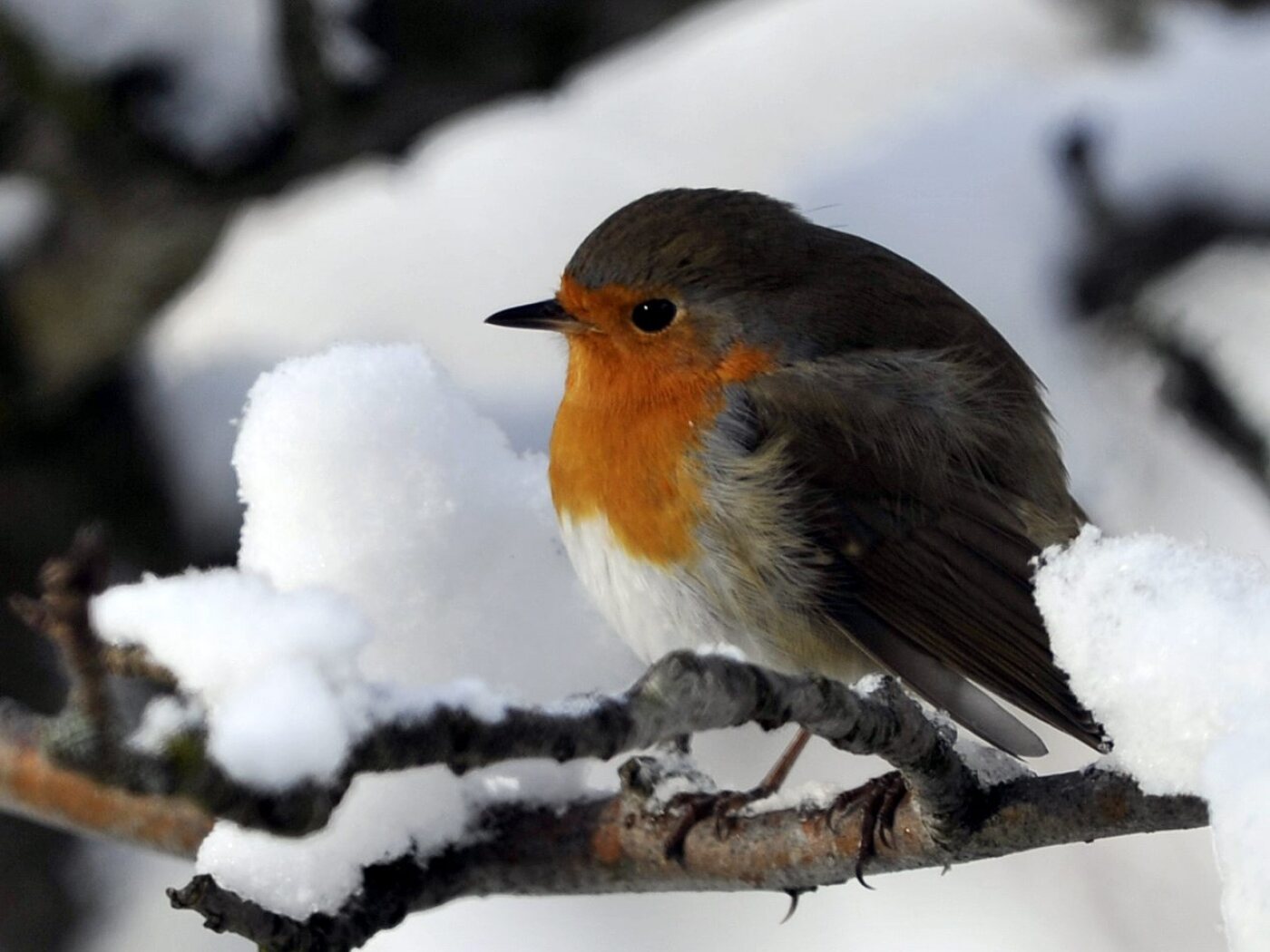
The Swiss public has named the robin as Bird of the Year 2025. With its familiar red breast and distinctive song, the robin is one of the most common bird species in Switzerland, found in gardens and forests.
Authorities underestimated severe weather risks in southern Switzerland
This content was published on
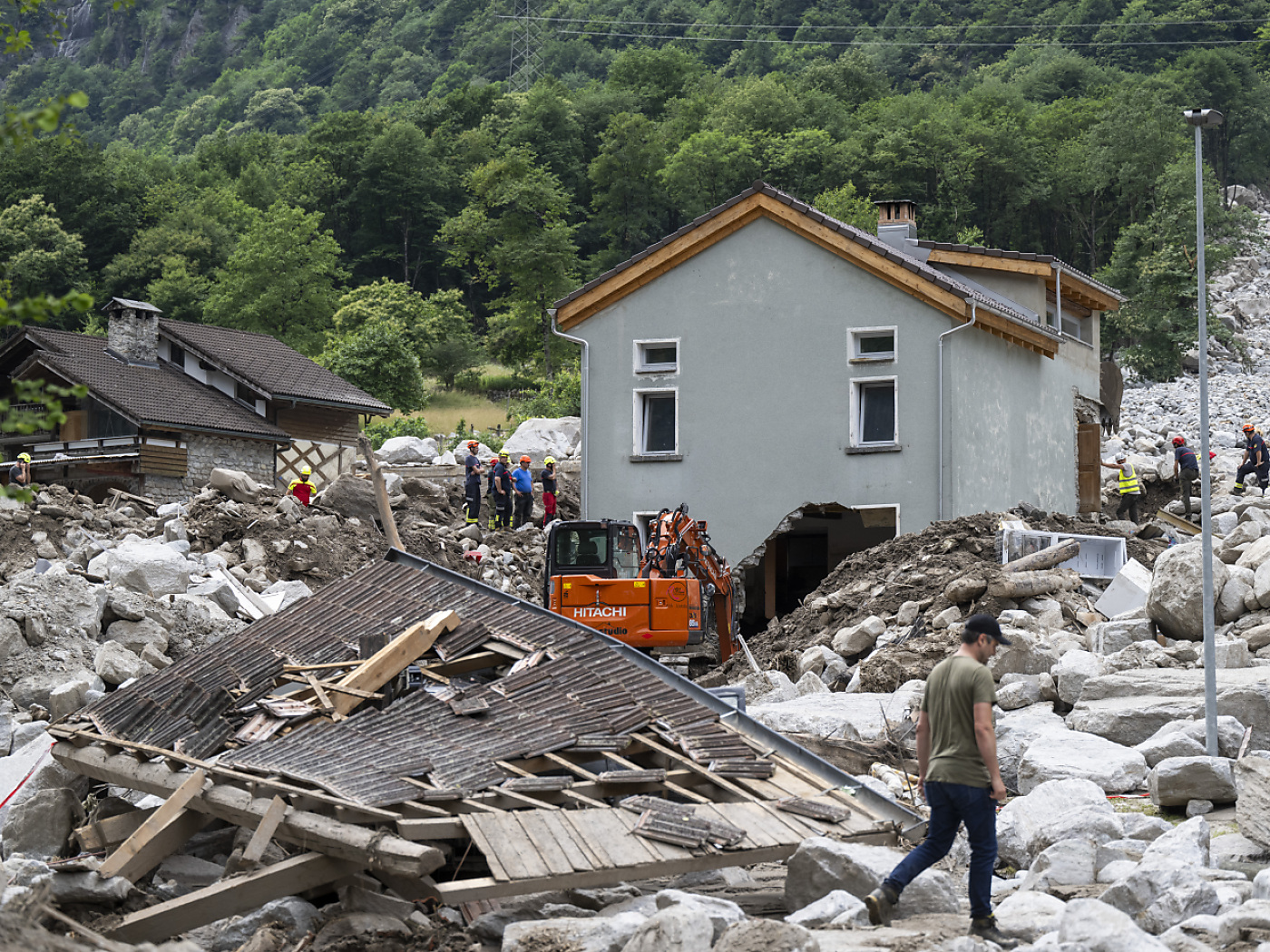
Violent storms hit the Misox valley in southern Switzerland in June, causing severe damage and two fatalities. New analysis, presented on Monday, shows that authorities underestimated some of the dangers.
Geneva police carried out a major operation in the east of the city on Monday, following reports that a parcel bomb had exploded in an apartment building and injured one person.