


This call follows the release of the agency’s Global Outlook 2025, which assesses global food security needs.
According to WFP, hunger continues to rise, with 343 million people across 74 countries experiencing acute food insecurity – a 10 per cent increase from last year.
This includes 1.9 million people who are on the brink of famine, with catastrophic hunger recorded in regions such as Gaza, Sudan, South Sudan, Haiti, and Mali.
Cindy McCain, WFP’s Executive Director, described the gravity of the situation: “Global humanitarian needs are rising, fuelled by devastating conflicts, more frequent climate disasters, and extensive economic turmoil. Yet funding is failing to keep pace.”
Funding shortfalls in 2024 forced WFP to scale back activities, often leaving some of the most vulnerable behind.
Sub-Saharan Africa, ground zero
In Sub-Saharan Africa, over 170 million people face acute hunger, making the continent the focus of half of WFP’s funding needs for 2025.
Conflict in Sudan, the Democratic Republic of Congo, and the Sahel, combined with climate extremes exacerbated by El Niño, has deepened the crisis.
Humanitarian operations are under significant strain, with rising displacement and reduced access to essential resources creating further challenges.
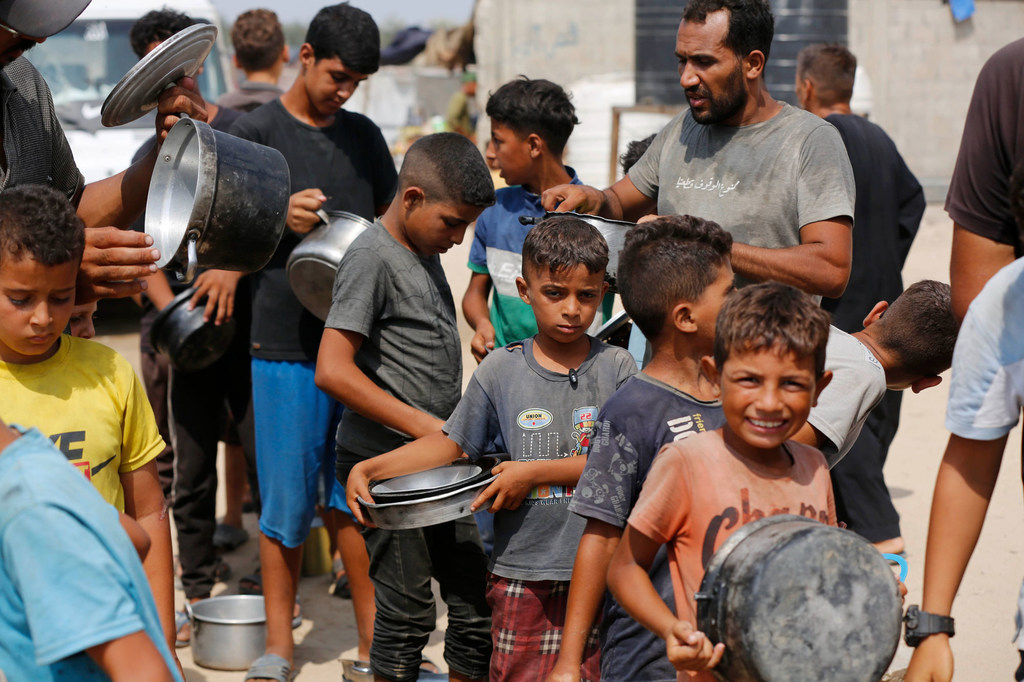
Children queue for food in Gaza.
Dire hunger in the Middle East
The Middle East is witnessing alarming levels of food insecurity, with Gaza, Syria, and Yemen among the hardest-hit regions.
In Gaza, 91 per cent of the population is acutely food insecure, and 16 per cent are living under catastrophic conditions.
Syria and Yemen face similar challenges, with millions dependent on food assistance amid ongoing conflict.
Asia and Pacific suffer climate shocks
In Asia and the Pacific, 88 million people are struggling with hunger caused by climate-related disasters.
The region’s vulnerabilities have been compounded by extreme weather events, which have disrupted food systems and livelihoods.
WFP plans to enhance social protection systems and anticipatory action to mitigate the effects of these crises.

WFP distributes hot food to Haitians in the capital, Port-au-Prince.
Urgent support needed in Latin America
Latin America and the Caribbean are also severely affected, with over 40 million people food insecure and 14.2 million identified as needing immediate assistance.
WFP’s focus in the region includes strengthening food systems, building climate resilience, and supporting social protection programmes to stabilise vulnerable communities and prevent further deterioration.
A global call to action
The $16.9 billion funding would allow the organization to feed 123 million of the hungriest people globally in 2025.
“At WFP, we are dedicated to achieving a world without hunger. But to get there, we urgently need financial and diplomatic support from the international community to reverse the rising tide of global needs and help vulnerable communities build long-term resilience against food insecurity,” Ms. McCain emphasised.
In 2025, WFP will continue prioritising and adapting its responses to each country’s specific needs and aligning its capabilities and resources to deliver high-quality programmes, the agency concluded.

