


 Getty Images
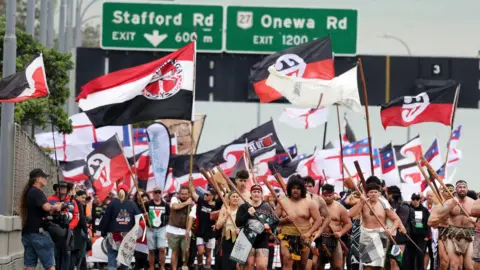
Thousands of people are gathering to take the final steps in a march on New Zealand’s parliament to demonstrate against a controversial bill seeking to overhaul the country’s founding document between British colonisers and Māori people.
Hotels are sold out in the capital Wellington – up to 30,000 people are expected to attend Tuesday’s rally outside parliament.
The demonstration marks the end of a nine-day hīkoi, or peaceful protest, that’s been making its way through the country.
The hīkoi has brought together Māori activists and their supporters who oppose the bill introduced by a junior member of the governing coalition.
New Zealand is often considered a world leader when it comes to supporting indigenous rights – but under the centre-right government of Christopher Luxon, many fear those rights are now at risk.
“They are trying to take our rights away,” says Stan Lingman, who has both Māori and Swedish ancestry and is planning on attending the rally. “[The hikoi is] for all New Zealanders – white, yellow, pink, blue. We will fight against this bill.”
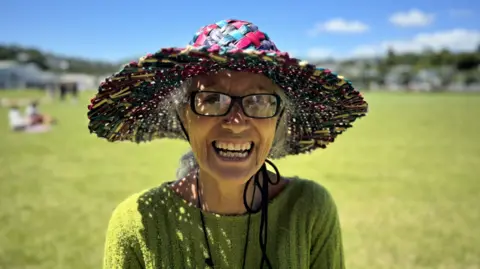
Stan’s wife Pamela says she’s marching for her “mokos”, which means grandchildren in the Māori language.
The 1840 Treaty of Waitangi is seen as fundamental to the country’s race relations.
But under the Luxon government, there’s a concern that the rights won by the Māori community are being eroded. The bill that has been introduced by the Act political party argues that New Zealand should legally define the principles of the Treaty of Waitangi.
The party’s leader, David Seymour, says that over time the treaty’s core values have led to racial divisions, not unity.
“My Treaty Principles Bill says that I, like everybody else, whether their ancestors came here a thousand years ago, like some of mine did, or just got off the plane at Auckland International Airport this morning to begin their journey as New Zealanders, have the same basic rights and dignity,” says Seymour, who has Māori ancestry.
“Your starting point is to take a human being and ask, what’s your ancestry? What kind of human are you? That used to be called prejudice. It used to be called bigotry. It used to be called profiling and discrimination. Now you’re trying to make a virtue of it. I think that’s a big mistake.”
He’s been blamed for wasting time and creating political rifts by bringing a bill that isn’t even expected to pass. Prime Minister Luxon has called the bill “divisive” – despite being part of the same coalition.
Despite the differences, plenty of supporters feel the march has gone too far.
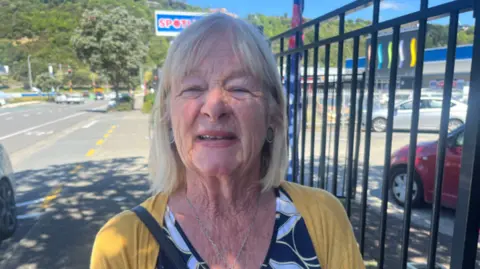
“They [Māori] seem to want more and more and more,” says Barbara Lecomte, who lives in the coastal suburbs north of Wellington. “There’s a whole cosmopolitan mix of different nationalities now. We are all New Zealanders. I think we should work together and have equal rights.”
Equality, though, is still a way off, says Debbie Ngarewa-Packer, co-leader of Te Pāti Māori (Maori Party).
“We can’t live equally if we have one people who are the indigenous people living ‘less than’,” she argues. What the coalition government is doing is “an absolute attempt to divide an otherwise progressive country and it’s really embarrassing”.
Such is the strength of feeling that New Zealand’s parliament was brought to a temporary halt last week by MPs performing a haka, or traditional dance, in opposition to the bill. The video went viral.
“To see it in parliament, in the highest house in Aotearoa, there’s been a real state of surprise and I think disappointment and sadness that in 2024 when we see politics and the Trump extremes, this is what the Māori are having to endure,” says Debbie Ngarewa-Packer. “It’s humiliating for the government because we are normally seen as punching above our weight in all of the great things in life.”
For those watching New Zealand and wanting to witness more hakas, this rally won’t disappoint. Organisers on Monday taught participants the words and moves of the rally’s haka, the subject of which is Te Tiriti o Waitangi (the Waitangi Treaty). Those in the audience enthusiastically repeated the lyrics written on a large white sheet, trying to soak in as many words as possible ahead of the rally.
“This isn’t just any normal hīkoi – this is the hīkoi of everybody,” says grandmother Rose Raharuhi Spicer, explaining that they’ve called on non-Māori, Pacific Islanders and the wider population in New Zealand to support them.
This is the fourth hīkoi Rose has been on. She comes from New Zealand’s northernmost settlement, Te Hāpua, right above Auckland. It’s the same village that the most famous hīkoi started from, back in 1975, protesting over land rights.
This time, she’s brought her children and grandchildren.
“This is our grandchildren’s legacy,” she says. “It’s not just one person or one party – and to alter [it] is wrong.”
On the grass nearby, Leah Land, a 26-year-old from Whangārei, is putting the final touches to a sign for the rally which reads ‘Honour It, Don’t Edit It’.
“I am here because I believe as a Pākehā [non-Māori], without those sacred documents I don’t have a right to live and be on this land, so that’s the foundation of me being able to be here in this beautiful country,” she said, adding that the proposed bill was terrifying.
“The saddest thing is that I will be fine because I am white – but my very best friends are Māori and I want Aotearoa New Zealand to be a safe space for them to exist.”


