


BAKU, Azerbaijan, November 16. As
part of COP29 in Baku, Trend News Agency proudly presents COP for
Hope, a special project offering an unparalleled platform to hear
from world leaders and trailblazers in politics, economics,
science, and ecology, all united by a shared commitment to
addressing today’s pressing climate challenges.
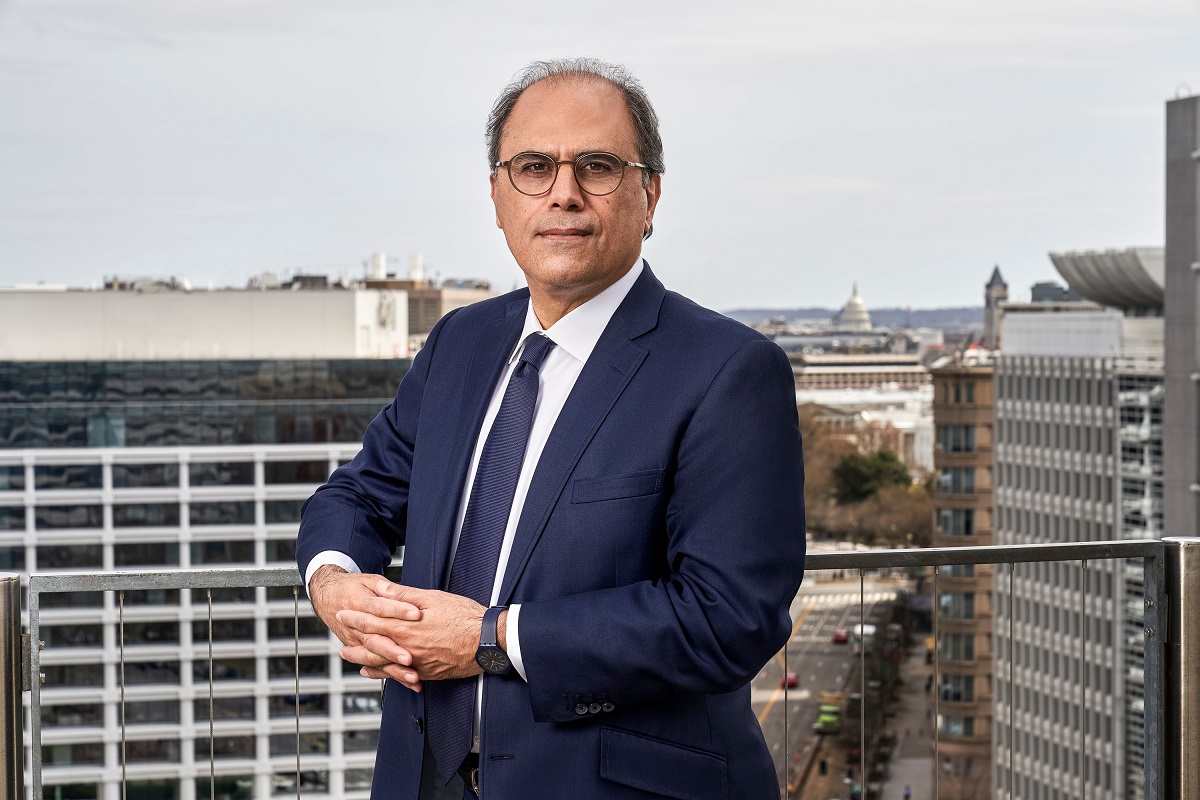
Today, we are honored to speak with Jihad Azour,
Director of the Middle East and Central Asia Department at the
International Monetary Fund (IMF).
In an exclusive interview with Trend, Azour noted that recent years
have brought some progress with new policy packages and rapid
growth in renewable energy deployment.
“Implementing the Paris Agreement will among many things require
sustaining the momentum on renewable energy use through carbon
pricing and similar instruments. There is much more to
do – we see 3 key priorities for action at
COP29,” he said.
Elevating Ambition
He pointed out that the world is not yet on track to
net-zero.
“There remain substantial gaps in global ambition and
implementation. Global emissions need to be reduced by
25-50 percent below 2019 levels by 2030 to stay on
track with limiting warming to 2°C and 1.5°C respectively. But
current NDCs would reduce global emissions by 12
percent – i.e. less than one quarter of what’s needed.
Keeping 1.5C alive requires deep cuts in emissions in the
next five years, otherwise countries will face an ‘emissions cliff
edge’,” Azour noted.
He noted that early next year, all countries will submit new
NDCs for 2035 while revising their 2030 and 2035 emissions
targets.
“If 2030 targets remain unchanged, global emissions would need
to decline by 95 percent in 2030-2040 to achieve
the 1.5°C target (i.e., an emission cliff edge). COP29 is the last
major opportunity for the international community to set clear
expectations for the next generation of NDCs. We want to see
countries — especially the largest emitters — setting out
intentions to submit bold and ambitious new NDCs. This can
encourage other nations to follow suit and spur more action from
investors and businesses,” said Azour.
Climate Finance
He believes that COP29 should result in a New Collective
Quantified Goal on Climate Finance (NCQG) that responds to
developing countries’ needs.
“AEs and EMDEs should jointly agree on a more ambitious target
for climate finance than the current $100 billion. A robust
NCQG at COP29 could help give developing countries the assurance
they need to set more ambitious emissions targets,” Azour
added.
Working together
“Climate challenges are global in nature, and we are
more likely to succeed if we work together. The Fund will
continue to do its part, delivering within its mandate and
expertise,” he said.
Further, Azour went on to add that the IMF’s mandate is to
safeguard macroeconomic stability, a pre-requisite for sustainable
growth and job creation.
“We help our members address those challenges of climate
change for which fiscal, financial, and macroeconomic policies are
an important component of the appropriate policy response,
including how best to capture the opportunities of low-carbon,
resilient growth.
At the IMF we are well-positioned to provide guidance to our
member countries on designing comprehensive mitigation strategies,
given our expertise on fiscal policies—which play a central role in
nearly all aspects of climate mitigation—and regular dialogue with
finance and other ministries,” he said.
Azour noted that the Fund is supporting macro-resilience,
delivering policy advice and capacity development support to help
identify and implement strong climate mitigation and adaptation
policies, and providing long-term lending to address long term
challenges in the most vulnerable countries.
“Providing climate finance helps not only with
decarbonization but also with macro-resilience and economic
development. Through our Resilience and Sustainability
Trust (RST), we provide long-term financing to low and vulnerable
middle-income countries to address climate challenges. Our research
shows that with $25 billion of annual climate finance
invested in renewables, sub-Saharan Africa could boost electricity
generation by 18 percent and increase annual growth by 0.8
percentage point over the coming decade,” he said.
Forms of climate-related financial support by IMF
provide to member countries
Azour noted that the creation of the Resilience and
Sustainability Trust (RST) in 2022 was a major innovation to the
IMF’s lending toolkit. It complements other IMF lending tools by
providing longer-term affordable financing to help low-income and
vulnerable middle-income members address longer-term structural
challenges, including those from climate change.
“Twenty RSF requests have been approved by the Board
with commitments of $9.6 billion, of which $3.1 billion has already
been disbursed. RSF programs have been approved in
Bangladesh, Barbados, Benin, Costa Rica, Cabo Verde, Cameroon, Cote
d’Ivoire, Jamaica, Kosovo, Kenya, Madagascar, Mauritania, Moldova,
Morocco, Niger, Paraguay, Rwanda, Senegal, Seychelles, and
Tanzania. Many more countries have expressed interest in having an
RSF program.
RSF arrangements can facilitate a broad set of policy
reforms—including public financial management, fiscal policy, the
financial sector, and macro-critical sectoral issues.
While the RST can fill only a small fraction of the large
climate-related financing (estimated in the trillions), through its
unique ability to influence fiscal/financial/institutional
policies, it can help create an enabling environment and foster
additional financing from MDBs, development partners, and private
sector players,” he said.
Azour pointed out that the IMF has convened/co-convened
roundtable discussions of the authorities and development partners
and the private sector to discuss additional financing solutions
for mitigation and adaptation.
“Good progress on fundraising for the Resilience and
Sustainability Trust has been made ($48 billion as of end
September), but timely delivery of existing pledges and additional
pledges are needed to meet demand,” he added.
Strategies suggested by IMF to foster resilience and
sustainable growth
Azour noted that policymakers must balance cost-effectiveness,
political feasibility, and budgetary impact.
“If the right measures are implemented immediately and
progressively phased in over this decade, the costs will remain
manageable and are dwarfed by the long-term costs of inaction.
Stop-and-go policies and further procrastinating will only
exacerbate the toll. Policies that rely heavily on spending
measures – such as increasing public investment and subsidies for
renewable energy – can entail large fiscal costs.
Carbon pricing should be an integral part of a
well-designed policy mix, complemented with public investment
support and sectoral policies, such as feebates or tradable
performance standards. Fiscal incentives are also needed
to reduce emissions from sources such as methane, forestry, and
agriculture,” he said.
Azour said the key fact is that carbon pricing has
doubled in coverage over global emissions since
2015 – with schemes now operating in nearly 50
countries and covering about 25 percent
of global emissions.
“Around 20 additional countries are planning to introduce
carbon-pricing schemes. But the current global average carbon price
is just $5, whereas we estimate the price needed
to keep below 2 degrees Celsius is upwards of an additional
$85 by 2030, and even higher for 1.5 degrees.
Governments are spending over a trillion dollars a
year on inefficient (explicit) subsidies that are making climate
change and the environment worse – money that could be tapped to
help solve the problem. Repurposing these wasteful subsidies can
help promote a green and just transition.
Green subsidies and other public investments can help
promote green innovation and address market failures, but careful
design is needed to avoid wasteful spending, distortions
in capital allocation across sectors, or creating trade tensions
and protectionism,” he said.
Azour believes that such policies should be time-bound,
transparently presented in budgets under a strong governance
framework, complemented with carbon pricing, and aligned with legal
obligations imposed by trade agreements.
“Done right, such policies could accelerate decarbonization. But
done wrong they could undermine global climate objectives, create
excessive burden on public finances, distort trade and investment
flows or give rise to a “subsidy race” that could harm developing
countries. The green transition also offers an opportunity
for workers. However, educational and labor policies that promote
skill enhancement and gender inclusivity are needed to
ensure a sufficient supply of workers for the green economy and
that all workers can benefit.
One in 10 workers globally work in green jobs.
Men currently hold close to two-thirds of these positions and women
only one-third. Green jobs are associated with a 7
percent premium for men and an even higher premium of
12 percent for women, suggesting that men’s and
women’s labor supply may not meet demand,” he said.
He pointed out that the skills and adaptability of
workers can support the green transition.
“Evidence suggests that economies with a robust supply of STEM
workers and a more equal treatment of women are better placed to
transition faster and at a lower cost to a green economy.
To secure broad public support, policies must ensure a just
transition. Mitigation and adaptation strategies should
include targeted measures for low-income households and other
vulnerable groups. Key policies include: productive use of
carbon price revenues; targeted transfers to mitigate the impact of
the transition on those most vulnerable, enhanced social safety
nets, lowering other taxes (notably labor taxes), active labor
market policies (e.g. reskilling of workers in transition to green
opportunities), and investing in education, health and
infrastructure,” said Azour.
IMF’s outlook for Azerbaijan’s economy
“Following the strong rebound from the pandemic, growth
slowed down in 2023 to 1.1 percent, from 4.6 percent in 2022, but
picked up again in January-September 2024 to 4.7 percent,
driven by strong growth in non-hydrocarbon sector, particularly the
construction, communication and transportation sectors.
In the medium term, real GDP growth is projected at
about 2 ½ percent, with oil GDP growth slightly negative
as oil production declines, and nonoil GDP growing at about 3 ½
percent. Inflation is projected to remain within the Central Bank
of Azerbaijan’s target band of 4±2 percent. Projected elevated oil
and natural gas prices will support the trade surplus,” he
said.
Azour noted that Azerbaijan’s long-term growth performance
will depend on the authorities’ success in diversifying the
economy and promoting private sector development.
“Azerbaijan 2030 plans to reduce dependency on
hydrocarbons and to promote a more sustainable and diversified
economy. The plan correctly emphasizes that the private
sector should drive economic growth and employment, which would
require improving the business environment, boosting the efficiency
of state-owned enterprises, and increasing competition.
Deepening financial sector would mobilize savings and provide
financing for investment. At the same time, continued macroeconomic
stability will be important. On climate, Azerbaijan’s plan
to raise the share of renewables in its energy-mix is
welcome. It should be accompanied by other policies to
reduce greenhouse gas emissions while remaining fiscally prudent,
such as gradually withdrawing fossil fuel subsidies,” he
concluded.


