


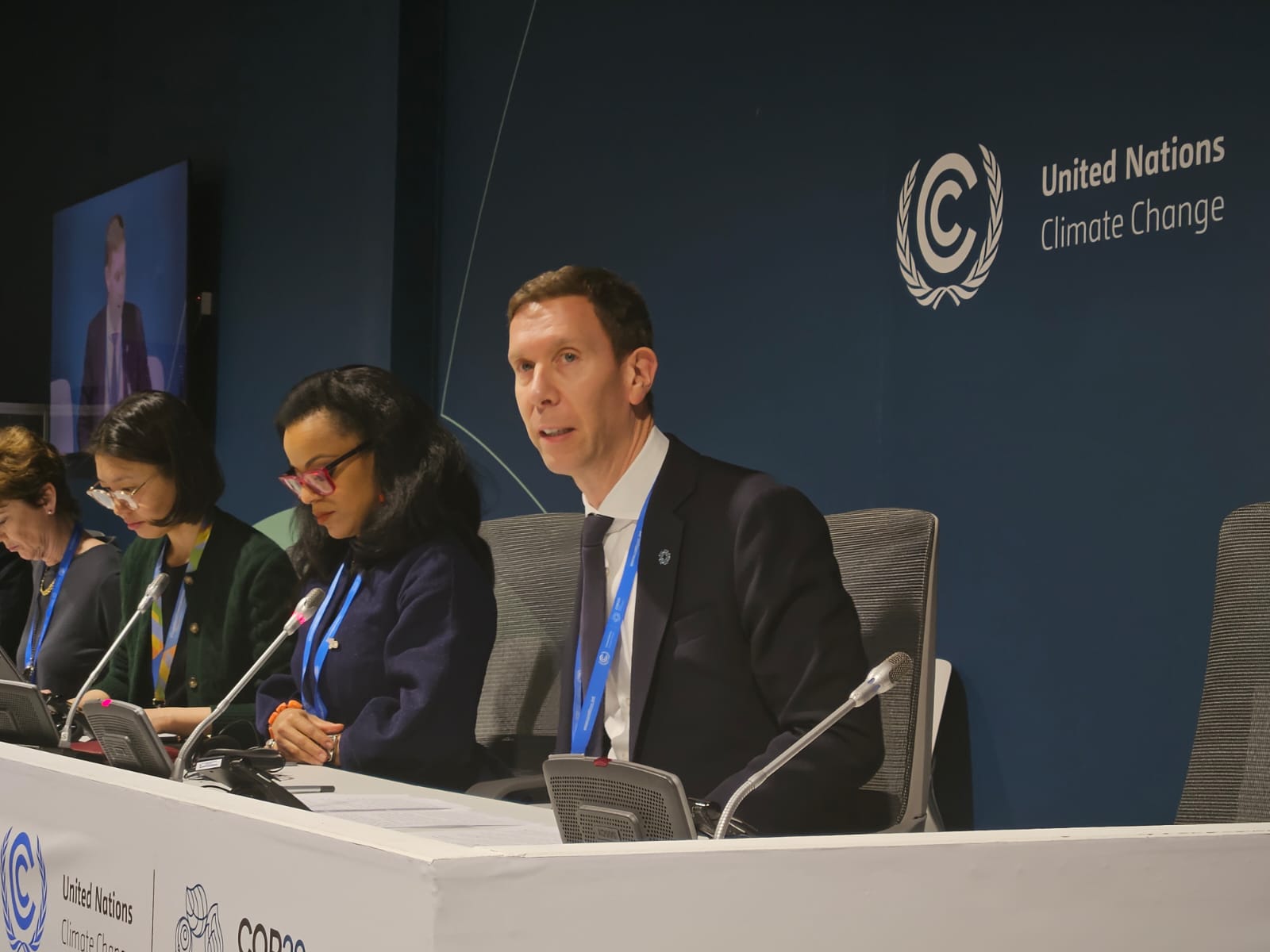
BAKU, Azerbaijan, November 15. The adaptation
financing gap is estimated at $87 billion annually by 2030, UK’s
Financial Secretary to the Treasury Lord Livermore said in a panel
discussion on “Mobilization for Climate Action: countries,
multilateral financial institutions, and the private sector
implementing the Paris Agreement,” Trend reports.
“Finance certainly plays an important and catalyzing role, but
it can never fully meet the needs. While adaptation finance flows
total $63 billion in 2022, this is only 5 percent of total climate
finance. The greatest needs are for resilient infrastructure,
including disaster protection, and agriculture for developing
economies,” he said.
As Livermore points out, the lion’s share of adaptation funding
is pulled from public coffers, primarily taking shape as sovereign
debt. When it comes to Africa, the pie is pretty small, with a mere
3 percent of adaptation funding trickling in from institutional
investors. As a result, it’s high time to roll up our sleeves and
take further steps to get private investment on board for
adaptation in these situations.
“The evidence that making investments resilient to climate
change makes economic sense is clear, and in most cases the upfront
costs, even for more capital-intensive assets such as
infrastructure, are negligible. A more consistent assessment of
climate and natural risks can help incentivize more resilient
investments. In turn, more resilient investments can yield assets
with more predictable cash flows and more competitive lifecycle
returns. The evidence for the profitability of investing in new
technologies and services for adaptation is also growing,” he
noted.
Lord Livermore emphasized that investment in supply chains can
also bring significant opportunities to develop both local
adaptation and international resilience, while inaction brings
risks. For example, the UK’s third assessment report on climate
change risks found that risks associated with international trade
routes could cost the UK billions of pounds a year by the end of
this century.
Stay up-to-date with more news on Trend News
Agency’s WhatsApp channel


