


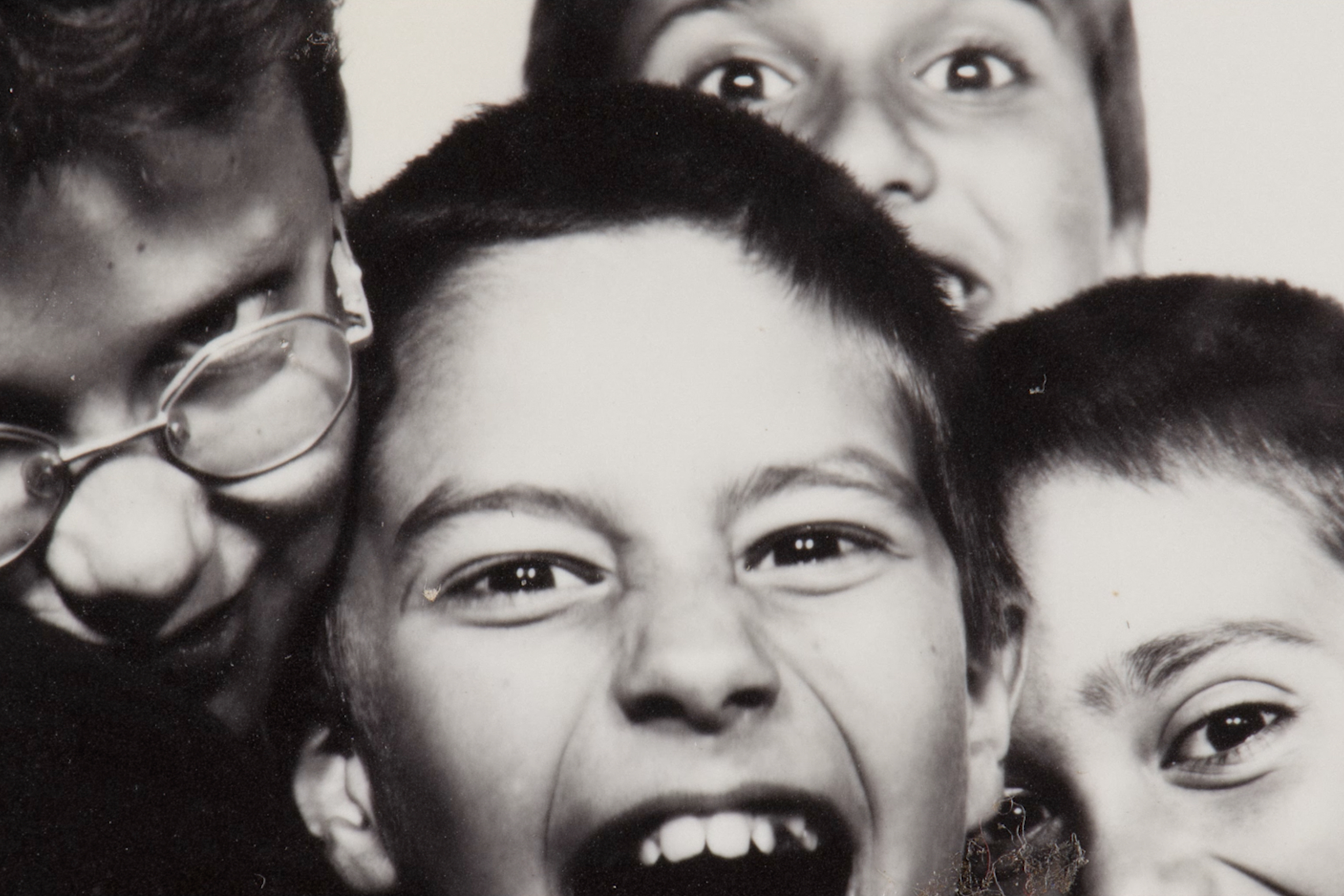
‘My Spanish Friends’, now showing in cinemas in French-speaking Switzerland and soon to appear in German-speaking regions, was directed by Adrien Bordone.
Adrien Bordone
In his documentary My Spanish Friends, Swiss film director Adrien Bordone tells the stories of teenagers from Swiss city Biel/Bienne who were forced to move to Galicia, their Spanish parents’ homeland but which is unfamiliar territory to them.
For many years cinema, literature and theatre have dealt with the thorny issue of immigration. Well before the migration crisis of the 2000s it was a focus of authors, playwrights and film directors. The documentary films The Fortress (2008) and Special Flight (2011) by Swiss director Fernand Melgar, for example, examined the lives and fates of asylum-seekers in Switzerland.
Melgar, himself the son of immigrants from Spain, spent a long period in hiding in an apartment in Lausanne when he was growing up, one of the so-called “closet children” of the 1960s. His story mirrors that of the main character of The Lizard Child, the 2018 novel by the Swiss-Italian author Vincenzo Todisco, a tale about seasonal workers’ children living below the radar in Switzerland.
Then there is Welcome to Switzerland, a 2017 documentary by Zurich director Sabine Gisiger about how a small town in canton Aargau in northern Switzerland refused to accept ten refugees in 2015.
External Content
A journey in reverse
In all these works, as in many others, immigration follows the same path: departure from the country of origin and arrival in the host country, together with all the personal suffering this forced migration entails.
But in My Spanish Friends the departure is from Switzerland and the arrival in their parents’ region of origin, in this case Galicia in Spain. Suffering too is turned upside down – nostalgia for Switzerland and unease about northern Spain, where the family resettles, but which remains a strange place.
My Spanish Friends, now showing in cinemas in French-speaking Switzerland and soon to appear in German-speaking regions, was directed by Adrien Bordone, who was born in 1987 in Biel/Bienne, canton Bern. His father is from the Italian city of Genoa while his mother is Swiss.
“My parents met in Italy,” he tells SWI swissinfo.ch. “My father followed my mother to Switzerland for love. Let’s say he is an emotional migrant. Probably because of this personal history, I’ve always been conscious of the intercultural issue. If I had been 100% Swiss, I probably wouldn’t have wanted to make this film.”

Swiss film director Adrien Bordone.
Copyright By Peter Samuel Jaggi
A neat and tidy Swiss school
During his schooldays in Biel/Bienne, Bordone made friends with the children of Galician immigrants. Their parents were legally registered workers. In their case they were not “closet children” but rather boys who had been born free in Switzerland and who were happy in their neat, tidy and disciplined school. In comparison, Galicia seemed “barbaric”, as one of the characters says in the film.
Bordone describes the beginning of the 2000s. “As teenagers, my friends would spend their summer holidays in Galicia, while I went to Italy. The experience of having fun together was really enriching: for each of us, two different countries and a double identity. But I wasn’t interested in my own story; I was interested in theirs.”
His documentary was partly made in Galicia. There Bordone met his friends’ parents who had returned to their homeland after having worked in Switzerland to “build themselves a house back home”. But what became of their kids, his dear school friends from Biel/Bienne?
Different destinies
The film shows one of his friends who now works in Munich, while another teaches French in Galicia; a third has returned to Switzerland temporarily, working for a construction firm. They have different destinies but one common regret: Switzerland.
Generally speaking, films about exile have a thread of anxiety running through them. In this case, however, nostalgia prevails, characterised by fond memories of a cosy past.
“Even though my friends had gone through difficult times which marked their childhood memories, leaving Biel/Bienne traumatised them. I still didn’t want to add my personal contribution on the issue of migration, which has already been dealt with so many times in films,” Bordone explains.
His film aims to present migration not as a problem but rather as an extremely complex issue, and to focus on the break imposed by the parents. It shows how parents decide to tear their teenage children away from a happy life without having told them in advance of their plan to return to Galicia for good.
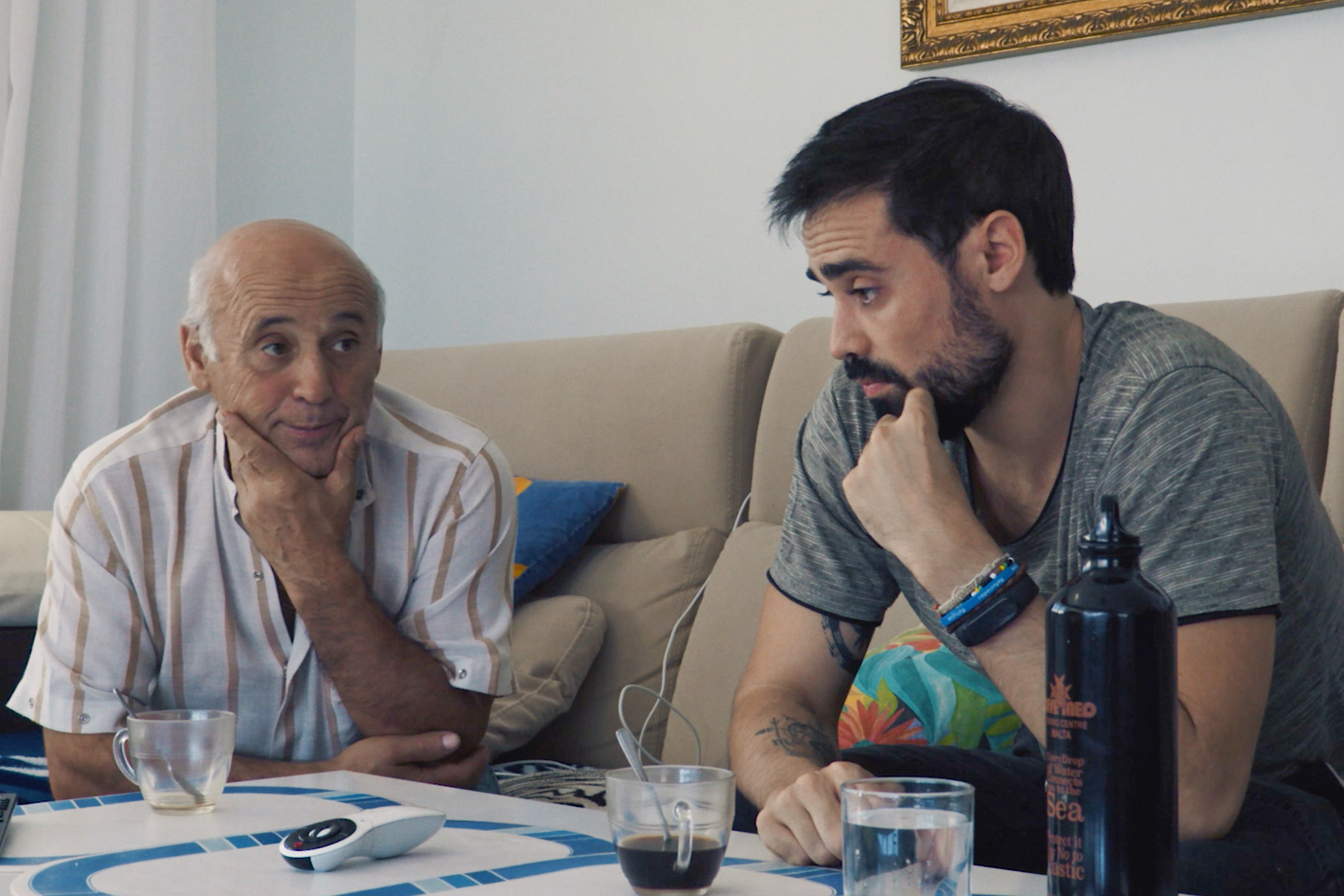
One of the families that features in the documentary ‘My Spanish Friends’.
ldd
Bringing emotions and energies together
During the film the parents and children whom Bordone brought together open up. We see each one expressing their opinions – and the resulting clashes. Former obedient teenagers have turned into sceptical adults, questioning the consequences of a decision made by their parents 20 years earlier.
One downside of the documentary is that at times the different characters’ identities are not clear. Bordone tries to explain: “I didn’t want to follow a linear narrative, with clearly defined portraits of each person. I preferred to use a chorus-like form, where people who have been through the same joys and sorrows are united. That way the emotions and the energies are not dispersed.”
Text reread and verified by Samuel Jaberg; adapted from French by J. Waardenburg/sb


