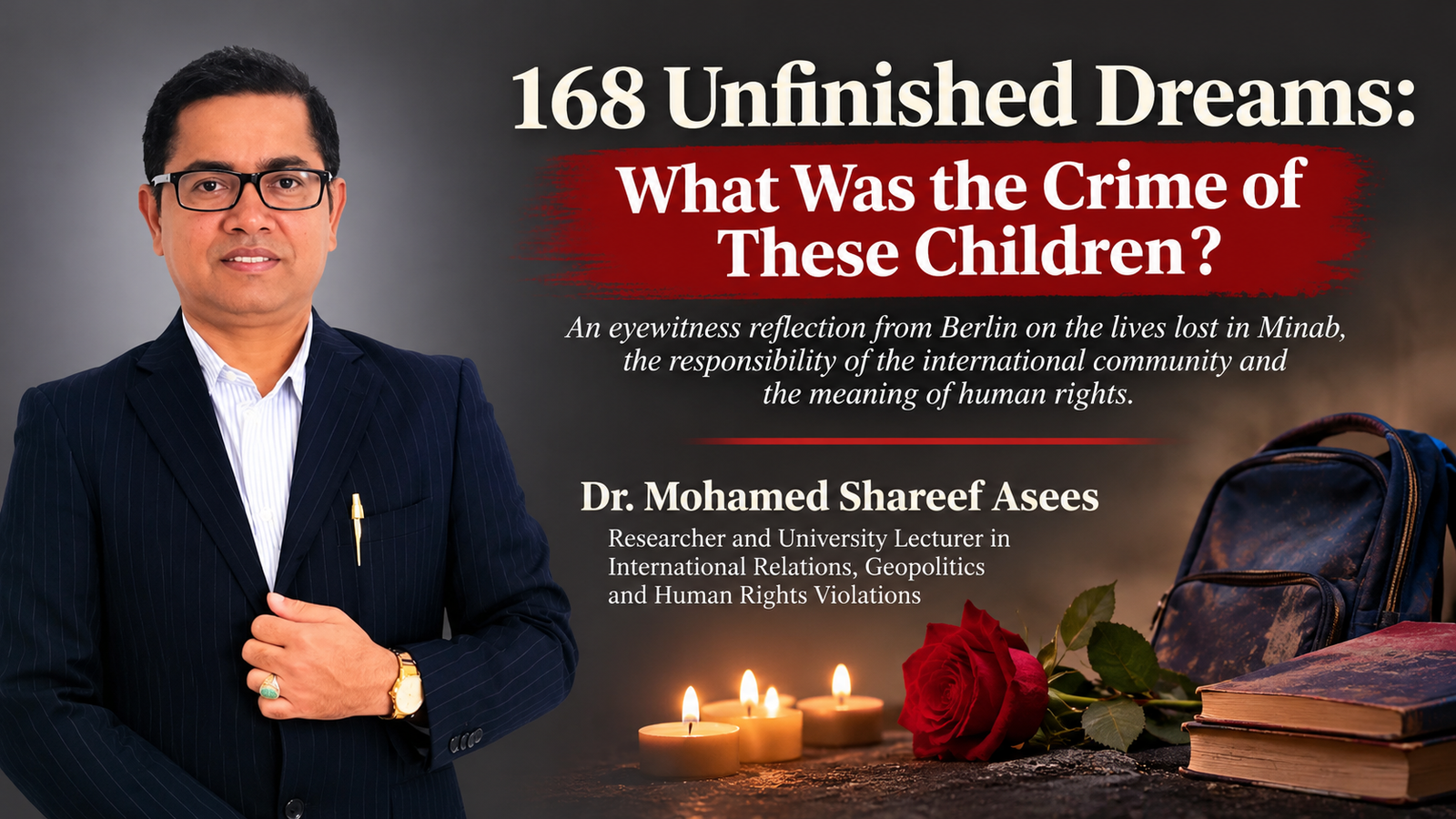
An eyewitness reflection from Berlin on the lives lost in Minab, the responsibility of the international community and the meaning of human rights.
Dr. Mohamed Shareef Asees: Researcher and University Lecturer in International Relations, Geopolitics and Human Rights Violations
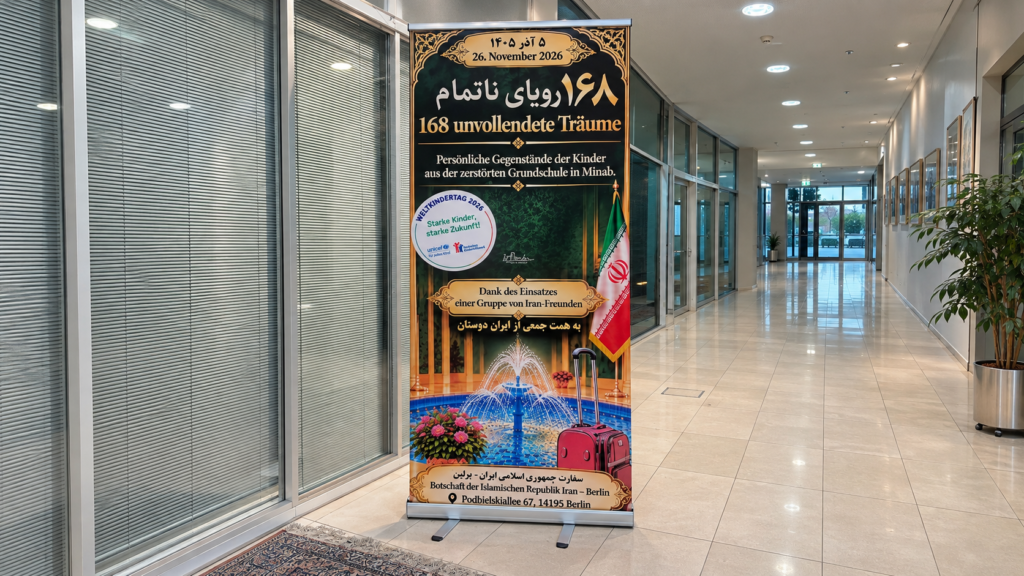
On 26 November 2026, I attended an exhibition in Berlin entitled “168 Unfinished Dreams”, organized by the Embassy of the Islamic Republic of Iran in connection with World Children’s Day. I entered the exhibition knowing about the tragedy of Minab. But knowing about a tragedy and standing face to face with its human consequences are two entirely different experiences.
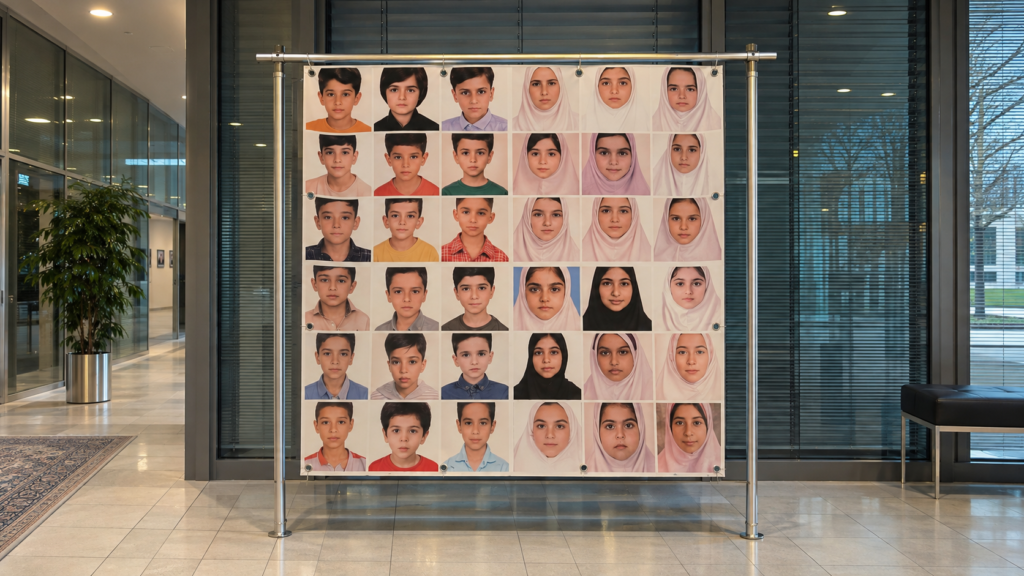
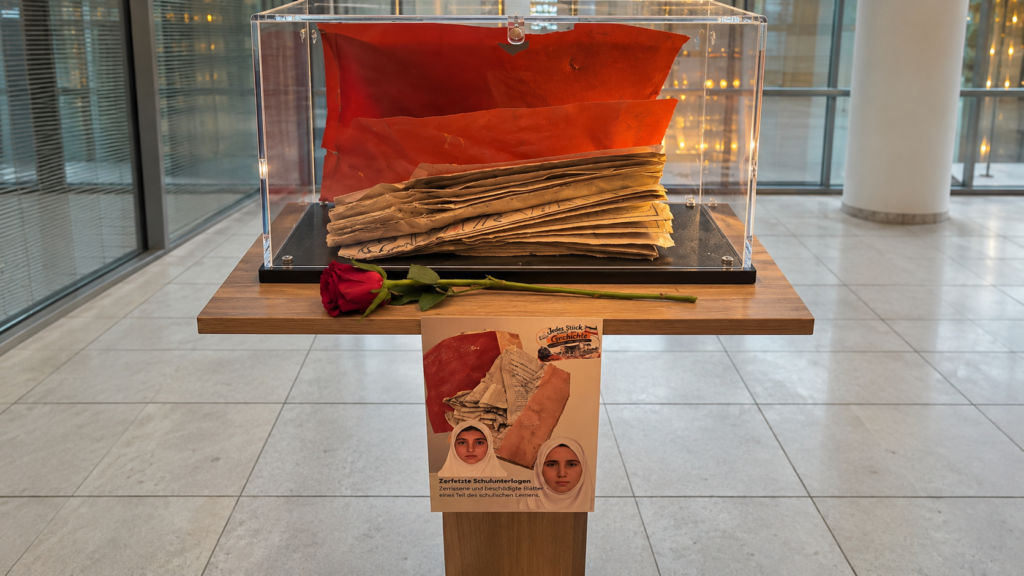
Displayed before visitors were the personal belongings of children killed in the bombing of Shajareh Tayyebeh Primary School in Minab, southern Iran: schoolbags, shoes, books and other objects that had survived the destruction.
These were not ordinary exhibition pieces. They were fragments of childhood, silent reminders of lives interrupted and futures that would never be realized. Some individuals and well-wishers had the opportunity to meet members of the bereaved families and borrow these belongings for the exhibition. Each object seemed to carry a story of its own.
Standing before them, I could not help wondering what these children might have become. What professions might they have chosen? What books would they have read? How many birthdays, family gatherings and ordinary school days had been taken away from them?
We will never know. Their dreams remained unfinished.
A father’s perspective
For me, this tragedy was not simply something to observe as a visitor. I am a father of two school-age children. Looking at those small shoes, schoolbags and books, I could not stop thinking about my own children. I imagined them leaving home for school in the morning, saying goodbye to their parents and expecting to return safely at the end of the day. That is what parents everywhere take for granted.
But for the families of Minab, that ordinary expectation became an unimaginable nightmare. I tried to imagine the pain of parents who had sent their children to school, only to discover that they would never come home again. No mother or father should have to face such a reality. No parent should have to look at an empty bedroom, an unused schoolbag or a familiar pair of shoes and know that their child will never return.
I sincerely wish and pray that no parent, anywhere in the world, will ever experience such a tragedy. The pain of losing a child transcends nationality, religion, ethnicity and political differences. A parent’s grief in Minab is no different from that of a parent in Berlin, London, New York or anywhere else. Every child deserves the opportunity to live, learn and grow in peace.
When a school becomes a place of destruction
On 28 February 2026, Shajareh Tayyebeh Primary School was struck during the opening day of the United States and Israeli military attacks on Iran. Iranian authorities reported that 168 people were killed.
Human Rights Watch investigated the attack, examining photographs, videos and satellite imagery. Its findings indicated that the school was a distinct educational facility and that there was no evidence it was being used for military purposes. The organization called for an investigation into whether the attack constituted a war crime.
The United Nations Independent International Fact-Finding Mission on Iran subsequently found reasonable grounds to believe that the United States had carried out the strike and that it constituted the war crime of making a civilian object the object of an attack. These are serious investigative findings, although they are not a final criminal court judgment.
International humanitarian law requires parties to armed conflicts to distinguish between civilian objects and military objectives and to take all feasible precautions to protect civilians.
A school is a place of learning, not a battlefield. A child’s book is not a weapon. A schoolbag is not a military objective. The children of Minab had no role in military decisions, geopolitical rivalries or political confrontations. They were simply children who went to school.
Human rights cannot be selective
The international community has expressed concern, and United Nations human-rights officials have called for investigations and accountability. However, expressions of concern alone cannot bring justice to the families.
The fundamental question is whether these calls will lead to transparency, accountability and meaningful action. If an attack violates international humanitarian law, describing it as a mistake does not automatically remove legal responsibility. The families deserve to know what happened, who was responsible and whether the necessary precautions were taken.
Human rights cannot be selective. The protection of children cannot depend on nationality, political alliances or the military power of the states involved. The life of an Iranian child must have the same value as the life of a child anywhere else in the world.
The international community, particularly the United Nations and human-rights organizations, must continue to demand an independent and transparent investigation, publication of its findings, accountability where violations are established, and appropriate support and reparations for the affected families.
Berlin: A message to the world
The exhibition in Berlin was attended by diplomatic representatives from several embassies, intellectuals and members of the public. Two books documenting the tragedy were also displayed, helping preserve the memories and stories of the children.
What made the exhibition particularly powerful was that its message was conveyed not only through speeches or political statements, but through the children’s actual belongings. Those small objects reminded every visitor that behind every reported death was a child with a name, a family, friendships and ambitions.
As I left the exhibition, I continued thinking about the parents, the empty places at their tables and the futures that had disappeared.
No article, speech or exhibition can restore what those families have lost. But we have a responsibility to ensure that their children’s lives are not forgotten.
To the international community, I ask: Do not allow this tragedy to disappear from the headlines. Do not allow political interests to overshadow the fundamental principles of human rights. Do not allow the passage of time to replace accountability with silence.
And to those responsible for investigating the attack, the questions remain: Who made the decisions? What information was used? What precautions were taken? Who will answer to the families?
The children of Minab had committed no crime. They only wanted to learn, to play, to grow and to dream.
Their dreams were unfinished. Their lives were taken away. Their families were left with a pain that words cannot describe.
Our responsibility does not end with remembering them. It begins with demanding truth, continues with seeking justice and must never end with forgetting.
168 unfinished dreams. 168 reasons for the world to demand answers. One universal responsibility: protect every child.