


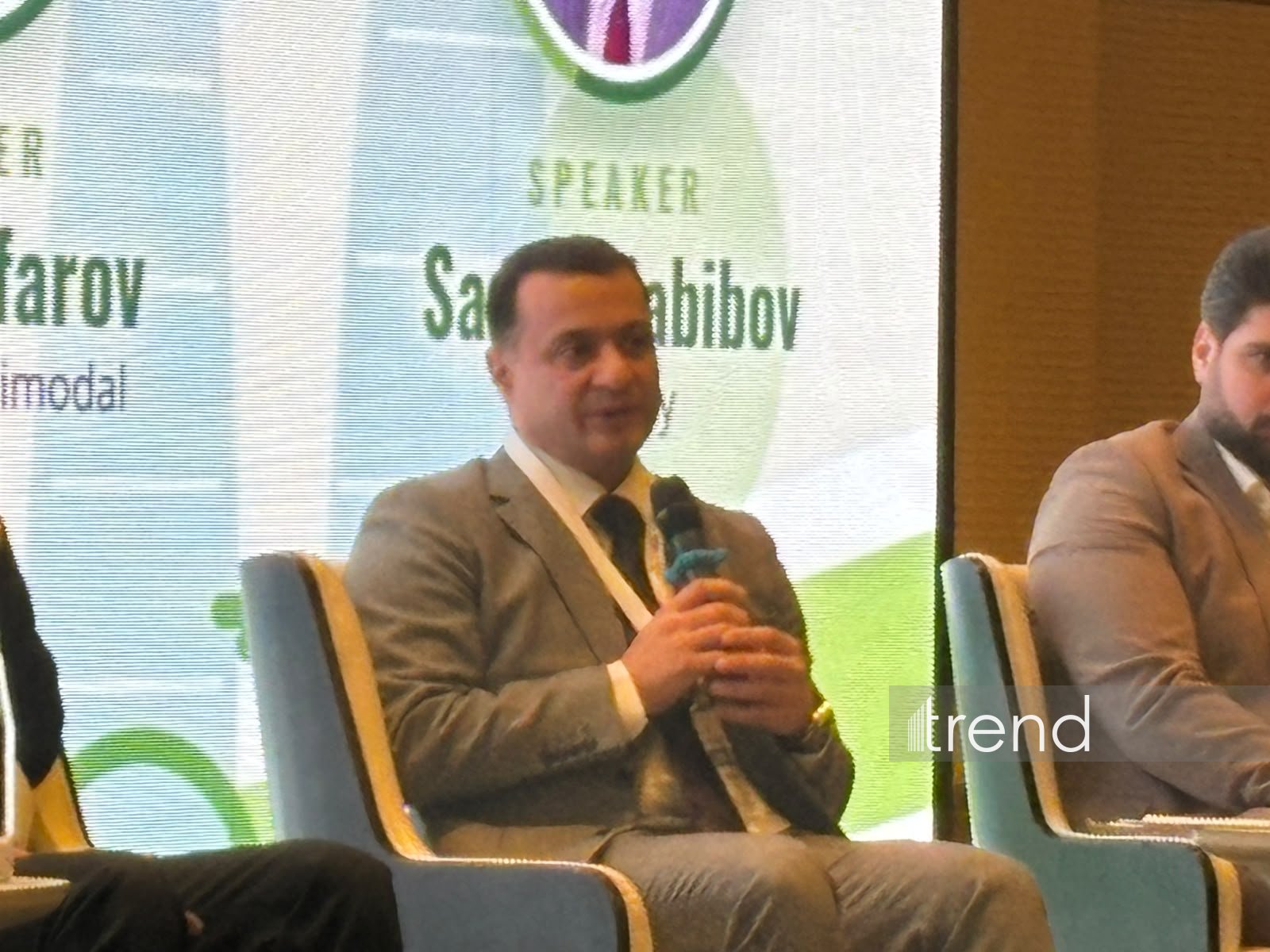
BAKU, Azerbaijan, November 26. Alliance
Multimodal plans to launch Ro-Ro services on the Caspian Sea
starting in January 2027, the CEO of Alliance Multimodal & Alliance
Logistics, Natig Jafarov, said on Thursday at a forum dedicated to
World Sustainable Transport Day, held in Baku, Trend‘s correspondent
reports.
According to him, once the second vessel enters service, the
company expects to transport approximately 1,000 trucks per
month.
The launch of the Ro-Ro service will expand freight
transportation capabilities across the Caspian Sea. An increase in
the number of vessels of this type will also create additional
opportunities for rail transportation by increasing the number of
railcars that can be carried on existing ferries between Baku and
the Kazakh port of Kuryk.
Jafarov also stated that Alliance Multimodal is participating in
a project to build the largest rail terminal in the Georgian city
of Poti.
Speaking about the development of the Middle Corridor, he noted
the need to integrate transportation infrastructure and harmonize
legislation and digital systems among the countries along the
route.
He said that individual digital solutions implemented by various
agencies cannot replace the comprehensive digitization of the
entire transport corridor.
Jafarov also highlighted the challenges of synchronizing
cross-border procedures between Azerbaijan and Georgia.
“In particular, although rail freight delivery from Boyuk-Kesik
to Alat takes about eight hours, inconsistencies in infrastructure,
legislation, and cross-border procedures lead to delays.
When choosing a transport route, customers consider its
reliability, cost, and delivery times. Therefore, the geographical
and geopolitical advantages of the Middle Corridor are insufficient
without infrastructure integration,” he said.
Moreover, Jafarov reported that over 80,000 containers were
transported via the Middle Corridor during the first eight months
of 2026. According to him, this figure matches the total volume of
shipments for the entire year of 2025.
In addition, he noted that the growing demand for the Middle
Corridor is linked, among other things, to the situation in the
Strait of Hormuz, disruptions in the Red Sea, and operational
issues at the port of Novorossiysk.


