

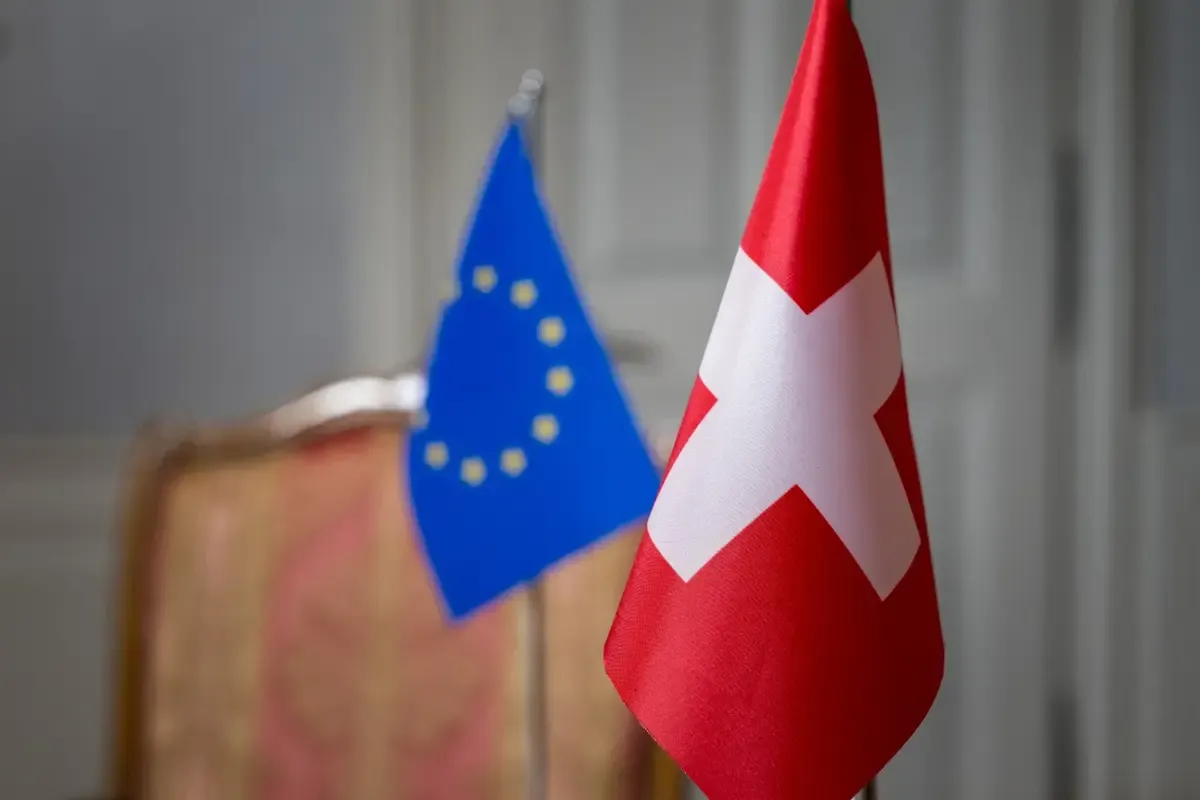
Large majority of lawmakers in the European Parliament have given the green light to the new batch of Swiss-EU treaties.
With 584 votes in favour, 13 against, and 60 abstentions, members of the European Parliament overwhelmingly approved the Switzerland-EU agreement, known as ‘Bilaterals III’.
According to Le Temps newspaper, the European Parliament “underlines the close relations between Switzerland and the EU, founded on shared values and interests. The economic interdependence of the two partners is also highlighted. The EU is Switzerland’s largest trading partner, while Switzerland is the EU’s fourth-largest trading partner.”
Further, MEPs also consider that these agreements constitute a balanced package. The package aims to update the existing agreements and to conclude new agreements in the areas of electricity, health and food safety.”
“The ball is now in Switzerland’s court,” said French MEP Christophe Grudler after the approval process.
Still in limbo
Bern, meanwhile, is far from ready to respond in kind, as Swiss legislators have been dragging their feet on the matter.
While some debates on the package have already taken place – with MPs deciding this fall to put the issue to a mandatory referendum which, however, will not be held until 2028.
READ MORE: What we know about how the Swiss referendum on the new EU deal will work
Both chambers of the Parliament – the Council of States and the National Council – are scheduled to further debate the Bilaterals III during the winter 2026 session, which will run from November 30th until December 18th.
What happens next will largely depend on the decisions made during this last parliamentary session of 2026, and what, if any, EU-related issues will be put on hold until 2027.
There is no indication of the intent among the deputies to speed up the package’s approval process, which is totally in line with the way Swiss politics operates.
This article explains why this is so:


