


BAKU, Azerbaijan, November 12. Uzbekistan
presented its first artificial glacier project, based on the “Ice
Stupa” technology, at the 31st UN Climate Change Conference (COP31)
in Antalya, Türkiye on November 11, highlighting efforts to improve
water security and strengthen climate resilience in Central
Asia.
According to Uzbekistan’s National Committee on Ecology and
Climate Change, the project, known as “FOLUR-Uzbekistan,” is being
implemented jointly by the National Committee for Ecology and
Climate Change of Uzbekistan and the Food and Agriculture
Organization of the United Nations (FAO), with a focus on water
conservation, land restoration and sustainable agricultural
practices.
According to the project’s estimates, water availability in
Uzbekistan could decline by 30-40% by 2050, while demand for
irrigation water could increase by 25%. The country’s water deficit
is projected to rise from nearly 3 billion cubic meters in 2015 to
7 billion cubic meters by 2030 and reach 15 billion cubic meters by
2050.
To address these challenges, Uzbekistan introduced the “Ice
Stupa” technology for the first time under the FAO-led Food
Systems, Land Use and Restoration Impact Programme (FOLUR), funded
by the Global Environment Facility (GEF).
The country’s first pilot artificial glacier was established in
the Sarchashma area of Shahrisabz district in the Kashkadarya
region. Launched on January 9, 2026, the system uses natural
elevation differences and water pressure to operate without
electric pumps.
During its initial trial, the installation accumulated
approximately 800 cubic meters of ice. Water from the melting
glacier was subsequently used by around 60 local households,
demonstrating the potential to store water during winter and make
it available during periods of higher demand.
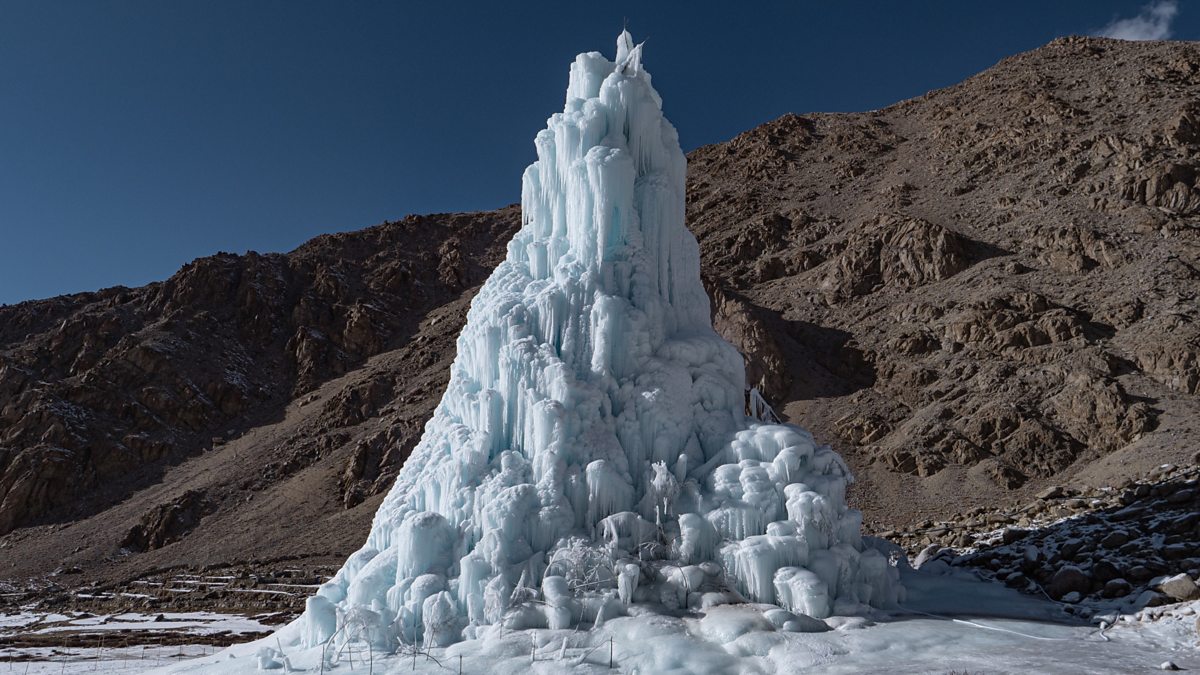
The “Ice Stupa” technology works by directing water from
available sources through specially designed pipes and spraying it
into the air, where low temperatures cause it to freeze. Ice
gradually accumulates into a large artificial structure, which
melts in spring and summer, providing an additional source of
water.
The technology is intended to improve water availability in arid
mountainous areas, support agricultural activities and provide
additional water resources for local communities. It also offers a
way to strengthen resilience to drought and other climate-related
pressures by storing water when it is more readily available.
The initiative forms part of broader efforts to promote
nature-based solutions and improve the sustainable management of
water and land resources in Uzbekistan.


