

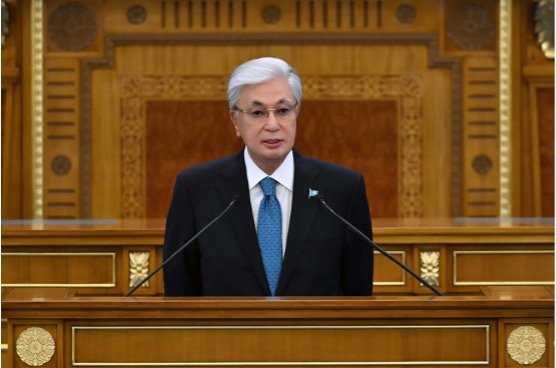
Kazakhstan is preparing for a major expansion of public infrastructure, energy capacity and economic reform after President Kassym-Jomart Tokayev announced an ambitious programme aimed at modernising the country and strengthening its position as a regional logistics and investment hub.
For international investors, diplomats and policymakers following Central Asia from Geneva and other European centres, the address offers a broad picture of where Kazakhstan intends to direct public capital and institutional reform over the next several years. Infrastructure, energy security, critical minerals, transport connectivity and digitalisation are being presented not as separate initiatives, but as elements of a wider strategy to reposition Kazakhstan within global value chains.
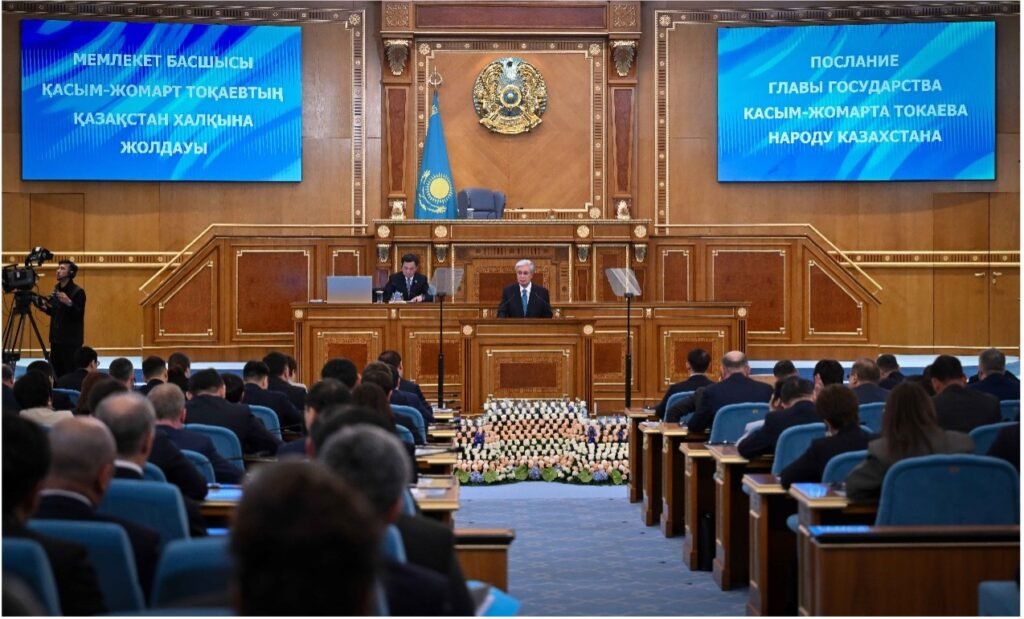
In his State of the Nation Address, “Kazakhstan’s Current Priorities in a New Historical Cycle,” delivered on 28 October, Tokayev presented infrastructure development, energy security, industrial diversification, digitalisation and social policy as interconnected priorities for the coming years.
At the centre of the programme is what the President described as “People’s Construction”, presented as the largest infrastructure initiative in Kazakhstan’s history.
$14.3 billion for infrastructure
The government plans to support an Infrastructure Modernisation Plan with approximately $14.3 billion from Kazakhstan’s National Fund through the end of 2029. Of this amount, approximately $3.3 billion is expected to be directed towards social infrastructure projects in 2026 and the first two months of 2027.
The President has proposed designating 2027 as the Year of Nationwide Large-Scale Construction, signalling that infrastructure spending is likely to become a major driver of economic activity.
The initial programme is expected to include around 70 healthcare facilities and 50 educational, sports and cultural facilities, as well as projects covering transport, housing, utilities, drinking water and gas infrastructure.
The President said the programme could generate employment for hundreds of thousands of people while addressing disparities in infrastructure and living standards between Kazakhstan’s regions.
“We must now direct this considerable potential towards modernising our infrastructure and improving the quality of life across every region of our country,” Tokayev said.
For international observers, the scale of the programme also raises a broader question: how effectively can Kazakhstan use public investment to attract private capital and develop local supply chains?
That question is particularly relevant for international financial institutions and development partners, for whom the quality of project selection, procurement, governance and implementation can be as important as the size of the investment itself.
The programme also reflects Kazakhstan’s broader economic ambitions. According to figures cited by the President from International Monetary Fund projections, the country’s GDP is expected to approach $400 billion in 2026, while GDP per capita is projected to exceed $19,000. Manufacturing currently represents more than 14% of GDP, while international reserves ombined with National Fund assets exceed $130 billion.
Energy security becomes a strategic priority
Energy is another central component of the government’s plans and an issue with implications beyond Kazakhstan’s domestic economy.
Kazakhstan aims to achieve a sustained electricity surplus by 2029, combining new generation capacity with grid modernisation, cleaner coal-fired generation and renewable energy.
Nuclear power is expected to play an important role. Tokayev said construction of the Balkhash nuclear power plant could begin as early as 2027 and called for a cooperation agreement to advance the proposed Moyynkum nuclear project.
The President also proposed examining the creation of a strategic uranium reserve.
For international energy companies, investors and policymakers, Kazakhstan’s nuclear ambitions are particularly significant. The country combines substantial uranium resources with growing electricity demand and an industrial base that requires reliable long-term power supplies.
The energy programme also places Kazakhstan within wider international discussions over energy security, nuclear power, decarbonisation and the diversification of electricity systems.
The government’s challenge will be to reconcile these objectives while modernising ageing infrastructure and maintaining a reliable supply of electricity for households and industry.
Kazakhstan seeks a larger role in Eurasian trade
Transport infrastructure featured prominently in the address, with the government seeking to capitalise on Kazakhstan’s geographic position between China, Europe and other markets across Eurasia.
The Bakhty–Ayagoz railway is scheduled to open in 2027 and is expected to add approximately 20 million tonnes of annual freight capacity between Kazakhstan and China.
Another major project is the Aral–Caspian corridor, construction of which began in August. According to the President, the route is intended to shorten the Trans-Caspian transport corridor by around 1,000 kilometres and reduce delivery times by up to three days.
The President also called for improvements to border crossings, roads, freight digitalisation and aviation infrastructure, including the development of a new airport in Astana.
“Kazakhstan must seize this historic opportunity to establish itself as a leading logistics hub in Eurasia,” he said.
The strategy is closely linked to the country’s efforts to strengthen the Trans-Caspian International Transport Route, which provides an alternative trade connection between China and Europe through Central Asia and the Caspian Sea.
For European governments and businesses, the development of these routes has a significance beyond Kazakhstan’s borders. More diversified transport connections between Asia and Europe have become increasingly important as companies and governments reassess supply-chain resilience, trade routes and regional connectivity.
From a Geneva perspective, the issue also intersects with the work of international organisations and financial institutions focused on trade facilitation, infrastructure development and regional economic cooperation.
Critical minerals and industrial diversification
Kazakhstan is also seeking to move beyond the export of raw materials by developing greater domestic processing and integrating the country’s mineral resources into international value chains.
Tokayev called for modern geological exploration, transparent geological data and a national system for managing reserves of critical minerals. He also advocated long-term financing mechanisms and offtake agreements to support investment in the sector.
The President urged Kazakhstan to establish stronger partnerships with developed economies and stressed that infrastructure investment should be accompanied by the expansion of domestic manufacturing.
This part of the programme is particularly relevant to international investors and policymakers as competition for secure supplies of critical minerals intensifies.
Kazakhstan’s objective is not simply to increase extraction, but to create conditions for greater processing and manufacturing inside the country. That could make the country a more significant partner for economies seeking to diversify their mineral supply chains.
For international investors, the approach could create opportunities in mining, processing, transport, energy and industrial infrastructure, while also placing greater emphasis on Kazakhstan’s ability to provide predictable legal and financial conditions.
New investment courts planned
Improving the investment environment was another priority.
Tokayev called for a more coordinated system for attracting foreign investment and stronger legal protections for businesses. Under the proposed special legal regime for Alatau City, Kazakhstan plans to establish an Investment Court based on the English common-law model for commercial disputes, alongside a Civil Court dealing with other matters.
The necessary legislative amendments are expected to be submitted by the end of January 2027.
For international investors, the proposal is potentially one of the more consequential institutional elements of the programme.
Capital-intensive infrastructure, energy and industrial projects typically require investors to assess not only market opportunities but also the predictability of dispute resolution, contract enforcement and regulatory institutions.
The proposal is therefore significant in the context of Kazakhstan’s efforts to attract international capital, particularly from jurisdictions where investors are accustomed to established commercial-law frameworks.
Its ultimate significance, however, will depend on how the proposed courts operate in practice and how their decisions are implemented.
Digitalisation and artificial intelligence
Digital transformation is another pillar of the government’s strategy.
According to the President, two supercomputers are already operational, with a third expected to be commissioned before the end of 2026. Kazakhstan has also completed a fibre-optic connection across the Caspian seabed.
Tokayev called for a stronger focus on practical applications of artificial intelligence, digital employment regulation by the end of 2026 and regional programmes allowing rural producers to access online markets.
He also advocated wider use of asset tokenisation as part of the country’s digital economy strategy.
“Our goal is to build a truly people’s digital economy,” Tokayev said.
For Kazakhstan, the challenge will be to translate investment in digital infrastructure and computing capacity into productivity gains across the wider economy rather than limiting digitalisation to the financial and technology sectors.
For international technology companies and investors, the country’s approach could also create opportunities in data infrastructure, artificial intelligence, financial technology, telecommunications and digital public services.
Tax, lending and business reforms
On macroeconomic policy, Tokayev placed reducing inflation and expanding long-term lending among the government’s priorities.
He called for targeted amendments to the new Tax Code, while proposing discussion of a higher tax rate for substantial wealth.
A new Civil Code is expected by the end of 2027.
The President also proposed considering a three-year moratorium on inspections of micro and small businesses, beginning in January 2027, as part of an effort to reduce administrative pressure on smaller enterprises.
The measures are intended to support private-sector activity while the government seeks to broaden the economy’s sources of growth.
For international businesses considering Kazakhstan, the direction of tax and commercial-law reform will be closely watched alongside infrastructure investment. Predictability in taxation, regulation and contract enforcement can influence whether large infrastructure opportunities translate into actual long-term investment commitments.
Higher minimum wage and expanded social investment
The government’s social programme includes a planned increase in the monthly minimum wage from approximately $187 to $242 from 1 January 2027. According to the government, the measure is expected to affect approximately 1.8 million people.
The government also plans to increase the pay of primary healthcare specialists by up to 40%, while it plans new perinatal centres and children’s hospitals, expanded inclusive education and more targeted welfare programmes.
Agriculture and water management are also included in the social and economic agenda. Tokayev called for greater investment in agriculture, more efficient water use and completion of a national water information system.
Water security is likely to remain an increasingly important economic and regional issue for Central Asia, where population growth, agricultural demand and climate pressures are placing greater emphasis on efficient water management.
For international development institutions and organisations engaged in the region, Kazakhstan’s water, agricultural and social infrastructure priorities therefore have a significance extending beyond individual domestic projects.
Reforming the state itself
Tokayev framed the programme within Kazakhstan’s broader political transition, referring to the country’s 35th anniversary of independence and the new Constitution, which he said had entered into force in July.
He called for comprehensive public administration reform, with proposals expected by 1 June 2027.
The reforms are intended to adapt government institutions to an economy increasingly shaped by digital technology and artificial intelligence.
The President’s broader message was that economic modernisation should be accompanied by institutional reform, the rule of law and greater government accountability.
“The ultimate measure of a state’s progress and the principal beneficiaries of all reforms are our citizens,” Tokayev said.
What Kazakhstan’s programme means beyond Central Asia
Taken together, the proposals point to a strategy built around infrastructure investment, energy security, industrial diversification and a stronger role in Eurasian trade.
For international investors and policymakers, the significance lies in how these priorities reinforce one another. Railways and logistics infrastructure can strengthen trade connectivity; critical minerals can support supply-chain diversification; new energy capacity can underpin industrial growth; and legal and digital reforms can shape the conditions for foreign investment.
The scale of the programme is substantial. But its long-term significance will depend less on the size of the announcements than on their implementation — whether projects are delivered on time, investment is mobilised efficiently, fiscal risks remain manageable, and infrastructure spending translates into higher productivity and better living standards.
For Kazakhstan, the next several years will therefore be about more than construction. They will test whether the country can convert its geographic position, natural resources and financial capacity into a more diversified, competitive and institutionally predictable economy.
The decisive measure will not be how much Kazakhstan builds, but how effectively those investments change the economy.


