


A Russian Geran-4 drone on display in Kyiv.
Keystone / AP
Ukraine has now named 11 Swiss companies whose components have been found in Russian drones and missiles.
What new discoveries have the Ukrainian authorities made?
The Ukrainian military intelligence service, HUR, regularly publishes details of electronic components found in the wreckage of Russian weapon systems in a publicly accessible database. Findings from spring, September and October of this year show that Swiss components continue to be used in new or upgraded Russian drones, missiles and cruise missiles. Ukraine has identified components from 11 Swiss companies. Swiss components have also been found in North Korean ballistic missiles fired at Ukraine.
How important are these parts for Russian weapon systems?
Very important, says Vladyslav Vlasiuk, the Ukrainian president’s adviser on international sanctions, speaking to Swiss public broadcaster SRF. According to Vlasiuk, 95% of Russian drones and missiles contain parts from Swiss companies. The electronic components supplied by Swiss firms are mass-produced industrial goods. They are used as microcontrollers in the control systems of missiles and drones, in the processing of satellite navigation data, as voltage converters, as sensors or as memory chips.

The Geran-4 drone is a further development of the Geran-2 drone, which in turn is based on the Iranian Shahed drone. The Geran-4 is now fitted with a jet engine and, according to the Ukrainian military, has been in service with Russia since May 2026. It was developed to evade Ukrainian air defences.
Keystone / AP
These components are not military equipment, nor are they dual-use items
And yet these electronic components are of military use. Countries are still struggling to define these goods in a uniform manner, as they have hitherto regarded them as civilian products. With changes in the nature of warfare – for example, the widespread use of low-cost drones – these mass-produced goods are becoming strategically significant. Together with the G7 countries, the EU has placed these goods on a joint sanctions list. Switzerland has adopted this sanctions list. As a result, Swiss companies are also no longer permitted to sell them to Russia.
What is Switzerland being accused of?
Switzerland is not doing enough to prevent shipments to Russia. This is the criticism levelled by Vladyslav Vlasiuk, an adviser to the Ukrainian president. He is calling on the Swiss government to involve the law enforcement authorities and to strengthen the export control bodies. He is dissatisfied with Switzerland’s responses to date. Sanctions regimes have evolved, as has Russia’s ability to circumvent them, he says, adding that Switzerland cannot simply stick to the logic that there are no production facilities in Switzerland and that it does not export to Russia. That is not enough.
More
More
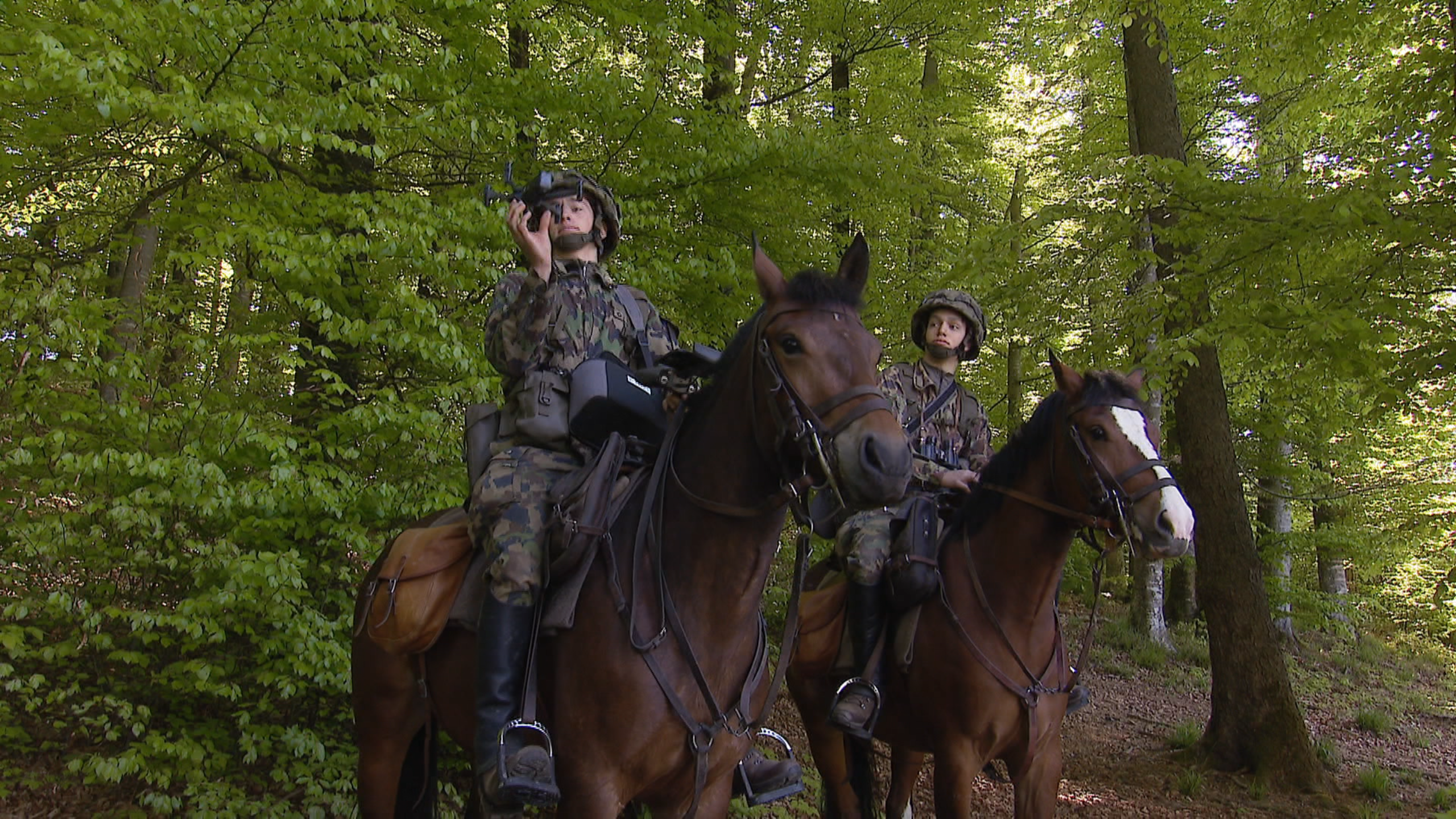
Swiss Army combines horses and high-tech drones
What does the State Secretariat for Economic Affairs (SECO) say?
SECO is aware of the issue regarding the components, the State Secretariat stated in response to an enquiry. It explains that, in most cases, the goods are not produced in Switzerland. Consequently, no exports take place. The export of these goods from Switzerland – including indirectly – to Russia is prohibited. Swiss companies are obliged to comply with certain due diligence requirements. This includes, in the case of exports or sales to third countries, contractually prohibiting the re-export of these goods to Russia. The effective and comprehensive enforcement of sanctions against Russia is a priority for the government, SECO writes.
What is required of companies?
They should take a closer look. Particularly when selecting their distribution partners and intermediaries, says Vladyslav Vlasiuk. He cites the example of the Dutch company NXP. A few years ago, this company attracted even more negative attention than the Swiss firms. By 2026, NXP electronic components were almost entirely absent from Russian weapons.

Ukrainian specialists are finding such electronic components, manufactured by Swiss firms, among the wreckage of Russian weapons such as drones and missiles. These are civilian industrial mass-produced goods – and yet they are relevant to the war.
SRF
The Ukrainian government lists 11 manufacturers based in Switzerland, two of which belong to the same group. We have asked the four companies with the most entries in the Ukrainian database for their comments:
STMicroelectronics: The company is headquartered in Plan-les-Ouates (canton Geneva). It emphasises that the use of its products for purposes other than those for which they are intended is neither authorised nor tolerated. The company has a comprehensive global compliance programme that includes training, procedures and guidelines for all sales channels. Since the end of February 2022, STMicroelectronics has taken measures to implement all sanctions packages and export control measures imposed by the EU, the US and other partner countries against Russia and Belarus. The company says it no longer conducts any business in Russia.
u-blox: In its statement, the Thalwil (canton Zurich)-based company condemns Russia’s attack on Ukraine in the strongest possible terms. Upon the outbreak of war, the company suspended all cooperation and deliveries to Russia and Belarus; sales to countries in the Eurasian Economic Union were subsequently halted as well. Since 2021, u-blox has also been working with the organisation Conflict Armament Research (CAR) to investigate how its own components ended up in drones used in the war in Ukraine. On the basis of this collaboration, it says several companies involved have been identified and blacklisted.
Traco Power: The company, based in Baar (canton Zug), points out that its products are electronic components for civilian industrial applications which are not listed in any dual-use regulation and are not intended for military purposes. Until the sanctions came into force, the company had supplied the Russian market exclusively via closely monitored authorised distribution partners. With immediate effect from February 28, 2022, Traco Power says it ceased all deliveries and business relations with Russia – including those via third countries. Any of the company’s components that may be found could therefore under no circumstances have originated from deliveries made after the sanctions came into force. The company says it conscientiously and strictly complies with all applicable regulations, embargoes and sanctions.
TE Connectivity (Schaffner / Axicom): TE Connectivity states that it complies with all export controls and sanctions applicable worldwide and has therefore fully complied with all sanctions imposed following the Russian invasion. Since these came into force in March 2022, the company has not supplied any products to Russia from any of its sites. TE Connectivity says it is committed to a business policy that excludes both direct and indirect deliveries to Russia or other sanctioned countries. These guidelines are communicated to its distribution partners, who are also expected to comply strictly with them.
So why are Swiss components still finding their way into Russia?
There are many indications pointing to China. Research and investigations by thinktanks, NGOs and the media show that intermediaries and distribution partners from China are supplying the goods to Russia. Some Swiss companies have their products manufactured in China.
Translated from German, sub-edited by ts
More

More


