


“The CAF is also committed to ensuring that French speakers can access healthcare services in their own language,” said its president.
Keystone-SDA
The Council for Francophone Affairs of the Biel/Bienne district (CAF), an institution established by the Canton of Bern to represent the interests of the French-speaking population, is celebrating its 20th anniversary. It is the only political body of its kind in multilingual Switzerland.
Until November 26, the public can visit the City of Biel library to see a bilingual exhibition on 20 years of the CAF. Seven themed panels showcase this political council, which represents the voice of the region’s French-speaking community and promotes bilingualism.
“This exhibition aims to raise the profile of the CAF’s activities,” said its president, Renaud Lieberherr, on Monday, adding that the body is a key partner in dealings with the Canton of Bern concerning French-speaking residents of Biel and its neighbouring municipalities. Recently, he has expressed concern about developments in Biel’s media landscape and voiced his opposition to the late introduction of French-language teaching.
More
More
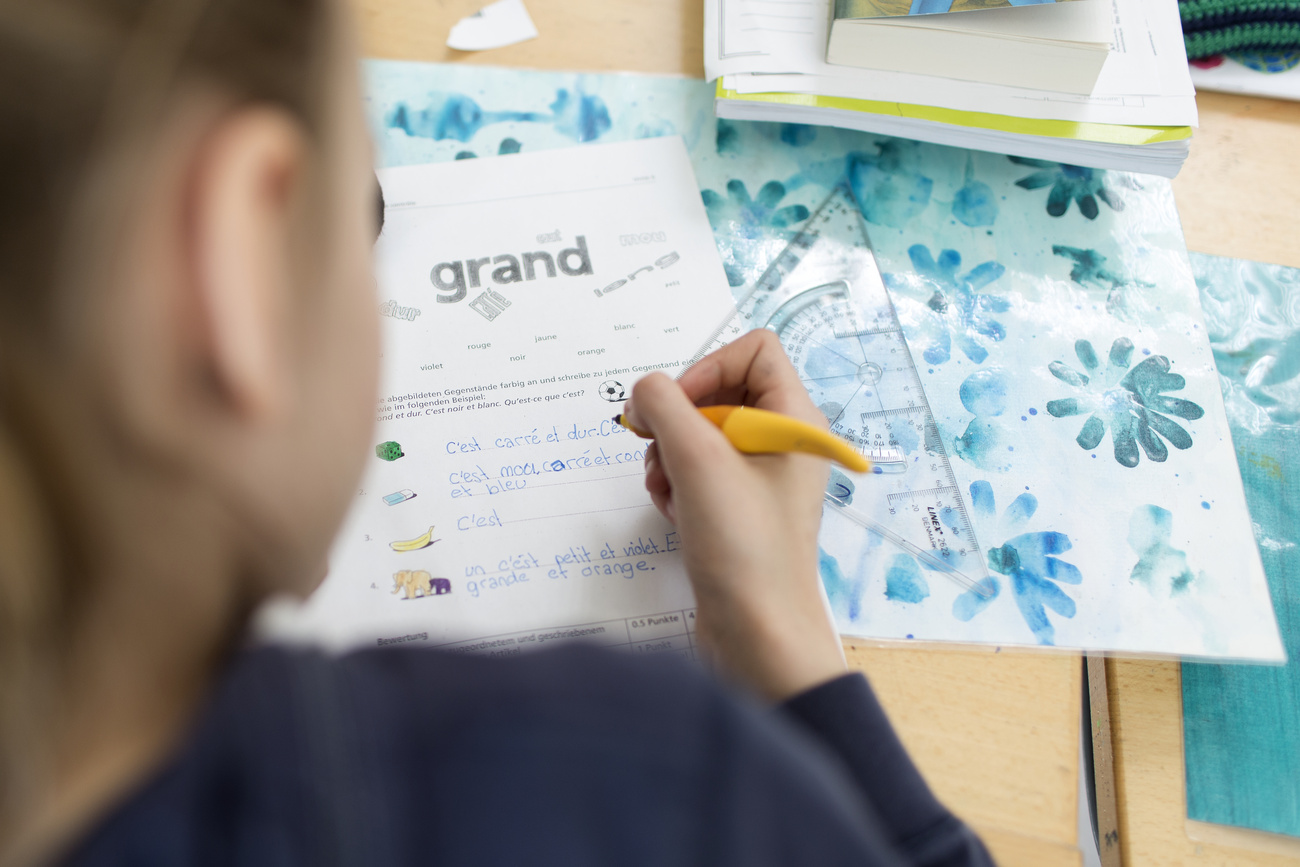
Why bilingual schools are few and far between in multilingual Switzerland
Among the key issues for the next four-year legislative term that also affect the CAF is the cantonal law on languages and bilingualism. “We will be putting forward proposals for the law,” said Lieberherr.
Culture, education and health
The CAF is involved in the cultural sector, providing advice on cantonal grants, and in the education sector, ensuring that apprenticeship places are available for French-speakers.
“The CAF is also committed to ensuring that French speakers can access healthcare services in their own language,” said its president.
The body, comprising 18 members – representatives from Biel and Evilard as well as from the 17 German-speaking municipalities in the bilingual Biel/Bienne district – appoints representatives from the bilingual region to councils, commissions and committees at cantonal, regional and local levels.
+ How we produce news in English
Translated from French, reviewed by an English Department journalist.


