


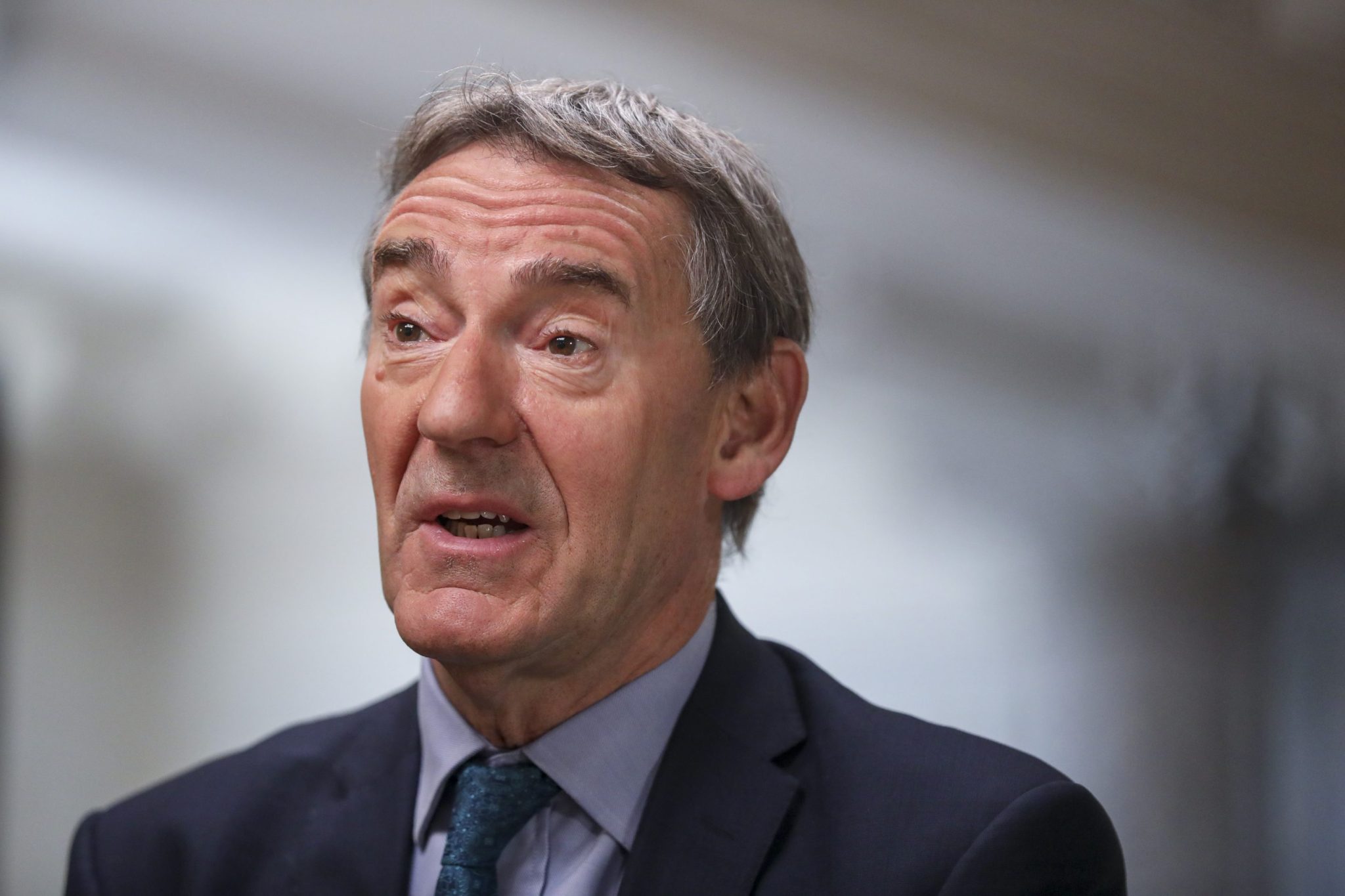
Twenty-five years ago, the unassumingly titled Goldman Sachs Economics Paper No: 66 changed the way business leaders looked at the world. Its author was Jim O’Neill, one of the bank’s leading economists who would become head of Goldman’s Asset Management division in 2010, where he oversaw $800 billion of clients’ money.
O’Neill and his team of economists and analysts had alighted on a new, emerging market trend—four countries that would play an outsized role in the world economy. Brazil, Russia, India, and China (which accounted for less than 10% of global GDP at the time) would be the new power houses, growing far more rapidly than the mature economies of the West.
The BRICs acronym stuck, although O’Neill now jokes that it might have been better to call the group “ICs”, given Russia’s warring tendencies and economic woes and Brazil’s regular bouts of political turmoil.
“Economically, 25 years later, BRICS has become utterly dependent on the ‘ICs’,” O’Neill told me. “China and India have surpassed the numbers that we showed could happen. Brazil and Russia actually, after the first great decade—their share of global GDP is back to where it was when I dreamt the name up.”
For India and China, the growth numbers are remarkable. Figures compiled by Fulcrum Asset Management reveal that India’s cumulative, per capita growth since 2000 totaled 246%. China’s hit 554%. During the same period the figures for the U.S., the European continent and the U.K. are, in order, 45%, 30% and 29%.
China’s growth is still outstripping the West. But O’Neill says that it is India that has the demographic wind in its sails.
“This is India’s moment in the sun because of its demographics.” he said. “It now has a clear 15 to 20 years where it should grow 7 to 8%. And if India got its mojo together on reforms, it could easily be 10%.”
In 2001, O’Neill wanted the debate around the newly emerging economies to be as much about global co-operation as it was about economic trends. After the financial crisis, the G20, which included China and India, flourished “out of horrible need,” he said, “it was the new thing.” Everyone was searching for fresh solutions and new approaches to economic and capital markets management. India and China were less scarred by the collapse of the Western driven financial system and were increasingly involved in global compacts.
Memories are short. Agreements on global banking regulations were forged, but little was done to re-order institutions and welcome more emerging market members to the top table. Western nations jealously guarded their privileges.
“The spirit of that kind of world, of policy corporation, just vanished,” O’Neill said. We are speaking in London, where O’Neill has launched a new think tank, BRICS+ Thinking to “foster expert dialogue between the Global South and North”. He is frustrated that the European Union has failed to grasp the opportunities of growth and deeper partnerships around the world.
“The Europeans are some combination of very lazy, very content, subconsciously still colonial, and unambitious,” he said. “So we live in this world where France, Italy, and Germany all still want their own individual seat at the global table, even though these days, you know, is that justified? But by them having those seats, that blocks the space for others to take more power.
“They are so hypocritical about Donald Trump and tariffs. Inside the [EU] single market there’s no free market in services because of German protectionism, French protectionism, and everybody else’s.”
At the same time, the U.S. President has alighted on a politically powerful narrative that America is having “its breakfast, dinner and lunch eaten by China.”
“It’s become this huge, strong mantra in the U.S. which is really sad because it’s not based on any evidence,” O’Neill said.
“France, Italy, and Germany still want their own individual seat at the global table. Is that justified these days? By having those seats, that blocks the space for others to take more power.”
Jim O’Neill, Author of Goldman Sachs Global Economics Paper No: 66
“And then partly linked to that, but partly because some people around the top of the Chinese Communist Party thought they were losing control, the Chinese clamped down on their own freewheeling business types and decided preservation of the party does take priority over anything else, and to sell that they became a lot more nationalist.”
Given that global volatility and the rapid growth of China and India are set to continue, O’Neill believes the West will have to ultimately respond. It is just a question of when.
“It will force more centrist thinkers and the core of liberal values to re-engage properly with the rest of the world,” he said. “That will include accepting, let’s call it the Mark Carney line, that you might not like how China’s run, you might not like how Narendra Modi runs India, but you’ve got to accept half the world’s population doesn’t want to be like us, and so rather than trying to pursue a world where you assume they are going to be like us, or you want to force them to be like us, you just get on with it.”
Gavyn Davies, the former chief economist of Goldman Sachs global research, described O’Neill’s original BRICs paper as “among the most influential ever produced by an investment bank economics department.” That the G7 still has no room for either China or India twenty-five years later shows a stubborn reverence for 20th century institutions. For O’Neill, it is time for a significant upgrade.


