

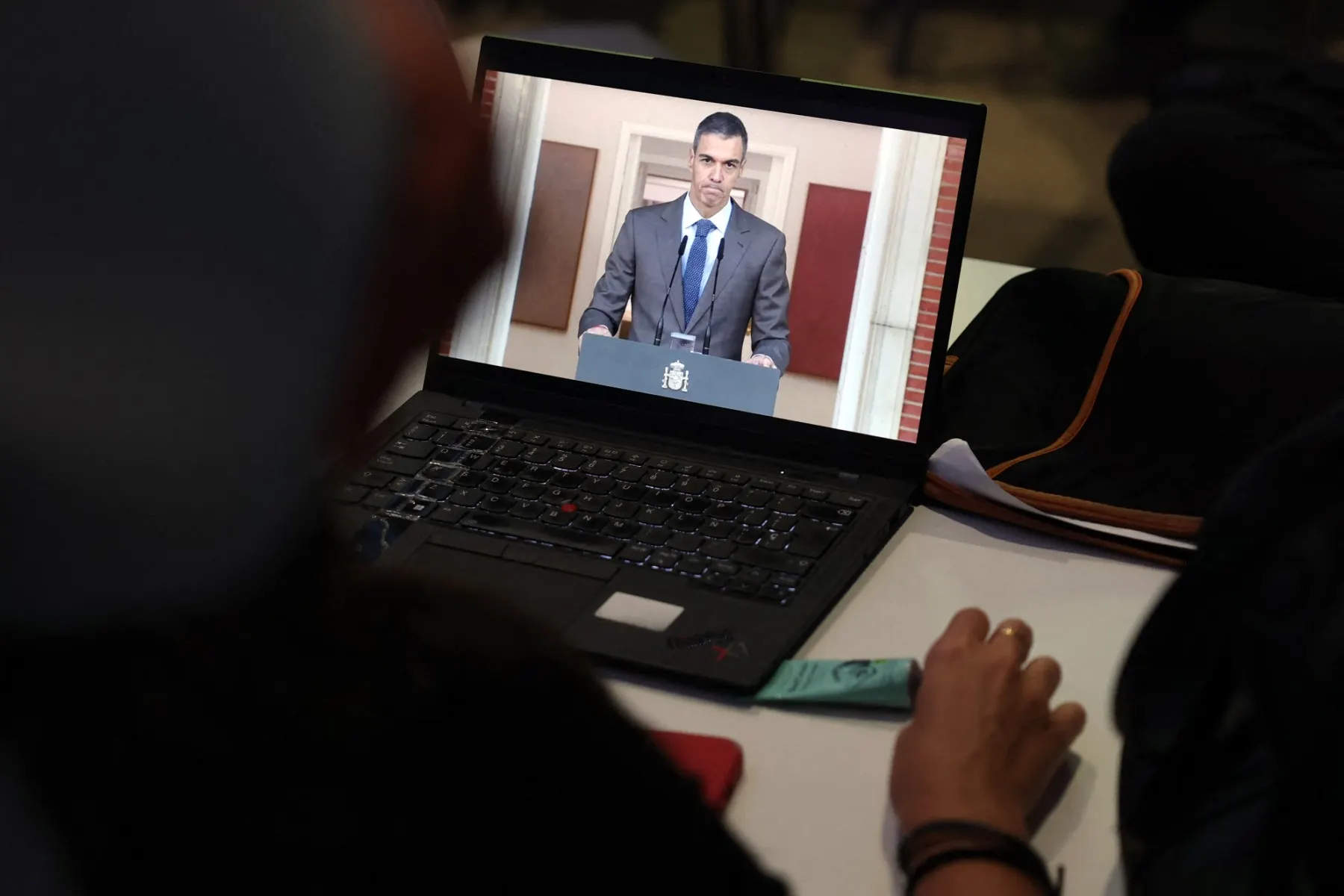
Spanish Prime Minister Pedro Sánchez on Monday called a general election nine months before the end of his third mandate. Why has he done this, and why now?
As Spaniards started their workweek on Monday October 5th, Prime Minister Pedro Sánchez gave a televised speech at 9am from La Moncloa, confirming what the Spanish press had anticipated days earlier – there will be an early general election in Spain.
The chosen date for these elecciones anticipadas (early election) is Sunday November 29th, roughly nine months ahead of the scheduled date in August 2027.
Sánchez’s decision comes just three days after right-wing parties dealt a heavy blow to his left-wing government by voting down two decrees in the Spanish Parliament which were meant to offer solutions to the country’s worsening housing crisis.
The vote was preceded and followed by nationwide protests, firstly as the eviction of 87-year-old Maricarmen proved to be the ‘final straw’ for millions of tenants in the country dealing with sky-high rents and worsening conditions, and secondly due to the anger felt towards the political class for failing to approve legislation that could potentially alleviate their housing struggles.
So why has Pedro Sánchez decided to call a snap general election?
Despite emerging as arguably the world’s most popular progressive leader due to his opposition to the wars in Gaza and Iran – as well as being viewed as the political antithesis of Donald Trump – at home Sánchez’s second mandate has been anything but stable.
The ruling PSOE-Sumar coalition he leads has a weak parliamentary minority which has made law-making particularly complicated for Sánchez.
His government has been unable to pass a state budget for three years, and right-wing parties PP and Vox have consistently voted down any legislation proposed by the Socialists.
Don’t miss our journalists’ daily news roundup from Spain
Catalan separatist party Junts – who acted as kingmakers for Sánchez in the 2023 general election following a hung parliament – have exerted political blackmail over him by voting against his laws, their seven seats in parliament often proving decisive.
Sánchez, who’s been in power since 2018, has also had to deal with corruption scandals involving his party, his inner circle and even his wife and brother, which have further weakened his government’s reputation.
In April 2024, he considered stepping down over the allegations against his wife Begoña Gómez, but after several days of reflection decided to stay on.
The migrant crisis in Ceuta, the controversial Catalan amnesty law and lastly the rejection of his housing measures in parliament on October 2nd have all piled extra pressure onto Sánchez’s ailing government.
READ ALSO: How Spain’s foreigners could be affected by a PP-Vox government
The latest polls suggest that a right-wing government formed by the conservative People’s Party and far-right Vox would obtain an absolute majority in Spain’s general election.
So why call a snap election now and not wait until August 2027?
For the past two weeks, Spain’s housing crisis has taken centre stage following the eviction of 87-year-old Maricarmen from her lifelong flat in Madrid at the hands of a vulture fund which quintupled her rent.
Protests have been held across the country and many people have formed encampments in city centre squares to demand a solution to Spain’s deepening housing crisis.
Sánchez and his team rushed to push legislation through aimed at improving prices and conditions for the country’s nine million renters, but as expected right-wing parties ensured these measures were voted down on Friday, with Junts once again going from kingmaker to king-slayer by tipping the balance to the ‘no’ camp.
The general consensus among political commentators in Spain is that Sánchez wants to leverage the Spanish public’s general discontent against the parties that rejecting the housing laws, and use it in his favour.
His team believes there is a chance that this could ensure his Socialist party and its allies gain more votes if Spaniards head to the ballot box sooner rather than later.
As Sánchez said during his speech on Monday morning: “To do more, we need to renew and broaden the support of the people,” adding that his aim was “to secure a much broader, progressive majority in parliament”.
The focus so far appears to be on portraying a PP-Vox government as a threat to Spanish society, more so ideologically than in terms of the housing crisis.
“You Spaniards have to decide what role you want to play: whether you want this far-right wave that keeps regressing or whether you want to continue moving forward,” the PM argued.
For the PP and Vox, the snap election is a defensive manoeuvre by a cornered government hoping to minimise its parliamentary losses and avoid future scandals.
Sánchez is known to be a shrewd political survivor who won the last general election when all the polls suggested that the PP’s Alberto Núñez Feijóo would be Spain’s next prime minister. Can he pull it off again?
