


The new media stars in the spotlight: model and influencer Sara Leutenegger (left) and model Steven Epprecht (right) at the opening gala of the 22nd Zurich Film Festival (ZFF).
Keystone / Claudio Thoma
The Zurich Film Festival (ZFF) has partnered with TikTok, following in the footsteps of the Berlinale and other festivals. Yet the more influencers and platforms shape the film world, the further professional criticism is pushed to the sidelines, argues film critic Denise Bucher.
The Zurich Film Festival (ZFF) is entering into a “strategic partnership” with the social media platform TikTok. Who will be next?
The Chinese short-video platform became a partner of the Toronto International Film Festival (TIFF) in 2022. The Berlin International Film Festival, widely known as the Berlinale, has been working with TikTok since this year, while at Cannes this year the platform was replaced by Mark Zuckerberg’s Meta.
Influencers are now an integral part of film festivals. They embody today’s digital media reality, where the rule is simple: if you’re not on social media, you don’t exist.
Of course, film festivals depend on reach. Clips of stars on the red carpet are meant to attract fans, customers and perhaps even sponsors. And it is a fact that most people now get their information through social media.
But when Meta promised “red carpet impressions” and “intimate conversations with stars” back in May, many film journalists were left with a hollow feeling. Are influencers, who are effectively paid to think everything is brilliant, now being handed access that is becoming increasingly difficult for the specialist press to secure?
The foundations of our profession are slowly being eroded. Writing about, analysing and discussing cinema is steadily losing value in the age of social media, PR and shrinking cultural journalism.
>>The Zurich International Film Festival (ZFF) on TikTok: US actress Julianne Moore and director Jesse Eisenberg in Zurich:
Cinema is now content
Short videos on TikTok and Instagram cannot replace film criticism. They are designed to entertain and go viral. The more likes and followers, the more lucrative they become for their creators. They role is PR. Film journalism, on the other hand, is about intellectual engagement with cinema and providing context, because films do not exist in a vacuum.
They are connected to film history, current events and the lived reality of every person sitting in the cinema. A film is more than a succession of images created simply to entertain.
At the recent Locarno Film Festival, Christopher Small, director of the Critics Academy, the festival’s programme for emerging film critics [and a regular contributor to Swissinfo], cited an analogy from a Portuguese colleague during the panel discussion “A World Without Film Critics”.
“In Portugal, there’s this famous football commentator who always provides the television audience with background information and explanations,” he declared. “When you listen to him, you see the match through different eyes.”
What this commentator does for football, criticism does for cinema. Criticism enriches films. Even when it is negative, it is a form of appreciation. Why else would anyone spend time reflecting on a work and then writing down those thoughts or speaking to them into a microphone?
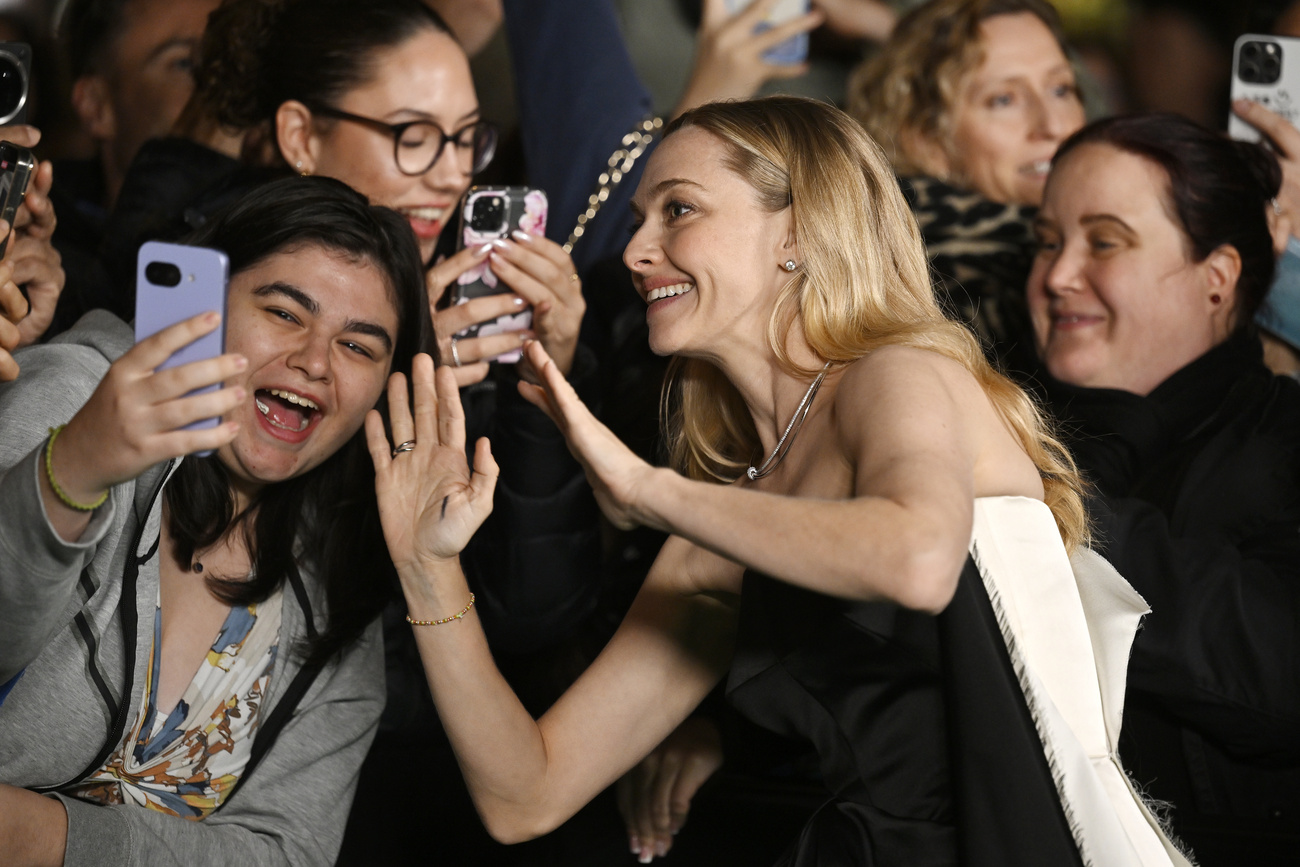
The US actress Amanda Seyfried, surrounded by fans (“content creators”?) on the Green Carpet during the ZFF 2025.
Keystone / Walter Bieri
When PR becomes more important than criticism
Production companies and festivals, however, increasingly seem to regard criticism as little more than a nuisance. It slows the PR machine that now dominates the industry. Hence the affection for influencers. Back in 2023, when influencers were invited to a screening of Barbie in Paris before the press, the decision sparked protests.
By now, people have become accustomed to TikTokers and YouTubers receiving special invitations and being “pampered”, as the French distributor of The Drama, starring Zendaya and Robert Pattinson, told the newspaper Le Monde.
Until recently, film festivals were seen by the trade press as havens for serious, passionate and critical engagement with cinema. But something has changed.
When you now reads statements such as the Berlinale claim that “as an official entertainment partner, TikTok reaffirms its ongoing commitment to film culture”, you must wonder what “film culture” means. Reach generated by amusing TikTok videos of stars and 30-second interviews? Is that all that remains for our profession?
>>The ZFF on TikTok (2): When Naomi Watts casually bumped into Julianne Moore in Zurich:
Although the panel in Locarno could not say what the future of criticism will look like, nobody questioned its importance. “Criticism is there to give us a language,” said the British film scholar Laura Staab.
She finds it worrying when young people go to the cinema but cannot explain why they thought a film was good or bad.
TikTok videos cannot do justice to the medium of film, a complex combination of image, language, text, sound and music.
What they might be able to do, as discussed on the panel, is inspire young viewers to become creative themselves or encourage them to learn more about the films being promoted. But where are they supposed to turn when in-depth film journalism is becoming increasingly rare?
TikTok videos and “red carpet impressions” filmed through Meta glasses may be lucrative for festivals and creators. At the same time, however, they contribute to the devaluation of film as an art form and accelerate the decline of professional criticism, once their ally. The “Vive le cinéma!” so solemnly proclaimed from festival stages risks becoming little more than a cliché. But it looks good on TikTok.
Denise Bucher is a film critic in Zurich and arts editor at Republik.ch. This article first appeared in the FilmbulletinExternal link (October/November 2026 issue).
Translated from German, sub-edited by Simon Bradley
