

The Council of States introduces a new immigration tax
Keystone-SDA
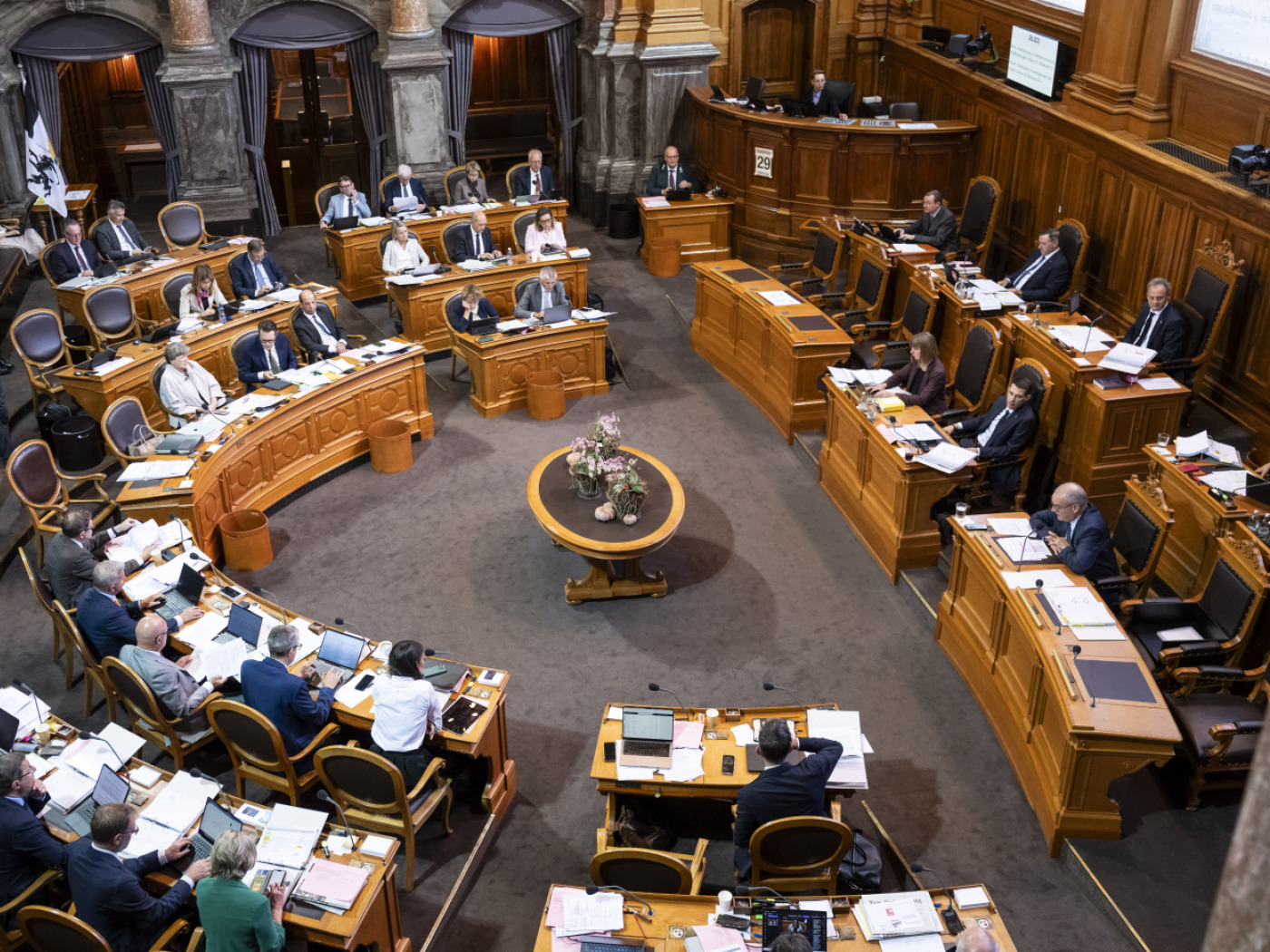
The Swiss Senate wants to go further than the government on the issue of the safeguard clause relating to immigration.
On Tuesday, it approved an incentive tax as an additional protective measure. The Left and a number of centre-right politicians from French-speaking Switzerland were sceptical.
The Bilateral Agreements III revise the rules on the free movement of persons. The government has therefore adopted several national safeguard measures, such as a safeguard clause. This clause is to be triggered on the basis of criteria indicating the existence of serious economic or social difficulties.
Senators have supplemented these measures with an immigration tax. The idea had been mooted within the ranks of the centre-right Radical-Liberal Party in recent years as a counter-proposal to the right-wing Swiss People’s Party’s “No to ten million” immigration initiative, which was rejected at the ballot box last June.
More
More
Swiss voters reject proposal to cap population at ten million
The levy is to amount to at least CHF4,000 ($4,800) for EU nationals in paid employment, those working as self-employed, and those not in gainful employment in Switzerland. As regards family members, adults who have come to Switzerland under family reunification schemes must be subject to a tax of at least CHF2,000.
The revenue from this levy is to be redistributed to the population. It must also apply to third-country nationals once the safeguard clause is triggered.
Families not excluded
This immigration tax will encourage the utilisation of the potential of the domestic workforce, according to committee rapporteur Heidi Z’graggen. Andrea Caroni welcomed it as an “appropriate incentive measure”.
Flavia Wasserfallen, on the other hand, expressed doubts about the actual impact of this new measure on both businesses and employees. She also highlighted the administrative burden it would entail. The Left sought to exempt at least family members from the measure.
Justice Minister Beat Jans was also in favour of exempting families from the tax. He referred to the constitutional right to respect for family life.
The measure failed to convince certain centre-right elected representatives from French-speaking Switzerland either. Pascal Broulis described it as an “anti-liberal” tax that would create bureaucracy, while the agreements are specifically aimed at greater economic prosperity and improved trade between international partners.
However, no vote was called for. The tax was tacitly accepted. The debate continues.
+ How we produce news in English
Translated from French, reviewed by an English Department journalist.
