


Roche data competitive with rivals
Keystone / Dominik Pluess
Roche’s experimental obesity shot enicepatide cut both blood sugar and body weight in type-2 diabetes patients who were overweight or obese in a mid-stage trial.
Patients receiving the highest 24-milligram dose had a 2.65% reduction in HbA1c – a measure of blood sugar – and lost an average 15.5% of their body weight after 48 weeks with no plateau observed, Roche said.
The data “look competitive” against results for rival drugs in Phase 3 trials, Goldman Sachs analyst James Quigley and colleagues said. They cautioned, however, that they need to see detailed placebo-adjusted data and the results replicated in Phase 3 trials to confirm the benefit.
Roche shares fell 0.19% at the end of the trading day in Zurich.
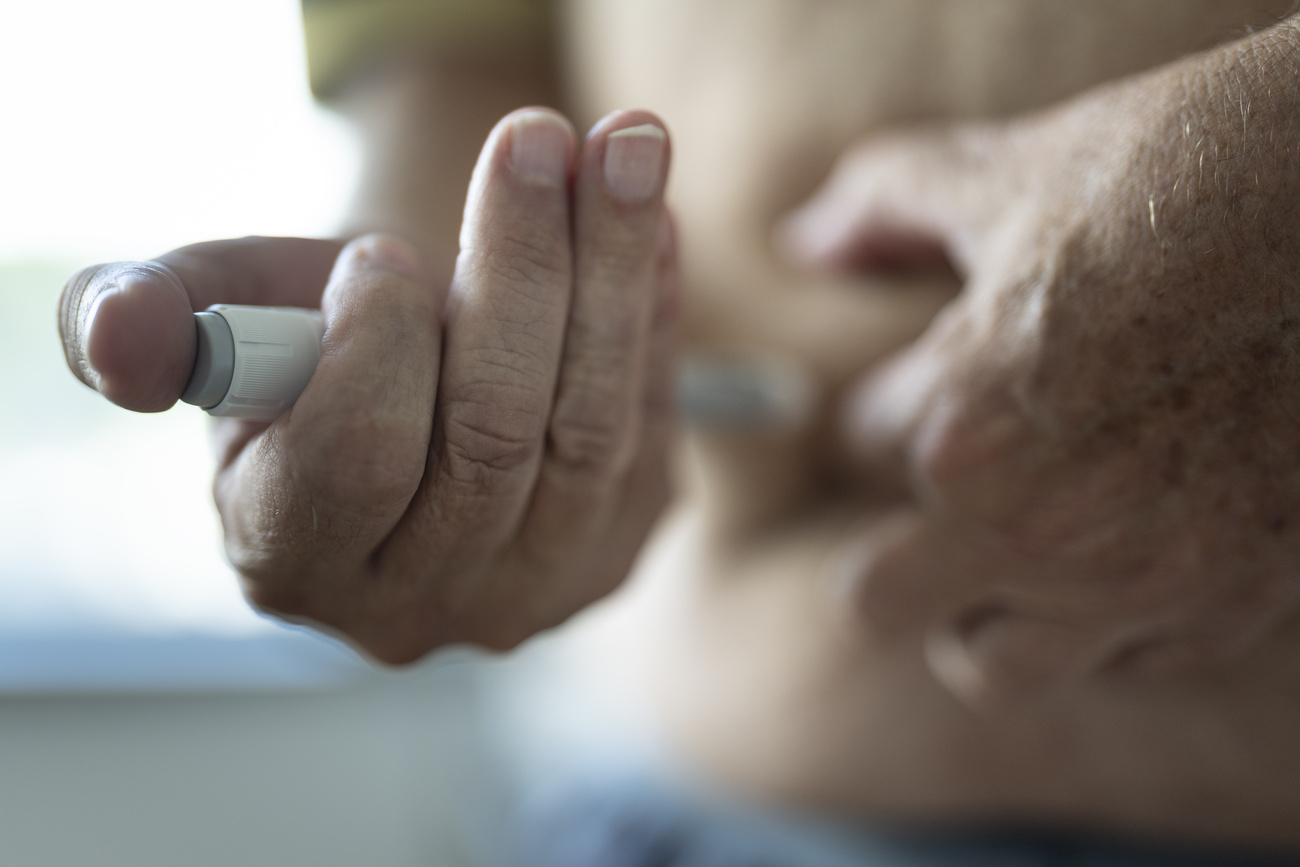
The Swiss drugmaker is seeking to compete with Eli Lilly & Co and Novo Nordisk A/S with a once-weekly shot that works similarly to Lilly’s Zepbound — by simultaneously activating the GLP-1 and GIP hormones involved in regulating metabolism. The global market for weight-loss drugs is estimated to reach as much as $150 billion.
More
More
Can Swiss pharma giant Roche reshape the obesity market?
Roche’s discontinuation rates due to side effects were just 2% after 48 weeks. In a mid-stage trial of Lilly’s Mounjaro in patients with diabetes that was carried out over a shorter period, discontinuation rates varied from 5% to 24.5%.
The results of the trial have been very promising, Manu Chakravarthy, senior vice president and global head of cardiovascular, renal and metabolism product development at Roche, said in an interview.
“What it tells us and underscores for us is the incredible potency of this molecule,” he said. “You’re losing weight, you have no hypoglycemia, and you’re dropping your sugar in a very, very healthy range. And that to me as an endocrinologist is the greatest boon you can offer people with poorly controlled diabetes today, because they don’t really have such a solution.”
Late stage trials underway
About 62% of the people were brought within 48 weeks to the normal glycemic range, he said.
One of the strategies the company is embarking upon, especially with enicepatide, is to cover the broadest range, from obese or overweight people without any co-morbidities to very significant co-morbidities like cardiovascular disease, heart failure, type 1 diabetes and others, he said.
More

More
What will be the next obesity blockbuster?
Roche already has two late-stage obesity trials underway. In early 2027, it plans to expand testing to diabetes and cardiovascular outcomes.
The company also plans to test higher doses of enicepatide and is exploring combinations with other weight-loss drugs. At its half-year media conference in July, pharmaceuticals chief Teresa Graham said Roche was looking to develop the drug both on its own and in combination, particularly for patients who need “greater weight loss and/or better glycemic control.”
Enicepatide, formerly known as CT-388, was first developed by Carmot Therapeutics, which Roche acquired for $3.1 billion in 2023.
Enicepatide has a “competitive profile” in patients with type 2 diabetes and obesity, Vontobel analyst Stefan Schneider said, pointing to the combination of normalised glucose levels in a meaningful share of patients and sustained weight loss. Schneider expects the drug could launch as early as 2028 and reach peak sales of CHF2.5 billion ($3.05 billion).
Previous data suggested enicepatide is “as good as rivals on weight loss,” Bloomberg Intelligence analysts Michael Shah and Christos Nikoletopoulos wrote in June. The drug is expected to win approval by 2030, the analysts wrote, and could have peak sales of $4 billion.
(Updates with Roche SVP comments from seventh paragraph.)
©2026 Bloomberg L.P.
