


Privileged access: visitors take a look around the Federal Council chamber during an open day in Bern.
Peter Klaunzer / Keystone
Why can’t Switzerland’s parliament launch a no-confidence motion against government? What might seem an undemocratic quirk also has advantages – as long as the rest of the system is designed right.

In 2027, when Swiss citizens go to vote in federal elections, 246 seats in parliament in Bern will be up for grabs. But seven other chairs in the capital are likely to remain untouched, unless vacated voluntarily: those belonging to the governing Federal Council.
In Switzerland, where the executive is largely decoupled from electoral processes, ministers enjoy some rare privileges: they are elected by parliament rather than popular vote, and yet they can’t be toppled by a no-confidence vote during a term – and they can stay in office as long as they like.

Every four years, after federal elections, parliament is asked to re-endorse the seven members of government. But it’s a formality: since 1848, only four sitting ministers have been rejected.
Peter Schneider / Keystone
For a country that prides itself on its democratic traditions, this might not sound very democratic. Indeed, the Swiss government combines various elements of the two main democratic models, parliamentary and presidential; but it lacks the key legitimating elements of both. It has neither a popularly-elected head of state, like in the United States, or a parliament which can eject an over-staying government, like in the United Kingdom.
“At first glance, it could seem like it combines the worst of both worlds”, says Steffen Ganghof, a political scientist at the University of Potsdam. This summer, Ganghof published a paperExternal link on this rare type of hybrid model, known in academic lingo as “assembly-independent government”, and which is found in a handful of democracies including Bhutan, Suriname – and Switzerland.
Shared power and shifting coalitions
Yet in practice, Ganghof tells Swissinfo, the model as it’s used in Switzerland has a range of upsides. To start with a counter-example: in his country, which has a parliamentary system, a coalition government in Berlin is always thinking about survival and “keeping everyone happy”, he says. With governing parties able to veto what they don’t want, “policy often becomes a matter of deadlock, or finding the lowest common denominator”.
In Switzerland, the seven-member executive is also a diverse coalition comprising the four biggest parties in the country, based on a long-standing “magic formula”. Yet there are no vetoes holding it back, whether it’s by a president or a party. Rather, the cabinet takes collective decisions, ideally by consensus, which it then also publicly backs as a body; individual members don’t take diverging stances – the cornerstone of the government’s “collegiality”.
>> How Swiss governmental collegiality works, and how it impacts the executive’s decision-making:
More

More
‘One for all, all for one’ – how the Swiss government makes decisions
However, despite the consensus, ministers are always anticipating how decisions will be received outside cabinet chambers. In Switzerland, the government doesn’t have ultimate law-making power. “It initiates, proposes, consults – but it doesn’t definitively decide,” former Federal Chancellor (a type of coordinator of the executive’s work) Walter Thurnherr told the Neue Zürcher ZeitungExternal link. It’s parliament that signs off on laws, not government: ministers thus always have to convince a majority, Ganghof says.
As such, they are well aware of what is likely to pass or not in a parliament which makes decisions based on what Ganghof calls “a system of shifting coalitions – sometimes centre left, sometimes centre right”. In this system, Ganghof says, parties are engaged in a constant process of “complex majoritarianism”. That is, they decide on a case-by-case basis rather than according to a pre-determined system of fixed alliances.
Beyond this, there is the ultimate veto player in a direct democracy – the people. Some 10% of new laws are challenged to referendum, usually by a party on the losing side in parliament. This means the government also has to be attentive to the public mood, as well as the limits of what parties are willing to accept. “Every referendum is ultimately the expression of a failed consensus-building process,” Silja Häusermann from the University of Zurich told Swissinfo in 2023.
Safeguards against executive power
For Ganghof, the “assembly-independent” side of the Swiss government could be seen as the model’s “linchpin”. However, he adds, it also only works in combination with other safeguards against governmental power. Along with direct democracy, there is an electoral system based on proportional representation, which helps to maintain a multi-party parliament with shifting majorities. And “what’s really crucial is collegiality”, he says.Since the government acts as a single body, the ministers tend to be relatively moderate types, acceptable to most parties and the public.
>> In Switzerland, public trust in government is not just comparatively high – it has also grown over the past decades:
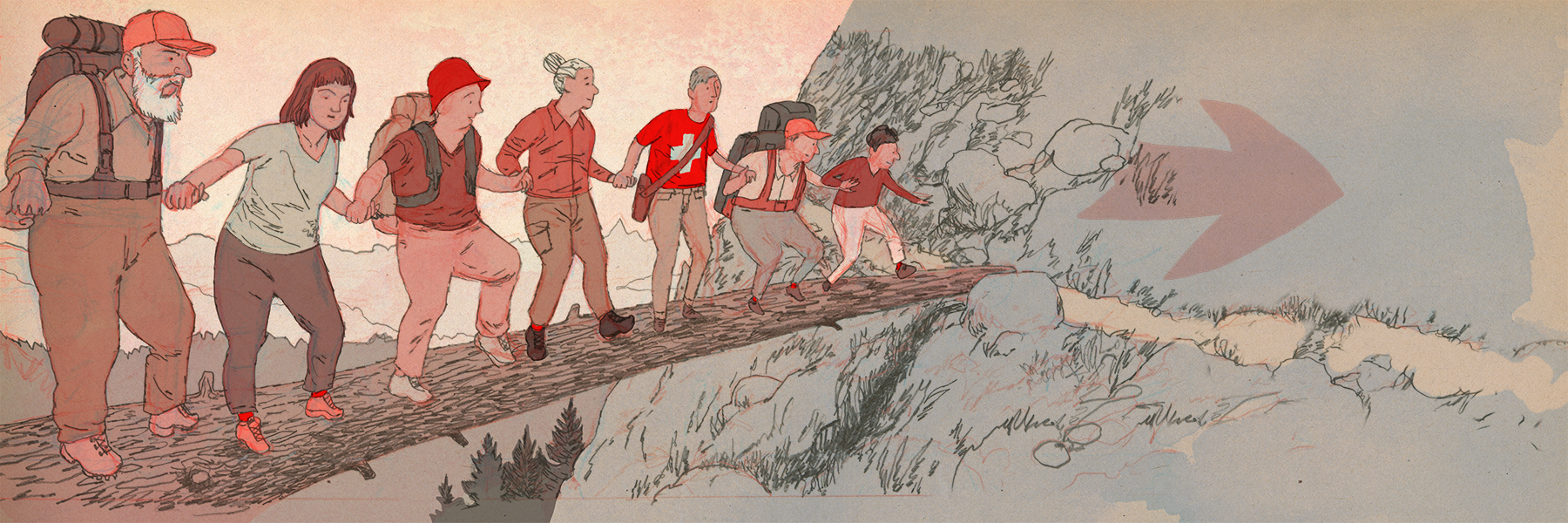
More
Why people in Switzerland trust the state
And if things were to go very wrong, and government were to lose all credibility, there is still a ‘nuclear option’. In theory, parliament can refuse to endorse cabinet members when they stand for re-election every four years. But in practice, this has only happened four times in 178 years, most recently in 2007. As a rule, ministers decide when to leave, and average tenure is around a decade (the longest-serving was 32 years, albeit in the late-19th centuryExternal link).
>> Our overview of what the role of Swiss “president” involves, and why there are so many former ones:
More
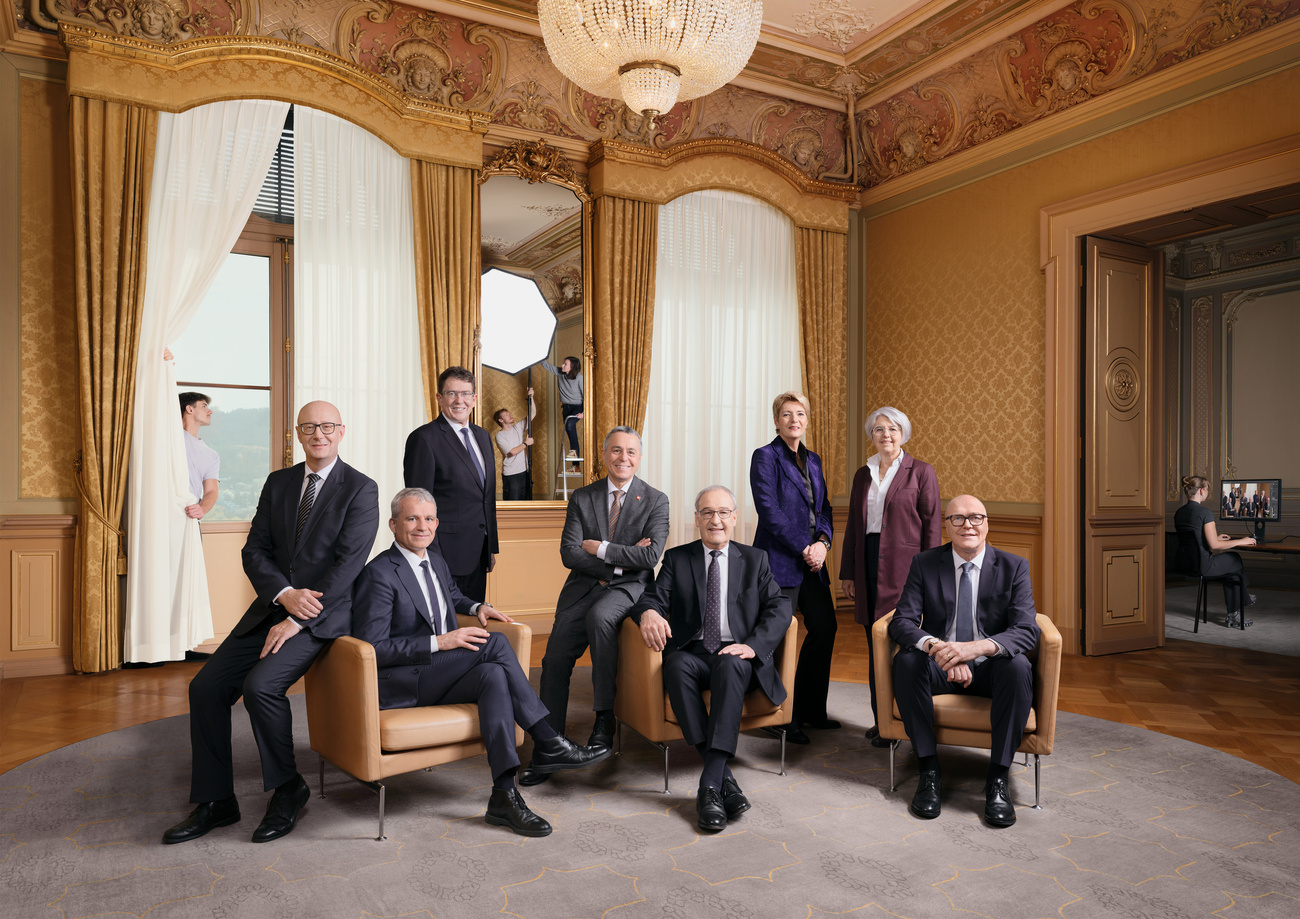
More
Switzerland’s 21 living ex-presidents: a world record
A model with undemocratic potential
But Ganghof also warns that assembly-independent government is not a recipe for success everywhere. “Unless you do all the other things Switzerland has done, the model can become a very undemocratic form,” he says.
Other examples in his research paper make this clear. In Bhutan, a democracy since 2008, an absolute majority in parliament can authorise a new cabinet, but only a two-thirds majority can topple it. Along with a constitutionally-entrenched two-party system, this brings stability – but also a strong executive and a system offering scant choices for voters, Ganghof writes.
In Suriname, meanwhile, there is proportional representation, but the system is hampered by executive dominance and clientelism. Institutions are used by politicians as part of a system of “horse trading” and corrupt patronage, Ganghof says; here, political culture combines with suboptimal constitutional design.
A government without a rudder?
The Swiss system has downsides too. While it’s often pointed out that the government is comparatively weak, there is still “quite a concentration of power” among a handful of ministers, University of Geneva political scientist Pascal Sciarini tells Swissinfo. To boost accountability, the idea of directly electing ministers has been raised several times in the past, but rejected in public votes, most recently in 2013; opponents argued it would make ministers focus more on re-election than on the national good. Ideas to limit ministerial term times have also failed, for similar reasons.
Meanwhile Sciarini says another reform proposal, to introduce a more powerful presidency role to the Federal Council, would be “quite alien to Swiss customs”, which traditionally aim to ensure no individual has too much power.
Ganghof also mentions that since government is not the result of an election campaign, it doesn’t “stand” for anything as such, if not stability and continuity; voters don’t have a clear choice every four years for a fresh vision of the future. “That’s also why, among advanced democracies, Switzerland has by far one of the lowest turnout rates in elections,” he says.
But more generally, he says, Switzerland’s system is quite “unique globally” in its set up and functioning – and its ability to avoid concentrations of power. And when it comes to the model of assembly-independent government, his research is clear: the Alpine nation is the “only case which showcases its democratic potential”. Elsewhere, he writes, the model can be a “double-edged” sword – it tries to get the best of both worlds from parliamentary and presidential systems, but can end up lending an undemocratic level of power to the executive. In an era of populist strongmen, this is hardly something the world needs more of.
Edited by Benjamin von Wyl/gw
