

Volodymyr Yermolenko is a Ukrainian philosopher, journalist and writer born in 1980 in Kyiv. Since November 2022, he has been president of Ukrainian PEN and the current Analytics Director at Internews Ukraine, one of the largest and oldest Ukrainian media NGOs. He is also the Editor-in-chief of UkraineWorld, a multimedia project in English about Ukraine and an Associate professor at Kyiv-Mohyla Academy.
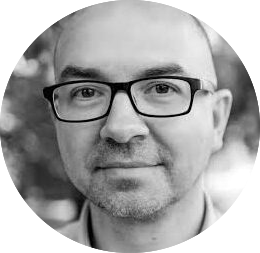
His articles and interviews in the international press also feature quite a few uncomfortable questions for Ukrainian society — mobilisation, democracy, corruption, elections, freedom of speech, and war fatigue. His last book, Life on the Edge (Dukh y litera, 2025) was written with his wife, literary scholar Tetiana Ogarkova.
This is the trascript of the interview he did with Irina Nedeva from Bulgarian Public Radio on the eve of the 35th anniversary of Ukraine’s declaration of independence, on 24 August.
Irina Nedeva: Volodymyr Yermolenko, you are not a politician, you do not speak on behalf of the Ukrainian government, but you are one of the people who shape Ukraine’s intellectual narrative for Ukrainians themselves and for the world. When you look back to the 24th of August, 1991, what did independence mean at that time? Was it an administrative consequence of the breakup of the USSR, or was it already a political choice made by Ukrainian society?
Volodymyr Yermolenko: It was a political choice. I would say that there is a long Ukrainian history of fighting for independence. Obviously, we had different types of state and statehood in our past, but in the 20th century it was very much present, and it was connected to the wars. So, the First independence happened after the First World War. The attempt of Second independence happened during the Second World War. And basically, I think it was a matter of time because there was a more and more national consciousness in the people who were conquered and colonised by the Russian Empire. And therefore, there is a long, long story of Ukrainian fight for independence. We can start from the 17th century.
We can start it from the 19th century, depending on chronology. But I would say that the independence of 1991 Ukraine emerged very much as a post-Soviet state in which a lot of things were developed by Soviet and post-Soviet establishments. I think this happened throughout the 1990s. Russia, in its turn, it was weak, it was disoriented. In 1991, there was hope that Russia would democratise itself. But by the end of the 1990s, I think Russia decided to return to its imperial identity. We see it in the already late Yeltsin period and of course during the Putin period. So many people in Ukraine consider this current war started by Russia in 2014 as a war for independence as a kind of attempt of Russia to reconquer its old colonies, and we are trying to, of course, defend against it.
In 1991, Ukraine voted for independence, and in December of that same year, over 92% voted in favor in a referendum. What did Russia fail to understand back then and what do Russia and Putin still fail to understand about Ukraine today?
Before this referendum, there was another referendum, I think in 1990, and Ukrainians were voting for maintaining the Soviet Union. So it was a time where opinions changed very quickly. And the divisive line was, of course, the August putsch in Moscow. That was the thing that showed very clearly that there are trends inside in Moscow, in Russia, that wants not only to preserve a kind of a federation confederation of states but made it in a Stalinist and authoritarian model and therefore that pushed Ukrainians to say: “No, we don’t want to stay within this state!” So, the history was not that linear and paradoxically enough, Ukraine in 1991 was politically quite passive compared to the other parts of the Soviet Union, in the Baltic states, in the Caucasus, in Georgia, in Lithuania, and at a certain point in Moscow.
But I think it was a gradual process because in Ukraine we had presidential elections and then there were two persons, one symbolizing the continuity within the Soviet system, although kind of more nationally conscious, it was Leonid Kravchuk. And the other one representing the dissident movement, the true Ukrainian democratic anti-Soviet dissident movement represented by Viacheslav Maksymovych Chornovil. And Chornovil got only one quarter of the votes, not more. And I think Russia was reading these signs as a kind of, well, even if Ukraine has these people who want to be independent, they will always form a minority because Russia did a lot of efforts to exterminate those people who would present the idea of Ukrainian independence. And basically, my point is that the Soviet Union did not really collapse in 1991. It’s just turned into a different form.
I would call it a more feudal form. Instead of an empire, you had kind of a hegemony. You had suzerain-vassal relations in which clearly Ukraine, Belarus, Kazakhstan, the states of the Caucasus, Central Asian states were considered as vassals and they were more or less aligned with Moscow but they were gradually moving away from Moscow. Georgia when we’re talking about the early 2000s – Georgia was moving to the west, Ukraine was moving to the west, and, you know, Central Asian states were moving rather to China or some of them to Iran. And I think Russia was feeling that. And it was a feeling that it was urgent to start reconquering the empire.
‘Ukraine is much more horizontal, democratic, republican, and anarchic than Russia’
And Russia thought that Ukraine was the easiest one. Belarus even more because Belarus has much less national consciousness than Ukraine. Historically, I can explain why. But Belarus was already controlled by Russia throughout the 1990s and 2000s and Russia was thinking okay let’s start with Ukraine because Ukraine speaks a language which is Eastern Slavic language and has common things in history and Russians were pushing forward this idea that basically Ukrainians and Belarusians are just elements of the Russian identity.
And it showed that it doesn’t understand Ukrainian history because Ukrainian history is not the history of the empire.
It’s a history of opposition to the empire, to the different parts of empires.
And Ukraine is much more horizontal, democratic, republican, and anarchic than Russia.
And Russia, I think, just didn’t get it.
Well, Russia claims that the war is also about historical, so-called “historical Russian lands”. You speak of Russian imperialism. In one of your articles: “Why you should not be naive about Russian culture”, you take a critical view on the romanticised perception of Russian culture. Why? Let’s talk a little bit about this. Many people in Europe say, let’s not mix Russian culture with Russian imperialism. What is your take on that?
My take on that is of course ideally a culture is independent from politics and it’s kind of an expression of the creative human spirit, etc. In the real world however it’s never the case because as Edward Said wrote, culture is a field of struggle. I’m against the over-politicising of culture, but I’m also against seeing culture as just “art for the sake of art”, as the French say l’art pour l’art.
I don’t know about Bulgaria, but in the Western world, for example, in France or Germany or Britain or United States, or Italy, whatever, even in Poland, there is this idea that, look, of course, Russian politics is bad. I mean, there are not many people who would say in the Western world that Russian politics is good, although there are some. But those who are criticising say, okay, Russian politics is bad, that is authoritarianism, tyranny, imperialism, etc. But we always have the “Other Russia”, and the other Russia is a great Russian literature and music and everything like that. Well, the problem of this approach is twofold.
The first is that if you look deeper into Russian literature, for example, you will see a lot of elements who would justify the empire, who would create the intellectual ground for this imperialism. And I wrote about it many times, about Pushkin or Lermontov or Dostoevsky, about Tolstoy and everything else.
Just to give the example, I was impressed by your Foreign Policy article “From Pushkin to Putin: Russian Literature’s Imperial Ideology” and if Pushkin, his Bronze horseman, for instance, is very obviously part of the Russian imperial context but people get more confused when we take, for instance, Mikhail Bulgakov, born in Kyiv, powerful anti-Soviet writer with a great satire against the authoritarian state. So people are getting confused. And maybe if you could compare Bulgakov with Gogol. What is different? Why is Gogol different from Bulgakov who was officially declared in 2024 by the Ukrainian Institute of National Remembrance to be a symbol of Russian imperial policy? Why did this happen to Bulgakov but not to Gogol, given that both were born on Ukrainian territory, Bulgakov even in the very heart of the country, in Kyiv?
I think the reproach of Ukrainians to Bulgakov is twofold. The first is that, well, he’s from Kyiv, but he seems to be hating Kyiv. He seems to be hating and he was mimicking, comicking and mocking those efforts of the first Ukrainian independence. And of course, if you see those people who would say, who would express all their negative attitude to Ukrainian will for independence, you will be at least suspicious towards him. The second approach is that in the late Soviet period, Bulgakov was obviously not a very welcome writer during the Soviet period. Although we know that there were films made on the basis of his plays, in particular about Ivan Grozny, there was a comedy, very popular in the Soviet Union based upon Bulgakov’s play. And we also know that Bulgakov wrote a very pro-Stalin place, like “Batum”, about the young Stalin and heroising him. And we know that Stalin’s attitude to Bulkakov was mostly positive.
So Bulkakov was not exterminated as many Ukrainian writers. He was not killed. Yes, he was not too much published, but he was in between. He was in between the official literature and the clearly opposing literature who was mostly exterminated. But another approach that I have, which is philosophical approach, which is not to say that, you know, I am canceling Bulgakov or whatever else. I’m personally against any cancel discourse. I think we need to discuss, we need to have a critical attitude towards, and we need to analyse, and we need to understand where certain thinking patterns come from.
So Bulgakov’s The Master and Margarita, of course, is a masterpiece but at the same time it’s a kind of a metaphysics of evil. What I find very disturbing is that it generally basically says that good does not exist in this world, and this world is dominated by, I would say, little evils, all these characters that Bulgakov describes. And the only way to get rid of these little evils is to get the help of … the big evil.
So in The Master and Margarita, it’s Volant, it’s the devil. But you can say that in Bulgakov’s world, it was probably the big dictator like Stalin.
And I find this metaphysics very disturbing. Although, of course, the creativity of Bulgakov’s writing, I mean, it’s very interesting.
Coming back to Gogol. So Gogol is a different case. Ukraine is present in Gogol’s writing. Ukraine is not present in Bulgakov, only as a caricature. Ukraine is really present in Gogol in a probably fairytale way.
So Gogol is somebody who would create a fairytale image of Ukraine, which is also problematic because if you create a fairytale image of Ukraine, you basically mean that the real Ukraine is not that interesting or that Ukraine is only a fairytale or the story of the past. That is why the first texts of Gogol were very much criticized by Ukrainian intelligentsia by the time. But Gogol tried to keep its identity and he cared about this.
‘If you create a fairytale image of Ukraine, you basically mean that the real Ukraine is not that interesting or that Ukraine is only a fairytale or the story of the past’
So the attitude to Gogol in Ukrainian culture is much more ambiguous: there are some critics and Gogol was considered as somebody who created the aesthetics, saying that Ukraine has lost. It’s just in the past, it’s just in history, it’s just in a fairy tale. We can read about Taras Bulba, but we understand that it will never come back. And there were other intellectuals of the time, you’ve had Malanyuk, both Lipa and Malanyuk, it’s about 1930s, right, and Malanyuk was saying: “Look Gogol wrote an epitaph for Ukraine, so it was kind of a grave inscription with sympathy but with the statement that anyway Ukraine is dead”, while the Ukrainian Romantics of the time and first and foremost Shevchenko and Kostomarov just a decade later they were arguing with Gogol and promoting the idea that it is not true that Ukraine is dead, that they will resurrect Ukraine, Ukraine will be born again, so of course we understand this tricky thing but, I think, what is good about Gogol is how greatly he described this political climate, political and social climate in Russia. And I’m speaking primarily about the Dead Souls.
I consider Dead Souls as one of the key diagnoses of Russian society. And it’s interesting that it was the same time when he wrote his book Russia in the early 1940s and Gogol published the Dead Souls I think in 1842 and the metaphor of these texts is that Russia is a collection of bodies without souls, you know…
Is it true that in fact Gogol is cancelled in the occupied territories, in the territories controlled by Russia right now?
I don’t know, but on Bulgakov I can say what we heard – I heard with my own ears when we first came to Kherson after its liberation. So Kherson was under occupation for about eight months in 2022. And we went to Kherson on 22 December, one month after liberation, and we talked with the theatre people. The theatre people, because there is a famous Kherson Theatre, the director of the theatre told us that nobody actually, except some very few people, wanted to cooperate with the Russian occupying authorities, even among the actors coming from Moscow.
But when they were thinking about the repertoire that they will be doing, the FSB guy said: “Okay, you had in your repertoire the Bulgakov The Days of the Turbins and it’s very good just keep it!”. So the Russians consider Bulgakov as a part of their identity. For Gogol in controlled territories I do not know.
Do you have an explanation why it is so difficult for some countries, for not only Bulgaria, but also in Latin America, Middle East, Africa, and even some former colonial powers of European continent to view the Russian model, the Russian authoritarian and militaristic model as in fact imperial? It seems that it’s a hard concept to understand, the Russian imperialism. Soviet Russia was talking so much about the Western imperialism, capitalism, etc. Is this the reason why it is a bit hard to understand the concept of Russian imperialism? Was there a specific moment when Bolshevik Russia or the Soviet Union turned this authoritarian model into an imperial model?
Why it’s hard to understand is because both in the Western post-colonial, post-imperial world and in the global South post-colonial world, imperialism is identified with Western maritime empires. And why it is identified with Western Maritime empires because when they started collapsing, they produced a lot of literature about imperialism and they allowed a lot of literature about imperialism and colonialism. While we have another thing which some of the scholars are calling Eurasian empires.
I just recorded a very interesting podcast with a Kyiv-born American historian, Michael Khodarkovsky, don’t mix him with the Russian politician, who has a book published this year, The Steppe and Its Empires, and he compares Eurasian empires of the same period of the Western expansionism starting from the 15th century. He talks about the building of the Eurasian empires at the same time, meaning the Persian Safavid empires, the Ottoman Empire, the Moscovite Empire, the Chinese Empire of the Qing Dynasty and the Mughal dynasty which conquered India. And he finds a lot of similarities. And very few people talk about this, that at the same time of this Western colonialism, there was another type of colonialism, which was in some way similar, in some way different.
So for example, why is Russia not considered as an empire?
Because people think that an empire is when you go on a ship somewhere across the sea and then you conquer other cultures while Russia conquers other cultures on land. And therefore there was never a clear difference, clear kind of a frontier between the metropolis and the colony, right?
Because there was a practice of changing names, assimilation, deportation of population, etc. And people look at the Russian map and say: “Okay, it’s Russia”. People don’t look at the map of Russia as 190 nationalities or something like that who were colonised, deported, under genocide right?
So this is the first difference.
It’s quite an interesting and creative explanation – the sea makes the difference.
Yeah, I agree. The second difference is the attitude to capitalism because the leftist framework of looking at empires dominates the discourse and in the leftist framework, it’s coming from Marx, Engels, and also Lenin, who wrote about imperialism as the highest stage of capitalism. And the argument was that you have a capitalist, pretty capitalist, who wants to earn a lot of money, and he goes somewhere to take resources from that, et cetera.
Well, this is true, this exists, but there are other types of imperialism which are not driven by capital but which are driven by the state, the state bureaucracy and the military interests.
So the idea to conquer, even not for resources, but for the sake of conquering. And this is the logic of these Eurasian empires, in particular Moscovite. And you should approach it with a completely different logic. Otherwise you will not understand If you have only leftist vision, you will not understand how the communist empire and communist imperialism is possible.
Speaking about decolonisation, something that is important for Ukraine, decolonisation of Ukrainian history, is it possible to do it without oversimplification, is it possible to do it without saying that absolutely everything Russian is evil? You said that you are not for the culture of cancelling, but what could be a positive approach from your point of view?
Well I don’t know if we Ukrainians can talk about any positive approach now. Maybe we need to end the war on Ukrainian terms or at least with maintaining Ukrainian sovereignty, territorial integrity and maybe in one or two generations we will be able to maybe look with nuance.
It’s normal, you know, there is too much suffering and it’s accumulated.
Every killed person today, it’s not just a killed person or destroyed city, it’s the chain of events going back centuries.
But coming back to the question of whether we can be more nuanced with colonialism, of course. But some things make the Ukrainian case different, not a typical colonial case.
‘Every killed person today, it’s not just a killed person or destroyed city, it’s the chain of events going back centuries’
The first thing is that Russia claims that a lot of centuries of Ukrainian history are actually Russian history. So Russia cannot imagine itself without Ukraine because it starts its history from Kyiv, from Ukraine. Its basic symbolic act of its history for Putin is when the Prince of Kyiv, Volodymyr, went to Crimea to Kherson and was baptised as Christian. So It happened in the 10th century but Russia started as a Moscow kingdom only in the 15th century. So you have five centuries, which Russia needs for itself to think of itself as a country that has 1,000 years.
You know how Russians love this figure (1,000) and Russians also want to have the Middle Ages because the Russian narrative was formed in the 19th century as many other narratives of the European states during the age of romanticism and at that time you should have had it. You should have had the Middle Ages. If you don’t have Middle Ages, you don’t have a national history, right?
So everybody was obsessed with the Middle Ages.
And Russians wanted to keep their middle, this Kyiv-focused, Kyiv-centered Middle Ages for itself.
We know that Kyiv is once again under constant missile and drone attacks, and I know that you live there with your family, even though you could certainly secure good positions everywhere in the EU in major cultural capitals. How does a person change after four years of running to bomb shelters, sitting between the two walls in the corridors of your apartments? And why are you staying in Kyiv under rocket fire and constant terror?
While I’m staying in Kyiv, I think the question never pops up like this in our minds. It’s our city, it’s our land. Why should we leave it? So we never thought about it seriously. Second, how life has changed. Well, of course, there is more pressure, more insecurity.
We understand that we can be killed at any moment, and there is a clear understanding of that. But at the same time, we try to continue our work. We do a lot of cultural, intellectual work. Our life has changed also.
We are helping the army. We are buying cars for soldiers. We go to the frontline areas. We bring books to the war zone. We hold cultural events there. Simple as this.
This is the major point of our book with my wife, Tetyana, Life on the Edge, that when you’re living close to death, you basically start cherishing and loving life even more.
We see something unusual in Ukraine. Mass anti-government protests while there is a martial law in force. And we recall the previous protests against attempts to weaken the anti-corruption institutions, but also these protests in favor of the dismissed Minister of Defence, Mykhailo Fedorov. Due to some rumors of connections between tech moguls Elon Musk, Peter Thiel and Fedorov some people ask themselves, is it possible that the technological conservative forces in the US could support a new leader of Ukraine or something like this? So my question is, what is happening to Ukraine democratic culture under this pressure of war right now? And if the dismissed defence minister Fedorov says, quote: “Democracy cannot be held hostage by Russia and there must be elections”, whilst Zelensky responds “Elections during wartime could be used by Russia against Ukraine”, which of these two fears is more justified?
Right now, the elections unfortunately would mean the return of the political fight inside of Ukraine and the fragmentation of Ukraine, polarisation of Ukraine.
And this is exactly what Russia wants. So I am against elections, holding elections now.
And I am in a difficult position because I’m not a fan of Zelensky, never voted for him.
But I’m thinking that unfortunately, during the war, we need to keep the unity as much as possible.
But of course, Ukraine, as you see, is a genuine democratic society. I would say that while we don’t have procedural democracy, we do have what Toquil described French philosopher as democracy as a social state. I mean, the state in which society lives, the attitude of the society.
‘Elections unfortunately would mean the return of the political fight inside of Ukraine and the fragmentation of Ukraine, polarisation of Ukraine. And this is exactly what Russia wants’
Therefore, we have anti-corruption investigations, very strong anti-corruption bodies, people protesting, et cetera.
It’s not a very stable system.
And I think we are now at a point of war when both countries are facing the risk of internal collapse.
So whoever collapses internally will lose the war.
Therefore, Ukrainians need to also be very careful about this. And therefore, the statement of Fedorov about elections was mostly criticised by people who supported Fedorov. That’s a paradox.
Can Europe guarantee Ukraine’s security without the United States? This is one of the questions that everybody is trying to answer. What’s your answer?
It cannot now, but it should. It should be done in the future. There is no other way, and it’s not about Ukraine, it’s about Europe. Because America is gone as a strategic security guarantor, it seems to me. Maybe it’s not gone fully now. Maybe the next president will return it fully to NATO, but the tendencies are like that, and we see it. So America can be much more focused on the Pacific, and it now considers its global leadership as a burden and not as an opportunity. So Europe should develop its armed forces, armed doctrine, and united military production, which will have unified standards. It needs to have its own satellites program because already now the war is in the air, drone war, but drone war is not possible without satellites. It’s a question of internet connection, intelligence and everything like that.
So Europe needs to develop its own kind of Starlink, for example, in its own capabilities. And so a lot of other things.
Unfortunately, I don’t see so much of this thinking and action in Europe. Europe is very much divided.
Is there something that Europe and the US actually are capable of doing right now, but have not yet done to help Ukraine?
So the key thing is, of course, anti-ballistic defense, because now Ukraine is totally unprotected against ballistic missiles, which fly to space and then come back with huge speed. And of course, Americans unfortunately used a lot of their anti-ballistic missiles in the War against Iran, unfortunately, also the Gulf monarchies also used it because they were not prepared for the Iranian drone attack.
They didn’t study the Ukrainian experience while Ukraine was under Iranian drone attack because these are Iranian drones, Shahid drones that Russia has been using since 2022.
SBoth Americans and Middle East countries had to go to Ukraine and study Ukrainian experience. They didn’t do that. And therefore they used hugely expensive Patriot missiles in great numbers against much cheaper Iranian drones. And therefore we have this global deficit of anti-ballistic missiles. Ukraine suffers the most because none of the ballistic missiles that Russia sends on us, we cannot shut down.
This, of course, if we are under these conditions for several months, well, we can end up having a really destroyed economy, destroyed energy, no electricity, no energy, no heating, nothing. So the priority of Ukraine right now is to find a way out. They can be supplies from the partners, but it seems to be that the stocks are very empty so they can be increased production. For example, in Germany, who has the license for these Patriot missiles. And another option is to develop our own capacities, but it can be done only with Europeans together with Europeans.
Everybody needs to speed up so by the end of this year or early next year we have at least the capacity to shot them down. Another thing is technological integration because Ukraine is much more technologically advanced than Russia right now. Ukraine had a huge boost in developments but Europe should also speed up because European NATO doctrines, military doctrines are obsolete.
Every new war makes previous doctrines absolutely obsolete very, very quickly.
And again, there is not so much understanding of it in Europe, so that Europe needs to study Ukrainian experience and learn from Ukraine much more than the other way around. If we’re talking about the war effort. And of course, technology.
We can only beat Russia with technology. And for Europe, it’s a chance because Europe is far behind America and China in terms of technology, in terms of unmanned systems, in terms of AI, in terms of satellite and space technology, etc.
‘Europe needs to study Ukrainian experience and learn from Ukraine much more than the other way around. If we’re talking about the war effort. And of course, technology’
For Europe, it’s a chance to catch up on a technological train. that goes very high speeds away from Europe. Europe was a center of technology in the 19th century. It was more or less in the 20th century. Now it’s lagging behind.
So if Europe uses this chance, it will survive. If it doesn’t – Europe will gradually turn into a province of the global world, and that would mean a lot of challenges.
From your point of view, what is the significance of such events like the anniversary of the Independence Day and that National Prayer Breakfast of Ukraine, which take place Sunday morning. How important are they? A part of the fact that probably missiles fall silent during this international elite coming to Kyiv.
I’m not sure that the missiles will fall silent because Russian tactics usually are to make strikes on Kyiv when there are high level European guests because they want to frighten Europe and not to respect it.
The strikes are silent when US negotiators are here because Russia wants to talk with Americans in order to divide Europe between themselves. So Russia respects Americans. It doesn’t respect Europeans, unfortunately.
Ukraine is now maintaining this defense effort thanks to its own courage, but also thanks to support from the other side and mostly from Europe so as we didn’t have European support in early 20th century when nobody knew about Ukraine and Ukraine independence well Ukraine lost its independence unfortunately, now there is a chance to keep it, to maintain it and the European support is crucial here.
We know that right now Russia occupies around one fifth of Ukrainian territory. What could bring the war to an end – a return to the 1991 borders? And what are the realistic conditions today for a genuine end to the war?
It’s an imperial war. Russia wants to keep its empire. And the question is whether it will succeed. And if it succeeds, then it will send the message to all other countries in the world that want to be empires like China or the United States, saying that this is the way to proceed.
And we can go again into the world dominated by Big Powers and the world of empires. If it does not succeed, then, well, it will try again.
So I’m not very optimistic with regard to when Russia will stop its war effort.
I think we are, well, soberly saying, we are dependent on biology, on Putin’s life.
I don’t think that elites after Putin will want to continue this.
There will be an attempt to, you know, to normalise the relations with the West or something like that. But it doesn’t mean that it will continue for a long time because most probably there will be a next generation of people in Russia who would say, okay, we want to try again.
So unless we have a complete change of minds within Russians and the new mindset that would say, well, imperialism is bad for Russia. Imperialism is bad for Russian citizens, the issue will stay. The issue will stay unless we see Russians who would rather prefer to have a state with clear cut borders, with law, maybe a smaller state, than empires that spend all the money they earn on war, which doesn’t make any sense. So therefore what Ukraine is now doing, and this probably sounds very strange, but it tries to show that and, kind of, raise awareness of the war among the Russian middle class.
Therefore now it strikes on those stocks-online marketplaces who are actually the basis of the middle class SME economy.
The logic is that, well, while Russia’s big economy is dominated by the Kremlin and oligarchs, there is a kind of a deal between the Russian elites who say, we allow you to make your pity business, but you don’t mess up with politics.
What Ukraine is doing now it’s kind of an attempt to say to these people that, politics is back and you should be interested in politics and the war is bad for you and the defeat, military defeat, will be good for you.
Unless we achieve this point, I don’t think that Russia is going to stop, unfortunately.
Do you think that these 40 days campaign for deep strikes in Russia will continue?
Yes, of course it continues.
To describe you my night, for example, I’m living with a family in the suburbs, which is Brovary, and it’s now attacked by Russia practically every day because we also have our stock/marketplaces here and Russians decided to make the same move, which is, I mean, crazy because they don’t understand the Ukrainian motivation to do what we do.
If they want to dissuade the Ukrainian middle class from supporting the Ukrainian army, that will not help because the Ukrainian middle class is very conscious about the need to protect themselves against Russia.
Basically every night starting, you know, from 1 a.m., there are huge explosions in the suburbs and we see the rockets flying and or the jet-powered drones flying.
It’s not a very pleasant stance. We don’t sleep well, of course. But then we wake up in the morning and we see that Ukraine struck another big warehouse, which is also in Russia. So it destroyed the Wildberries, now it goes into another big marketplace.
‘What Ukraine is doing now it’s kind of an attempt to say to these people that, politics is back and you should be interested in politics and the war is bad for you and the defeat, military defeat, will be good for you’
It’s a kind of the war of deep strikes, the war against economies right now. because in 2022-2023 it was the war against mostly military targets and of course Russians keep on killing Ukrainian civilians as they don’t really care, then it was in the Russian case the war against Ukrainian infrastructure – on how to make Ukrainians freeze in winter, leave without electricity, etc. It also didn’t work. And then Ukrainians started to target the Russian economy because the logic is that if Russia doesn’t have money to continue the war, then it will stop.
It’s a feasible logic. So first it was the attacks on oil refineries, on ports, and now its attacks on warehouses and online marketplaces. But Russia is doing the same. And basically, the Ukrainian economy now suffers a lot because we cannot really export our grain or our steel.
So it’s again, who will be stronger, who will be financially stronger politically, economically, psychologically? That’s the point.
It seems that Donald Trump is supporting who looks more strong psychologically. So probably it is a matter of every single moment of deals between Ukraine and the US in order to secure the weapons and the means for fighting Russia to show strength. It’s a very strange mixture between thinking in terms of deals and thinking in terms of military attacks, which is completely mind-blowing viewed from beyond. But do you have the same feeling that it’s up to show that Ukraine is strong in order to receive help from the US especially?
Basically, Trump approached world politics with a completely unworkable vision. He thought that it’s about deals, meaning the positive sum game. While world politics is completely based upon very different criteria. It’s about culture, it’s about memory, it’s about feeling of security, it’s about many things and when he faced the difficult conflicts like the Israel-Gaza-Iran or Russia-Ukraine, his approach failed everywhere because it’s not the way you deal with complex issues. Therefore, we basically rely on Americans a lot, of course, in terms of satellites, in terms of intelligence, and some armaments. But in my vision, Europe should realize that it’s now its major task to secure its security with the help of Americans probably, but it’s not like the US will solve European problems.
In fact all the European capitals are within reach of Russian missiles.
People in Portugal or Spain might not be aware of that, but it’s very, very close.
I remember discussions in France when people asked me, “OK, but do you really believe that Russian tanks will enter Paris?” And I said, well, it’s not about tanks. It’s about so many different things. You can drive a lorry with drones and create a terrorist act. You can send a missile. You can do whatever you want. You can make a cyber attack that will switch off electricity from your hospitals. You can disturb the work of French nuclear power plants, whatever else. I am not sure there is understanding in Europe about that. More should be done in this field.
We know, we see that Ukraine is defending its identity, its nation, its territory, its language. But what kind of country and what kind of world is it defending along with it?
Well, I think it’s a non-imperial world. It’s precisely the European world. This is the idea that the world should be organised as a sort of republic of republics. And therefore Ukrainians are so much for the European Union and this idea of a confederation of nations is very present in the Ukrainian political thoughts, starting from the romanticism.
I don’t know about Bulgaria. By the way, one of the key Ukrainian thinkers who developed the idea of the federation of nations, although he thought that we would transform the Russian Empire into Federation of Nations, was wrong, was Mykhailo Drahomanov, who spent his last days in Bulgaria in Sofia as a professor at Sofia University. So there is this very interesting connection between Ukraine and Bulgaria because Drahomanov is the major political thinker of Ukraine of the 19th century. He was forced out of Ukraine by the Russian czar in 1876.
And he decided not to be in the Russian Empire, but to emigrate. He thought that he would be staying in the Habsburg Empire in Lviv, then in Vienna. But he didn’t like it either. And he went to Geneva. So Geneva was one of the rare republics at the time in Europe. And he stayed there, but in the last years of his life, he actually didn’t live too much, he went to teach at Sofia University as a professor in history and he died in his 50s. But this is the major political thinker of Ukraine, of the 19th century. If you want to ask me who is the top one, I would say it’s Drahomanov.
I see that the Ukrainian professor Mykhailo Drahomanov taught history for three years at the University of Sofia, and despite demands by the Russian imperial government to expel him and other “nihilists” from Bulgaria, in 1893, his contract was renewed for another three years and Bulgarian prime minister at the time Stefan Stabolov refused to deport him in spite of the request by the Russian Empire.
Drahomanov was actually a person who would be saying that politics starts from the grassroots level, not from the top. In many aspects, I think he was an Aristotelian, so he developed the idea of community, Hromada. He called it Hromada. And he was saying that the state is the community of communities and that the organization of peoples should be like a community of communities of communities.
So it’s more or less the idea of the European Union, which I think we underestimate. We, the Eastern, South and Central Europeans, underestimate how much this non-imperial idea of Europe was actually created in our region, not in the Western Europe.
‘We, the Eastern, South and Central Europeans, underestimate how much this non-imperial idea of Europe was actually created in our region, not in the Western Europe’
It was created by romantics in Slovakia, Czech Republic, Poland, Ukraine, Bulgaria, and many other places, because these were the nations who didn’t have empires, who were rather colonized, and therefore they were dreaming about Europe, which would be not the Europe of empires, but Europe of republics.
So I think this is the world Ukraine is fighting for.
It doesn’t want to conquer other territories.
It doesn’t really like the empires.
Therefore, Ukrainians are very, you know, mocking Trump very much. And this is the paradox because many people portray all this, as you know, “Americans fighting against Russia through Ukraine”, but there is a lot of skepticism in Ukraine with regard to American power as well.
Do you like our work?
Help multilingual European journalism to thrive, without ads or paywalls. Your one-off or regular support will keep our newsroom independent. Thank you!
