

In this edition we speak to Americans living in Spain who describe what newcomers can expect about the Spanish property market, from lax landlords, to tiny apartments and a fiercely competitive rental scene.
Comparing my home in Barcelona to my previous apartments in New York, the differences would hardly fit into my suitcase.
The adjustments range from finding a place to furnishing and maintaining it.
And I’m not alone; as Americans continue to move to Spain, they’re navigating challenges in settling down.
I spoke with newcomers as well as more seasoned immigrants about their struggles and solutions to a new life in Spain.
Expect a different way of life
You’ve made it! You’re officially living in Spain. Now, get ready for a few adjustments.
“Apartments in Spain are smaller than in most of the US,” says Barry, who moved from New York to Andalusia.
“Accordingly, furniture here tends to be smaller as well. That massive sofa or giant armoire should probably stay at home in the US. Don’t have them shipped here,” he says.
READ ALSO: Why does Spain build with concrete while the US uses wood?
It’s not just apartments that are different; many houses feature a particular design that is different from US properties: having many small bedrooms.
Rather than more spacious rooms, you’ll likely find small bedrooms, some without windows. On the plus side, thanks to the climate, many homes also have large outdoor spaces: terraces, verandas, and balconies.
The size of homes, rooms, and even appliances was an adjustment for many Americans I spoke with. “Welcome to smaller living. Unless you have a chalet or a house, not a lot of room for a huge fridge or freezer. Spanish people go to the shop every other day, so the fridges are smaller,” says Patrick, who lives in Alcalá de Henares, a town just outside Madrid.
READ ALSO: Warm milk? What shocks Americans about grocery shopping in Spain
What if you’re really attached to that armoire from back home?
“Movers know how to get big furniture into places; that’s their job. Sometimes they have to take them apart, but it’s possible, and some places come with the furniture included,” says Cynthia, who moved from New York to Madrid.
Finding a home in Spain
As you may have heard, many parts of Spain are experiencing a housing crisis. Finding a flat in Barcelona today is much more difficult than it was when I moved here eight years ago.
It’s not just major cities like Barcelona and Madrid; according to the country’s Centre for Sociological Research (CIS), 40 percent of Spaniards say it’s the most serious problem the country faces.
READ ALSO: ‘Spain is outpricing itself’ – Your views on the ‘impossible’ rental market
Jennifer, who now lives in Cantabria, put it simply: “Rents are too high, and people don’t have anywhere to live.”
Spanish cities aren’t as affordable as they used to be, but like any top destination, it’s manageable with a little patience and know-how. Don’t expect to afford a penthouse if you were living in a studio in the United States, but if you’re bringing an American salary to Spain, you may find that your money goes further here.
EXPLAINED: How Americans can move to Spain
That being said, you also want to mind the impact you’re having on the current housing crisis. One way to move here without making the problem worse is to know and abide by Spain’s newer housing laws.
For example, if you’re renting a home as your primary residence, the landlord – not the new tenant – is responsible for paying real estate agency and contract fees. In areas officially designated as stressed housing markets, there are also limits on how much landlords can charge for new contracts. The exact rules depend on where you live in the country.
Long-term rentals in Spain traditionally default under the law to protections allowing renewals up to five years (or seven years if the landlord is a corporation), unlike standard 12-month fixed leases common in the US.
However, the notorious “11-month contract” is becoming increasingly prevalent in Spanish cities as a way for landlords to sidestep stricter rules for long-term contracts. The number of months on the contract does not, by itself, determine whether a rental is temporary or your habitual residence. If you’re offered one for a home that will actually be your primary residence, don’t assume the landlord can simply tell you to leave after 11 months.
READ ALSO: 11 key housing laws Spain wants to pass in 2026
Furthermore, fianzas or security deposits in Spain are capped at a one month’s rent (two months in some cases), whereas US landlords often charge variable or higher upfront amounts depending on credit checks.
That’s not to say that solvency isn’t important to Spanish caseros (landlords), but often it’s a fixed-term Spanish job contract which they prefer over high monthly self-employed earnings, a struggle for many foreign newcomers.
The problem is that with so many people willing to skip the laws and pay premium rates, you may feel forced into an overpriced decision.
“With such a tight housing market, I found it surprising to have to decide on where I’d like to live and with whom on the spot or within a couple of hours of visiting a place,” says Isabel, who moved from New York to Barcelona.
Meanwhile, a family of four moving to Valencia has dubbed their property hunt as “professional Idealista refreshers.”
Moving in and staying put
Is it really impossible to move American-sized furniture into a Spanish flat? As Cynthia says, movers usually know how to do it. But if you have a smaller flat, you may feel cramped with your oversized couch.
It all depends on what you’re looking for. If you’re testing out a new life in Spain (as I was eight years ago), you may want to rent a furnished flat, which is usually easy to find.
“Many come furnished, which I think is less frequent in the US; you can buy anything and everything you might need to outfit an apartment,” says Ellen, who moved from Denver to Madrid.
READ ALSO: More than Ikea – Where else to buy furniture in Spain
She also says that the small apartment is sometimes a myth. “In some places here you can find apartments that are 2,000 square feet (185sqm) or more.”
My flat is 32 square metres (roughly 345 square feet). Most of my American friends encourage me to move into an “adult-sized flat”, but for me, the sea views are more than worth the trade-off in size. Meanwhile, my friend from New York just sold her two-bedroom, two-bath flat in Barcelona’s centre for €800,000 and moved into a three-story house in Begur. Like most places, you’ll be able to find what you’re looking for, just a more Spanish version.
READ ALSO: Foreigners buy more homes in Spain than ever before
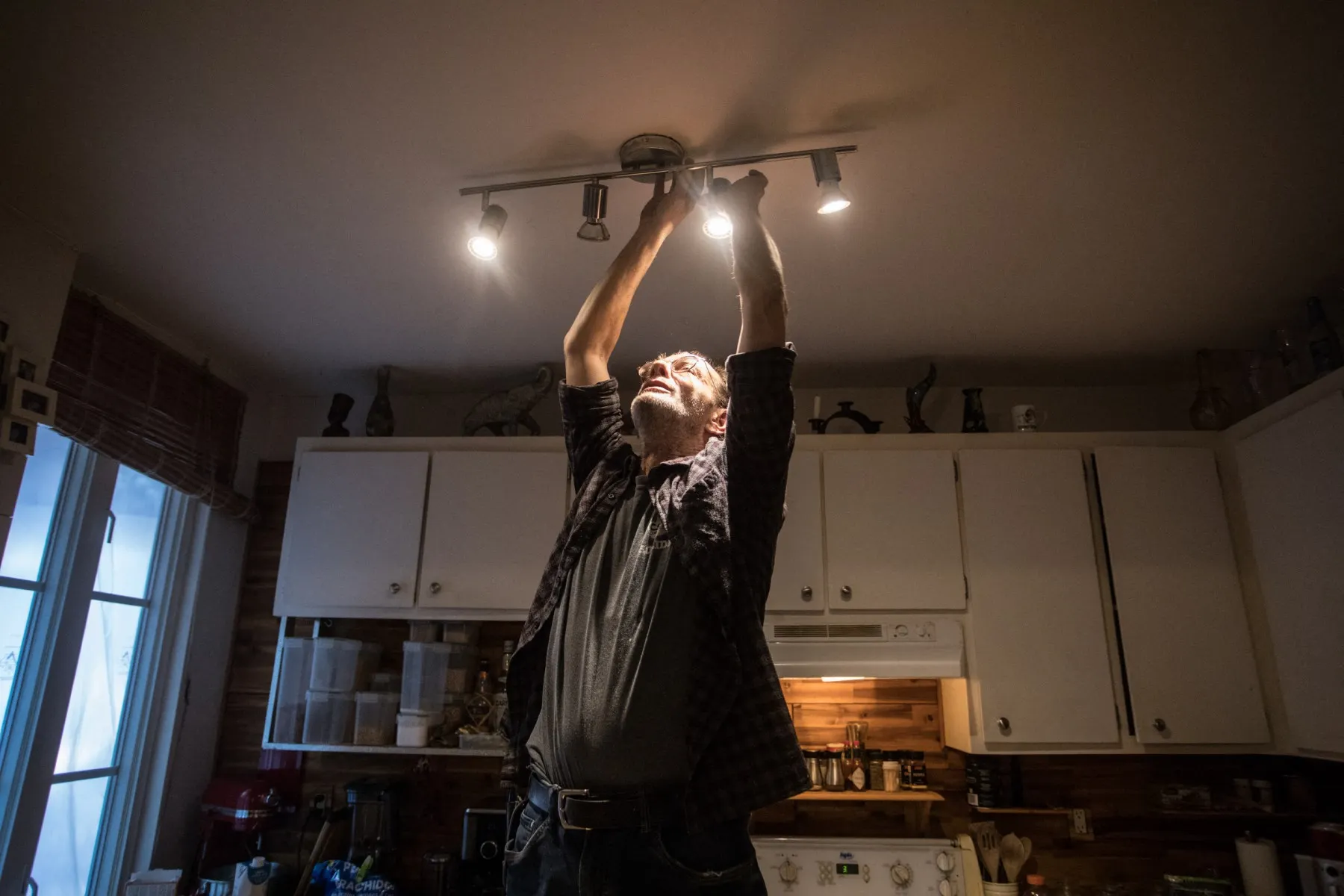
Wherever you go, some practical advice: make friends with the workers at your local hardware store. There’s a good chance you’ll need their help finding workers when your landlord refuses to fix things. And in many cases, you’ll be responsible for general maintenance — a big difference from living in New York and having a super in the building.
“Don’t be afraid of your landlord,” says George, who moved to Barcelona over fifteen years ago. “If they refuse to fix things, get it done yourself, keep the receipt, and deduct it from your rent.”
This month’s weekly oops is all about that. When I first moved to Barcelona, I was so enamoured with the city that nothing bothered me, including my cantankerous Catalan landlord who refused to fix anything. For months, I tied a sheet to the doorknob and anchored myself to pull the warped door open. Finally, I hired two workers from the hardware store to shave it down for me. But things got more complicated when my landlord refused to fix a leak. I went back to the States for Thanksgiving, and when I arrived back at my beachside flat in Barcelona, the walls were covered in different colours of mould. Green, brown, yellow; it was a mosaic!
In the end, I rented an Airbnb while I battled with my landlord to fix the mould. It took two months. To date, he’s one of my best friends in Barcelona, and we met because of mould. That’s sort of how moving goes: the more you can go with the flow and be open, the better you’ll fare.
COMPARE: How Americans can pick the right Spanish city to move to
