

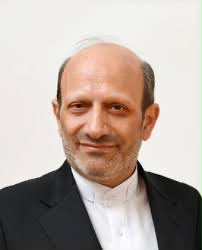
By H.E. Majid Nili, Ambassador of the Islamic Republic of Iran to Germany
Four questions came to my mind when I read the European Union’s statement of 31 August 2026, in which it welcomed efforts to increase economic pressure on Iran, including through the U.S.-led “Operation Economic Outcast.” Why does Europe believe this policy will work? What political logic and experience support this calculation? Why should a strategy that has relied for decades on pressure and confrontation now be expected to produce a different result? And, most importantly, what kind of stability does Europe believe it is creating?
1. Why believe that pressure will work?
For 47 years, Iran has been subjected to sanctions, economic restrictions, and threats of military action. Yet these policies have failed to produce the outcomes their architects promised. Military action has failed as a strategy, and the US has now shifted greater emphasis towards economic pressure. But this policy, too, will certainly not be effective. Iran is a resilient and largely self-sufficient country, with a strong capacity to withstand external pressure and defending its national interests. The latest unilateral and illegal American campaign “Operation Economic Outcast“ seeks to intensify economic pressure on Iran. The EU has welcomed these efforts while also calling for diplomacy and regional stability.
But Europe should ask itself a simple question: What has this approach achieved so before? Pressure can impose costs and create hardship, but imposing costs is not the same as achieving political objectives. If decades of sanctions have failed to produce the desired outcome, why should Europe assume that more of the same will suddenly succeed?
2. What has the American strategy achieved?
The history of U.S. policy toward Iran offers almost no reason for confidence. Washington has repeatedly moved between sanctions, maximum pressure, threats and sometimes negotiations. The result has been cycles of escalation rather than a durable solution. The lesson is not that diplomacy is impossible, quite the opposite. Diplomacy in accordance with respect and recognition becomes more difficult when pressure is treated as a substitute for political engagement.
Europe should consider whether increasing economic pressure creates the conditions for meaningful diplomacy or instead makes compromise politically more difficult for everyone.
3. Why should Europe follow Washington?
There is another question Europeans should ask themselves: Is this really Europe’s strategy, based on its own interests and calculations? Or is Europe once again adapting its policy to decisions made in Washington? European policymakers should consider not only the costs and benefits, but also questions of human values, dignity, and strategic independence.
The EU has important interests in West Asia that do not always coincide with those of the United States. Europe is geographically closer to the region and is directly exposed to instability, migration, energy insecurity, and disruptions to trade and shipping.
The Strait of Hormuz is a clear example. The EU’s own statement emphasizes the importance of freedom of navigation and safe transit through the Strait, as well as regional stability. If these are genuinely European priorities, then Europe should think carefully about policies that risk increasing confrontation in precisely the region where stability is most needed.
Europe should not confuse alignment with influence. Following another power’s policy does not necessarily give Europe greater leverage over its outcome.
4. What does Europe mean by “stability”?
This may be the most important question of all. Europe speaks of stability, de-escalation, diplomacy and freedom of navigation. These are understandable arguments, but stability cannot mean simply asking one side to absorb increasing pressure while the consequences of military escalation are treated as secondary.
Recent events in Iran were clear evidence of how dangerous the present trajectory has become. The U.S. barbaric airstrike on a residential building in Kuhestak on 1 September 2026, during a wedding celebration, caused civilian deaths and injuries. This incident recalls the earlier U.S. strike on a school in Minab on 28 February 2026, where 168 schoolchildren were killed by the American warmongers.
As a continuation of the February and June 2026 war against Iran, people and human beings bear the consequences of sanctions and military attacks. If the objective is stability, policies that deepen economic hardship and widen confrontation deserve serious scrutiny.
Europe should therefore ask not only whether pressure can be increased, but where that pressure leads. Europe still has a choice, Europe is not without alternatives. It can continue along a path increasingly defined by confrontation and economic coercion. Or it can use its political weight to promote dialogue, negotiation and a genuine reduction of tensions.
Iran does not expect Europe to agree with every Iranian position. Nor should Europe expect Iran to accept every European or American demand, diplomacy does not work that way. But diplomacy requires a basic recognition: sustainable security cannot be built through coercion.
If Europe genuinely seeks stability in West Asia, it should pursue policies that make stability more likely, not policies that risk reproducing the same cycle of escalation. Following Washington’s failed playbook would only expose Europe to greater risks and could further deepen the cycle of problem. The choice is ultimately Europe’s. But history offers a clear experience: Iran is a superpower of resilience and should not be underestimated or ignored.

