

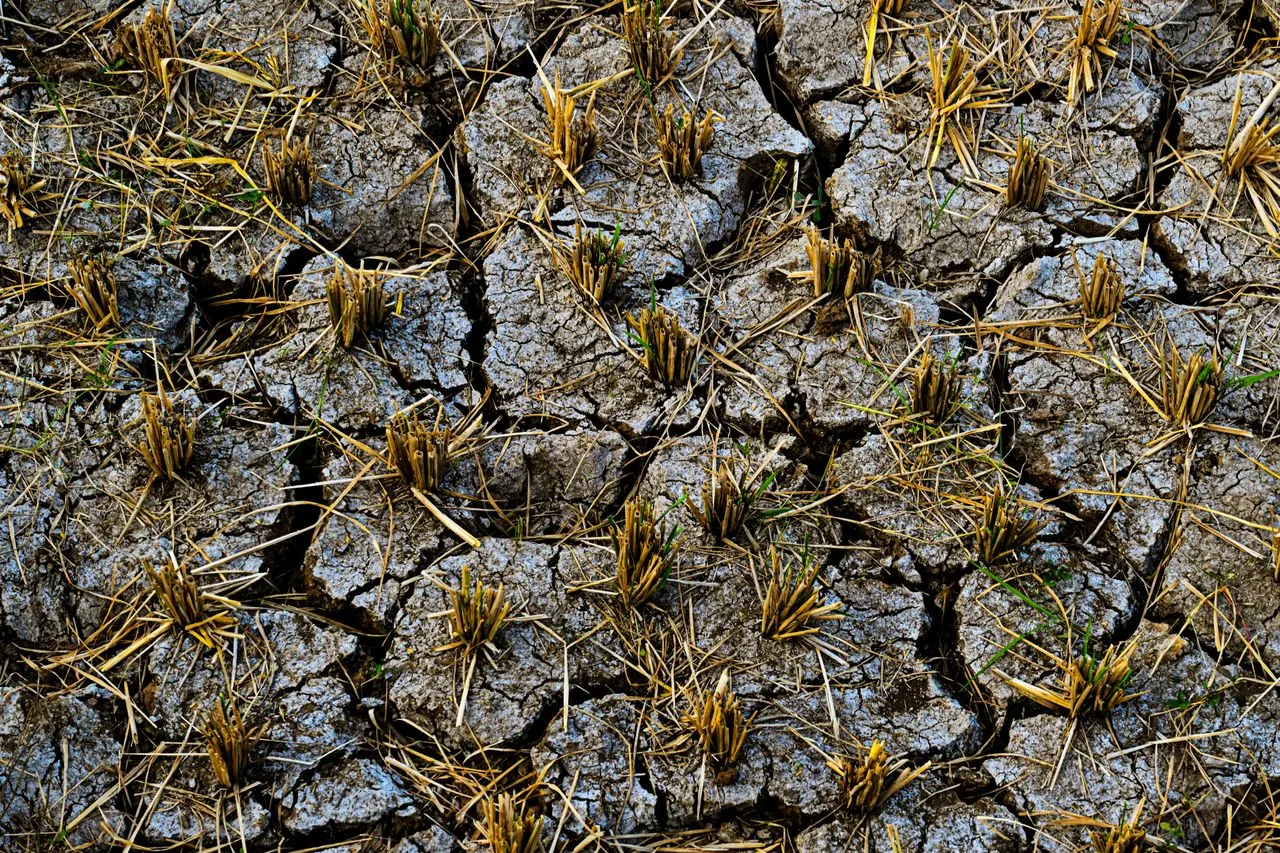
All the Swiss regions have suffered from a severe dry spell since June, and the consequences are significant and far-reaching, the government reports.
Switzerland broke the record for its hottest-ever June day on June 28th, with the temperature rising to 39C in Basel.
The rest of the summer has been scorching and extremely dry as well, with mercury reaching mid to high 30s and rain almost non-existent.
The resulting drought has hit Switzerland in many ways.
As The Local reported, “the drought is manifesting itself in the levels and flows of major lakes and rivers, which are sometimes reaching historically low levels for this time of year, as well as in the historically low filling rates of reservoirs across Switzerland.”
“Furthermore, increasingly large agricultural areas require irrigation. Many meadows are already appearing more yellow to brown than green, and the effects of the drought are also becoming increasingly visible on some trees. Currently, it is the birch trees, which thrive in moist conditions, that are suffering the most; some have already changed colour and are losing their leaves due to the drought and lack of water.”
Now, a government report published on August 24th details the full extent of drought-caused damages.
What does it reveal?
The report reiterates just how seriously Swiss rivers and lakes have been affected “by a severe water deficit…impacting virtually all sectors of water management.”
For instance, “This means that agriculture can no longer irrigate on the usual scale. Many Alpine farms have had to bring their cows down to the valley earlier than planned because water and fodder have become scarce. Many farms are already forced to draw on their winter fodder reserves. Some are therefore reducing the size of their herds.”
This situation is also impacting supply of merchandise.
Since the level of the Rhine river is significantly lower than usual, ships transporting goods from the North Sea to Switzerland “can now only carry a small fraction of its usual cargo. “
And a bottleneck that formed upstream means that “navigation may even come to a temporary halt” altogether.
But that’s not all.
Four nuclear power plants are currently in operation in Switzerland, providing about 30 percent of the country’s electricity.
However, two smaller reactors at the Beznau “have had to repeatedly reduce their power output or be temporarily taken offline in recent weeks,” according to the report.
“This is due to the high temperatures of the Aar River, whose water is used for circulating cooling.”
So far, however, energy supply has not been affected.
What other consequences of the drought are included in the report?
Arid soil
“Without sufficient moisture, soils are less able to supply plants with nutrients,” the report says.
“The activity of microorganisms such as bacteria and fungi also decreases, further reducing soil fertility and the supply of nutrients to trees.”
This is bad news because “soil organisms play an important role in the decomposition of organic matter and the recycling of nutrients. When their activity is limited by drought, these processes slow down, which can affect soil fertility and overall soil health.”
Dry trees
“In regions where rainfall has been low or even nonexistent in recent weeks, the situation for trees can be, or will become, very precarious,” the government said.
In fact, the risk of forest fires has been at its highest level in most parts of Switzerland during the summer months.
READ MORE: What you need to know about wildfire risks in Switzerland this summer
Falling branches
Under the effect of persistent heat and drought, “seemingly healthy branches can break suddenly, often on hot, windless afternoons. It is impossible to detect them in advance by simple visual inspection.”
Consequently, the report points out that “large or isolated trees, with extended branches, can therefore present a real danger. The warnings issued by several Swiss cities and certain forest services are therefore justified and logical.”
Fewer – and more expensive – produce
The drought has also impacted locally-grown fruit and vegetables.
“Salads have been totally devastated, while greenhouse vegetables, such as tomatoes, are already showing declining yields,” Xavier Patry, director of Farmers’ Union, told RTS public broadcaster.
Additionally, ‘storage vegetables ‘ like carrots and potatoes, harvested only once a year, risk being sorely lacking and, consequently, more expensive, he added.
And if you are a fan of Swiss wine, you will be saddened to hear that grapes used in wine production have suffered as well.
In some regions, the harvest – usually occurring at the end of September and into October – will begin already in August, and the grapes will be smaller than usual due to lack of irrigation.
Will Switzerland eventually dry out?
That is a frightening prospect, but the government report says that “drought will continue to be a growing concern as climate change continues.”
“We will be less able in the future to compensate for hot, dry periods, as the water supply from melting snow and glaciers will decrease. Switzerland will therefore be more dependent on precipitation and more vulnerable due to its uneven distribution.”
This is a very likely scenario, as experts agree that heatwaves will become more frequent, hotter and last longer in the future, due to climate change caused by the burning of fossil fuels:
READ MORE: Just how hot and dry will Swiss summers become in future?
