

Taxing all 938 billionaires at 100% wouldn’t stop the $40 trillion national debt, says Elon Musk. Bernie Sanders says taxing them 5% cuts you a check
The richest person in the world and the most well-known person leading the cause against creating more people like him have many differing views on taxing the ultrawealthy.
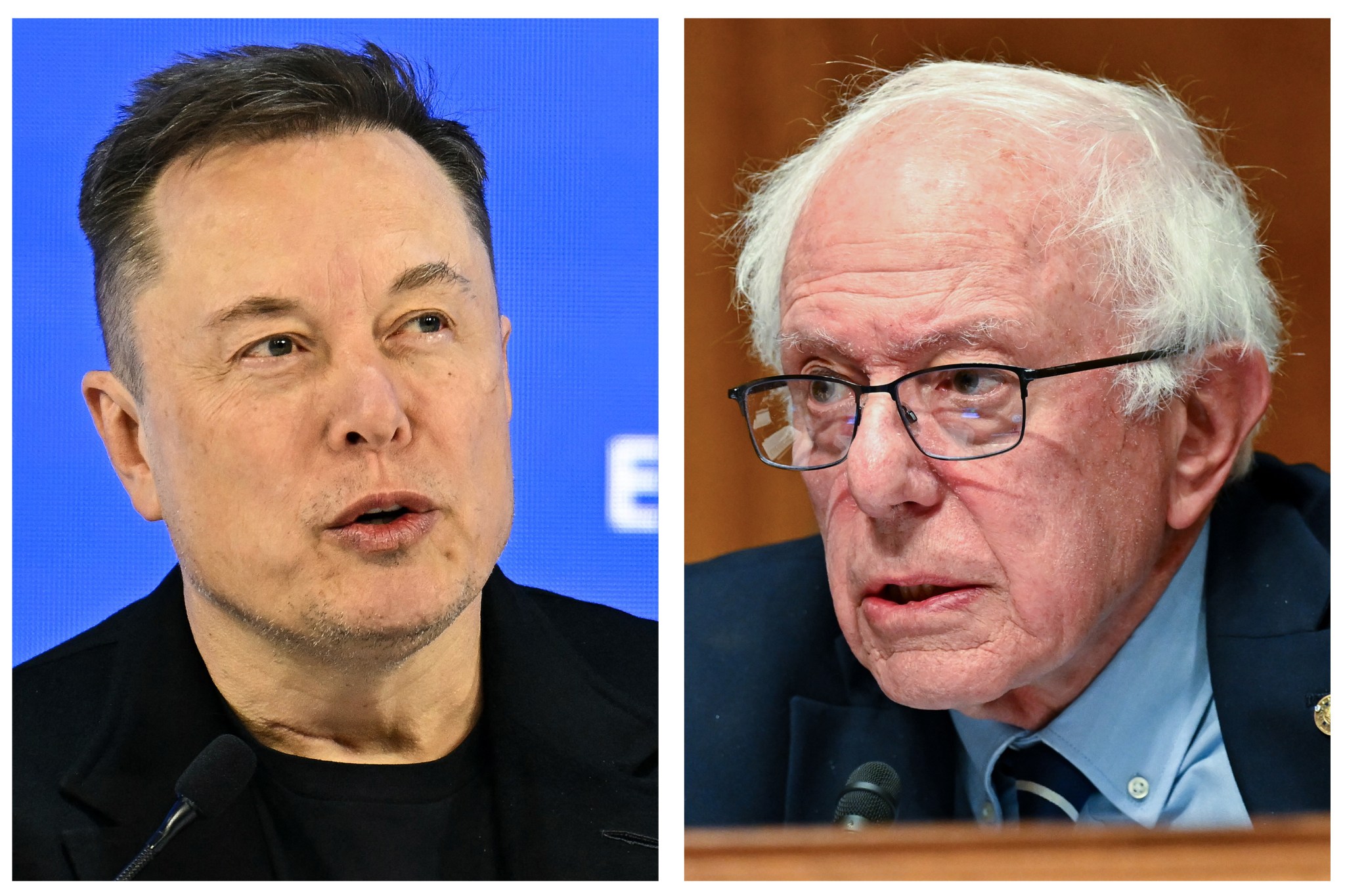
But now, Elon Musk and Sen. Bernie Sanders (I-Vt.), two men on opposite ends of the ideological spectrum, are using the same math to make opposite arguments for how much billionaires should be taxed, and how that money should be allocated.
In Musk’s view, collecting every cent billionaires rake in pales in comparison to federal debt, which just hit $40 trillion and counting.
“Even if you tax every billionaire in America at 100%, it barely makes a dent in the national debt,” Musk wrote on X in 2023. “In the end, the government will be forced to tax everyone to pay the debt.”
Sanders agrees—but he’s not looking to tax billionaires for all their worth and he’s not trying to eliminate the debt. Instead, he wants enough to give nearly three-quarters of the nation a nice check, offset cuts to federal health programs, and fund social services.
How many billionaires are in the country?
Sanders, along with Rep. Ro Khanna (D-Calif.), introduced a billionaire tax earlier this year and suggested there are only 938 billionaires in the country, who, combined, hold a net worth of $8.2 trillion.
Simple math would prove Musk’s logic correct: $8.2 trillion will barely plug a fifth of the national debt.
But that’s not what Sanders and Khanna are suggesting: The two put forward the “Make Billionaires Pay Their Fair Share Act,” which proposed an annual 5% wealth tax on individuals with a net worth of $1 billion or more.
Sanders estimates the bill would generate $4.4 trillion over its first decade. And in the first year, that revenue would fund a one-time $3,000 check for every American in a lower- or middle-income household, defined as those earning $150,000 or less annually, or roughly 74% of the nation.
In the years that follow, Sanders believes the revenue from the tax would reverse the $1.1 trillion in Medicaid and Affordable Care Act cuts, establish a $60,000 minimum salary for public school teachers, and cap childcare payments at 7% of household income for working parents.
“At a time of unprecedented income and wealth inequality,” Sanders said in the press release, “this legislation demands that the billionaire class in America finally pay their fair share of taxes so that we can create an economy that works for all of us, not just the 1%.”
How much is the U.S. paying in debt service?
The U.S. is paying nearly $1 trillion per year just to service the debt—a figure that has nearly tripled over five years and has surpassed what the government spends on Medicare. The Committee for a Responsible Federal Budget projects interest payments will exceed $1.5 trillion by 2032. America is, at an accelerating pace, borrowing money to pay interest on money it already borrowed.
Musk and Sanders are making two different arguments. Musk’s framing casts a billionaire tax as a debt solution, and by that measure, it fails. Sanders’s framing casts taxing billionaires as a redistribution mechanism, a way to put money back in the pockets of working Americans and fund social services. By that measure, a 5% annual wealth tax generating $4.4 trillion over a decade is significant.
Musk has warned more broadly America is on a path to going bankrupt “1,000%” if spending isn’t curtailed. The debt crisis is structural, rooted in decades of spending that outpaces revenue, and no single tax can undo that. The national debt has grown by more than $11 trillion over the last five years alone.
But Sanders’s counter is equally pointed: The debt crisis and the affordability crisis are not the same problem, and solving one doesn’t require ignoring the other. A $3,000 check won’t fix the national debt. But for a middle-class family barely keeping up with inflation, it may fix something more immediate.
A version of this story was originally published on Fortune.com on March 17, 2026.
More on the billionaire tax:
o
