


BAKU, Azerbaijan, August 13. Kyrgyzstan sees
stronger connections with both Central Asian countries and China as
important for advancing regional connectivity following the
Cholpon-Ata summit.
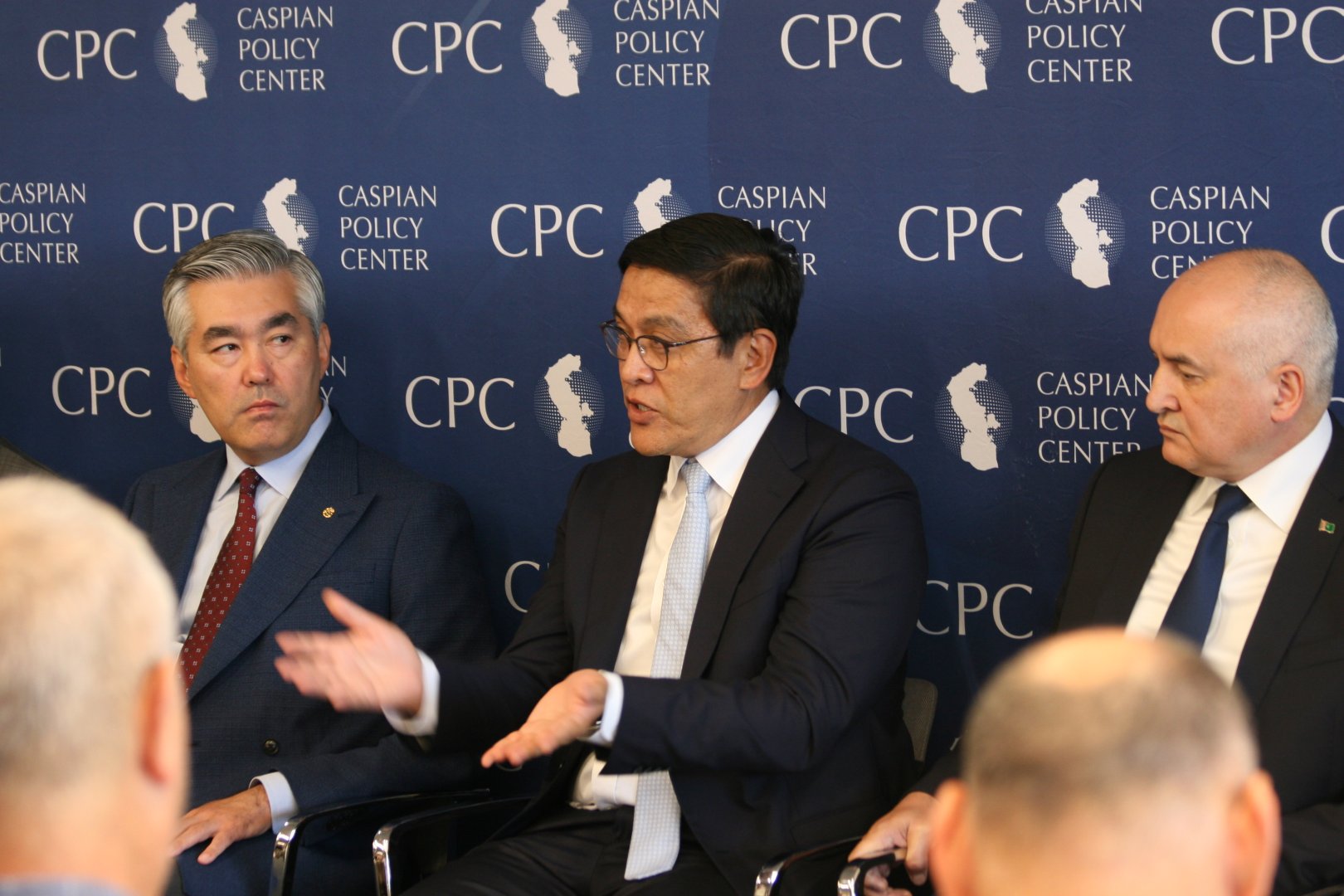
This was reflected in a publication of the Caspian Policy Center
following Kyrgyz Ambassador to the U.S. Edil Baisalov’s remarks
during a roundtable on the Cholpon-Ata summit and next steps for
Trans-Caspian cooperation.
“We have been talking about the Western and Trans-Caspian
connection, but of course we also need to think about our Eastern
neighbor, the People’s Republic of China,” Baisalov said.
He noted that the China-Kyrgyzstan-Uzbekistan railway connection
would be “very significant.”
“We need to appreciate the momentum,” Baisalov said.
Trend noted in its
earlier analytical article that Kyrgyzstan’s growing focus on
China is closely linked to the expansion of its transport
infrastructure, industrial production and bilateral trade. The
article highlighted the development of the Barskoon-Bedel highway
and the Bedel border crossing as part of efforts to strengthen
connectivity with the Chinese market.
Against this backdrop, the remarks by the Kyrgyz ambassador at
the roundtable come as the country is simultaneously developing its
western and Trans-Caspian connections and strengthening its eastern
link with China. Trend’s analysis showed that these directions are not
necessarily competing priorities: expanding transport
infrastructure toward China could provide Kyrgyz producers with
additional access to a rapidly growing export market, while
Trans-Caspian routes offer another channel for regional and
international trade.
Meanwhile, the Cholpon-Ata Declaration was signed on July 31,
2026, by the presidents of the five Central Asian countries and
Azerbaijan at an informal meeting in Kyrgyzstan. The document
formalized the expanded regional cooperation format following
Azerbaijan’s integration into the Central Asian consultative
process and places greater emphasis on practical cooperation in
trade, transport, logistics and energy.
The declaration comes as the expanded six-country format, often
described as C6, seeks to translate growing political coordination
into economic and infrastructure projects. Areas discussed in the
regional framework include the Trans-Caspian transport route,
energy cooperation, critical minerals and digital infrastructure.
The broader agenda is aimed at strengthening connectivity between
Central Asia, the Caspian Sea and markets beyond the region.
For reference, the Caspian Policy Center (CPC), which hosted the
roundtable attended by the ambassadors, is a Washington-based
nonprofit think tank focused on economic, political, energy and
security issues in the Greater Caspian region. It organizes
research, policy discussions and forums bringing together
government officials, business representatives and experts from the
region and the United States.


