


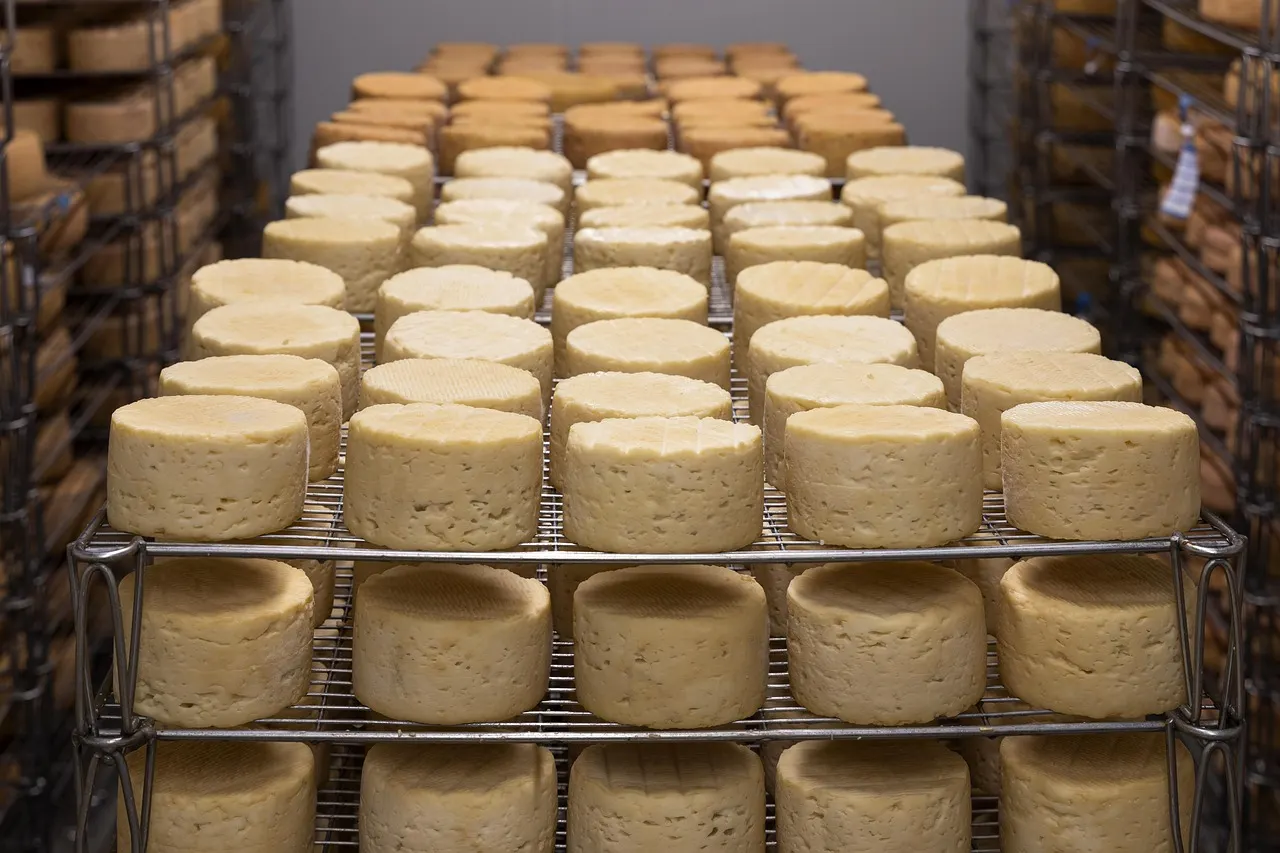
Increasingly warmer weather is affecting many aspects of life, including Switzerland’s iconic product – its mountain cheese.
So far, this summer’s record-breaking heatwaves have had negative repercussions on human and animal health, nature, water supply, as well as key infrastructure such as the road network and railroad tracks.
READ MORE: How the heatwave has hit daily life in Switzerland
Also affected are hiking trails – both mountain and lowlands ones – because extreme heat has increased the risk of rockfalls, black ice, and thawing permafrost.
But that’s not all.
Extremely high temperatures are also affecting the production of Alpine cheeses.
How are mountain cheeses different from ‘regular’ ones?
They are mostly made from raw (rather than pasteurised) milk sourced from cows grazing on high-altitude pastures.
According to a report by RTS public broadcaster, however, the heat is disrupting the ripening process of alpine cheeses.
“Temperatures in some cellars now exceed 16C rather than the required 12–13C.”
In the past, the natural coolness of the ground was sufficient – but it no longer is.
Trying out new methods – but at a cost
Mountain dairy farmers are therefore obligated to find alternative techniques of ‘cooling down’ the cheese, such as installing climate control in their cheese cellars.
This measure, however, comes at a price which, logically, will ultimately be passed on to consumers.
An alternative solution, which a number of cheese producers are opting for, is to entrust cheese maturation to centralised, properly cooled facilities located off-farm.
Such facilities already exist, notably in the cantons of Bern, Valais, Fribourg, and Glarus.


