

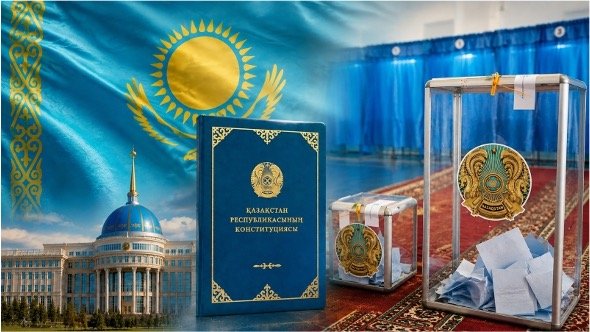
As Kazakhstan approaches the parliamentary elections scheduled for 23 August 2026, the country enters a new stage of its political development, demonstrating the results of a consistent programme of institutional reforms. Over recent years, Kazakhstan has consolidated its position as Central Asia’s largest economy while continuing to modernize public administration, expand political representation, and strengthen public participation in governance.
Economic Development and Institutional Capacity
Kazakhstan’s position as the leading economy in Central Asia provides a solid foundation for institutional development. With GDP per capita exceeding US$17,500 and a steadily diversifying economy beyond the energy sector, Kazakhstan has outpaced its regional neighbours in developing sophisticated administrative institutions and modern regulatory frameworks. The country’s performance in the World Bank’s Ease of Doing Business rankings and its commitment to internationally recognized standards of corporate governance reflect a level of institutional maturity that remains uncommon across the region.
The Central Asian context is essential in understanding these developments. While all countries in the region continue to address the institutional legacy of the Soviet era and the challenges associated with post-authoritarian governance, Kazakhstan has invested considerably more resources in modernizing state institutions, digitalizing public administration, and establishing relatively independent regulatory bodies. Although these reforms have not yet resulted in a Western-style liberal democracy, they represent measurable progress in strengthening bureaucratic professionalism and the institutional foundations of the rule of law.
Democratic Reforms and Political Evolution
Since 2019, Kazakhstan has implemented substantial constitutional and legislative reforms. The transition from a predominantly presidential system toward a mixed semi-presidential model, introduced following a nationwide consultation process, has sought to distribute political authority more broadly than in previous years. These reforms have expanded the powers of Parliament, strengthened mechanisms for civic participation, and introduced new channels through which public opinion can be incorporated into government decision-making.
Today, Kazakhstan is increasingly viewed as a leading platform for political and institutional modernization in Central Asia. The continued development of civil society, improvements to electoral legislation, broader public dialogue, and the gradual modernization of state institutions have created a stronger foundation for the country’s democratic development.
The process of democratic transformation is, however, still ongoing. Kazakhstan continues to strengthen the rule of law, enhance judicial institutions, and promote the further development of independent public institutions. Nevertheless, the consistency of its reform agenda, institutional resilience, and commitment to gradual political modernization have enabled Kazakhstan to maintain its reputation as Central Asia’s most developed state and one of the region’s leading examples of democratic reform.
The upcoming parliamentary elections will represent not only a significant domestic political milestone but also an important indicator of the continued evolution of Kazakhstan’s model of governance. Their outcome will contribute to strengthening public confidence in state institutions and reaffirming the country’s commitment to the further modernization of its political system.


