


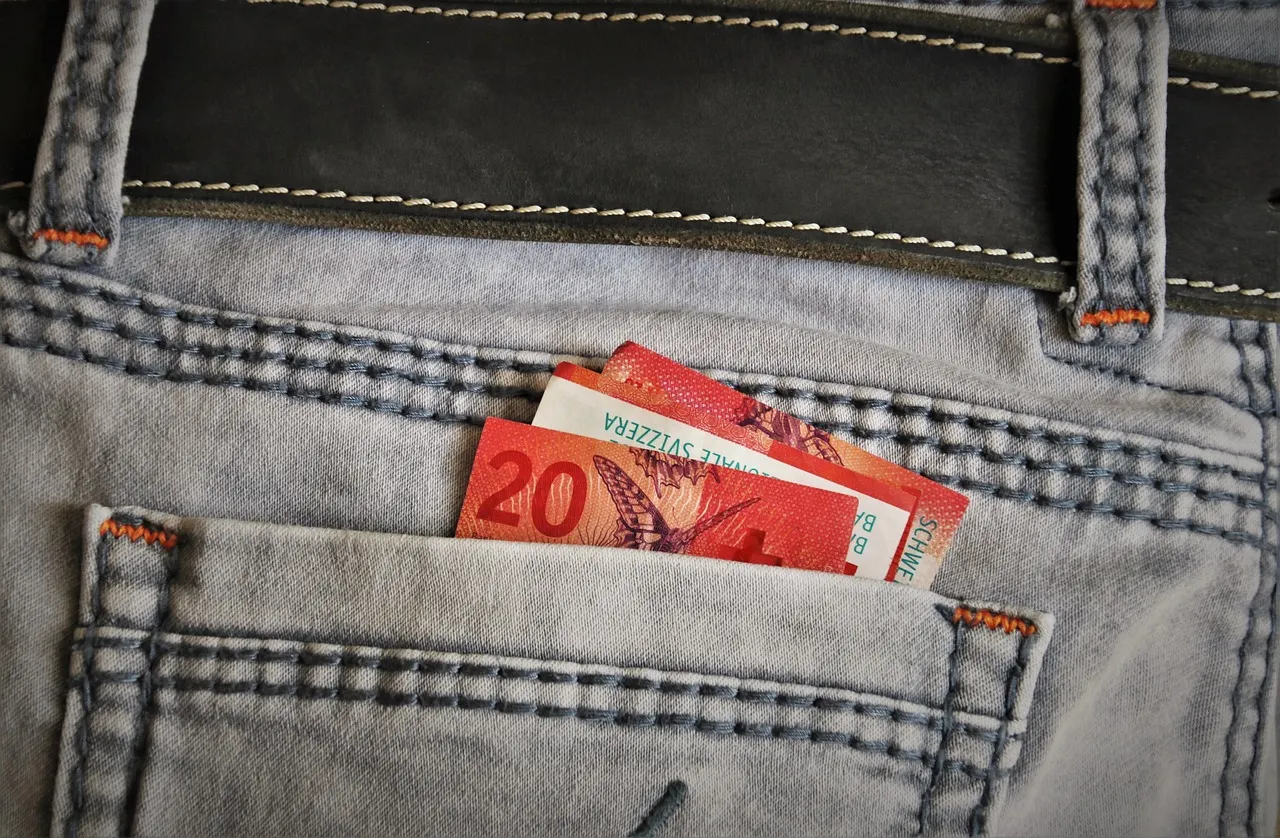
Employees in Switzerland have higher net salaries than their counterparts elsewhere in Europe. But why exactly do they earn more?
It is a well-known fact that Swiss wages are among the highest in the world, which explains why so many people immigrate here.
In 2024 for instance (the last year for which official data is available), the median gross monthly salary for a full-time position was 7,024 francs, compared to 6,788 in 2022.
And when the next set of data about earnings is published, that figure will he higher as well.
What is even more important is that the net disposable income is also highest in Switzerland, because the country’s tax rate is lower than elsewhere as well.
In fact, other data indicates that employees in eight Swiss cities (Zug, Zurich, Basel, Bern, Geneva, Lausanne, Lugano, and Lucerne) have more disposable income than workers living in other European cities.
Another comparison
Unlike many other countries, Switzerland has no national minimum wage.
However, a few cantons do have legislation setting the minimum pay on their territories – ranging from 21.40 francs per hour in Jura to 24.59 francs per hour in Geneva (Switzerland’s highest).
These minimum wages top the averages in other European countries
(Note than the vast majority of employees in Switzerland earn more than the minimum imposed by law in several cantons).
So why are wages higher in Switzerland?
There is no one, simple answer to this question.
Instead, a variety of factors play a role in determining how much an employer is willing to pay.
Let’s look at some of them.
Strong economy
Switzerland’s economy is the strongest, most stable in Europe, and most innovative globally as well.
Generally speaking, when the economy is strong and thriving, employers can afford to pay higher wages to incentivise the workforce to keep up the productivity and profitability level of companies.
High demand for skilled workers
Switzerland has been in the throes of the worsening labour shortage, which has now reached “its highest level,” according to a report by the University of St. Gallen.
Employers eager to fill vacant positions will offer workers high salaries, along with other perks as well.
This extends also to cross-border commuters, whose wages in Switzerland are double or even triple those they’d earn in their own countries.
READ ALSO: Why cross-border workers from Germany love their Swiss jobs
Do these salaries compensate for the high cost of living?
The answer to this question depends, logically, on how high your wages are versus your fixed costs (rent / mortgage, health insurance premiums, food, transport, clothing, taxes, etc.), and also your overall spending habits on “non-essentials” such as entertainment, restaurants, travel, and leisure activities in general.
That, of course, applies to all countries, not just Switzerland.
One way to look at the salaries versus the cost of living is through the purchasing power parity (PPP) — the financial ability of a person or a household to buy products and services with their wages.
An in-depth analysis by a digital employment platform Glassdoor provides some interesting and no doubt surprising insights into Switzerland’s PPP in comparison with other nations.
“Taking not only income and cost of living into account, but also the effects of differences in taxation, it is possible to derive an indication of after-tax, local purchasing-power-based, standard of living”, the study reported.
“On this basis, the highest overall standard of living is found in the cities of Switzerland, Denmark, and Germany. Although the cost of living can be relatively high in these countries, so are average wages and purchasing power”.
Also, despite higher overall prices, households in Switzerland are putting aside more money at the end of each month than their European counterparts, a study from HelloSafe consumer platform indicates.
Swiss households are saving nearly 22 percent of their income, while the European Union recorded an average savings rate of 10.3 percent – that is, 11.6 points below the average Swiss rate
So the salaries (at least the ones on the higher end) do seem to go further in Switzerland.
READ ALSO: How do the Swiss manage to save more money than other Europeans?


