


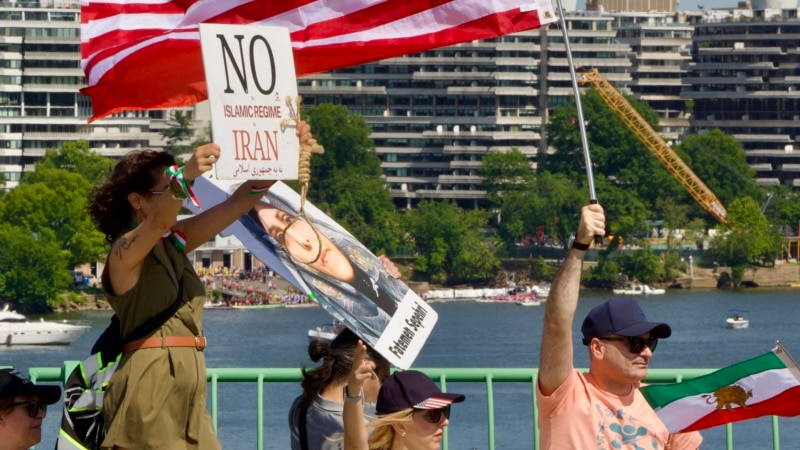
The US State Department sharply criticized the execution of Iranians by authorities and called for Tehran to release political prisoners amid signs it has ramped up its use of the death penalty in recent months to sow fear and quell dissent.
Iran is one of the world’s leading executioners, according to human rights groups, who say Tehran is using the cover of the current war with the United States to justify increased usage of capital punishment and spread fear among Iranians.
According to the latest data, 424 people have been put to death so far in Iran in 2026.
In a post on July 26, Riley Barnes, US assistant secretary of state for democracy, human rights, and labor, called for a halt to the execution of individuals “for peacefully exercising human rights and fundamental freedoms.”
“We condemn the Iranian regime’s action in executing its own citizens, brave young Iranians who dared to speak out,” Barnes wrote on X.
“We join the people of Iran in calling on the regime to release all political prisoners and stop executing individuals for peacefully exercising human rights and fundamental freedoms. The world is watching,” he added.
The latest execution to date was that of 26-year-old law graduate Mehdi Khaneki, whom the Iranian judiciary hanged on July 22 for alleged weapons offenses and actions that “benefited” Israel, the United States, and “hostile groups.”
The Paris-based National Council of Resistance of Iran, the political arm of Mojahedin-e Khalq (MEK), disputed the charges, saying Khaneki was hanged because of his membership in the group and participating in protests in the city of Karaj.
US officials, including US President Donald Trump, have repeatedly condemned Iran for executing protesters.
After Iran’s judiciary announced on July 19 that two men had been executed over their alleged involvement in violence linked to antigovernment protests that began in December and intensified in January amid widespread economic discontent, Trump called Iran leaders “savages.”
Trump reposted several messages on his Truth Social platform about the executions of Erfan Esfandiari and Gol Mohammad Mohammadi, including one where he reposted a message about Mohammadi’s execution while adding: “The latest one of 52,000, plus, innocent protesters. Savages!!!”
Trump’s claim that 52,000 protesters were killed by authorities in the uprising early this year, has not been independently verified.
According to human rights groups, at least 7,000 people were killed during the nationwide protests, although the real death toll is believed to be significantly higher.
Most of the killings occurred from January 8 to 10, the peak of the crackdown. Tens of thousands of others were arrested nationwide.
Esfandiari and Mohammadi were convicted for allegedly being connected to the killing of four police officers in Isfahan during the January protests.
Rights groups say the charges were fabricated and that their trials were held without access to independent legal counsel.
Politically Motivated Executions
Amnesty International said Iranian authorities have sharply escalated politically motivated executions since the US and Israeli attacks on Iran began in late February, including the execution of people arrested in connection with the January protests and individuals accused of spying for Israel.
“The international community’s failure to pursue justice is emboldening the Iranian authorities to continue committing atrocity crimes,” Amnesty Secretary-General Agnes Callamard said on July 8, the six-month anniversary of the deadliest day of the crackdown on protesters.
The Norway-based Iran Human Rights Group (IHRNGO) has warned that authorities could use the broader conflict to accelerate executions of political prisoners.
“With the breakdown of the cease-fire and the resumption of the war, we are deeply concerned that the authorities will exploit the situation to intensify the execution of political prisoners,” IHRNGO Director Mahmood Amiry-Moghaddam said in a statement on July 16 following the execution of Mohammad Amini Dehaghani, another protester.
“Hundreds of political prisoners and protesters are currently facing capital charges, and we estimate that around 100 have already been sentenced to death.”
Watchdogs have urged action to prevent the execution of 10 men currently sentenced to death over the January protests in Isfahan.
In a statement on July 23, the Independent International Fact-Finding Mission on the Islamic Republic of Iran “urged Iranian authorities to immediately halt the executions of 10 young men sentenced to death after taking part in a protest in Isfahan earlier this year,” adding that the UN body “strongly condemned the execution on 19 July of two other men in the same case.”
“The Mission is gravely concerned by Iranian authorities fast-tracking capital punishment cases that are related to the protests and national security issues,” it said.
The scale of the repression, which began with security forces killing thousands of protesters in January, has drawn widespread condemnation, including through a hunger strike by hundreds of death row prisoners at the Ghezel Hesar prison where Khaneki was executed.
The protest, which began on July 12, spread outside the prison, with over 500 family members demonstrating in solidarity, facing violent crackdowns from security forces, while inmates endure severe health deterioration and communication blackouts.
Amnesty International reported in May that Iran carried out at least 2,159 executions in 2025, describing the figure as unprecedented and the highest annual total recorded since 1981.


