


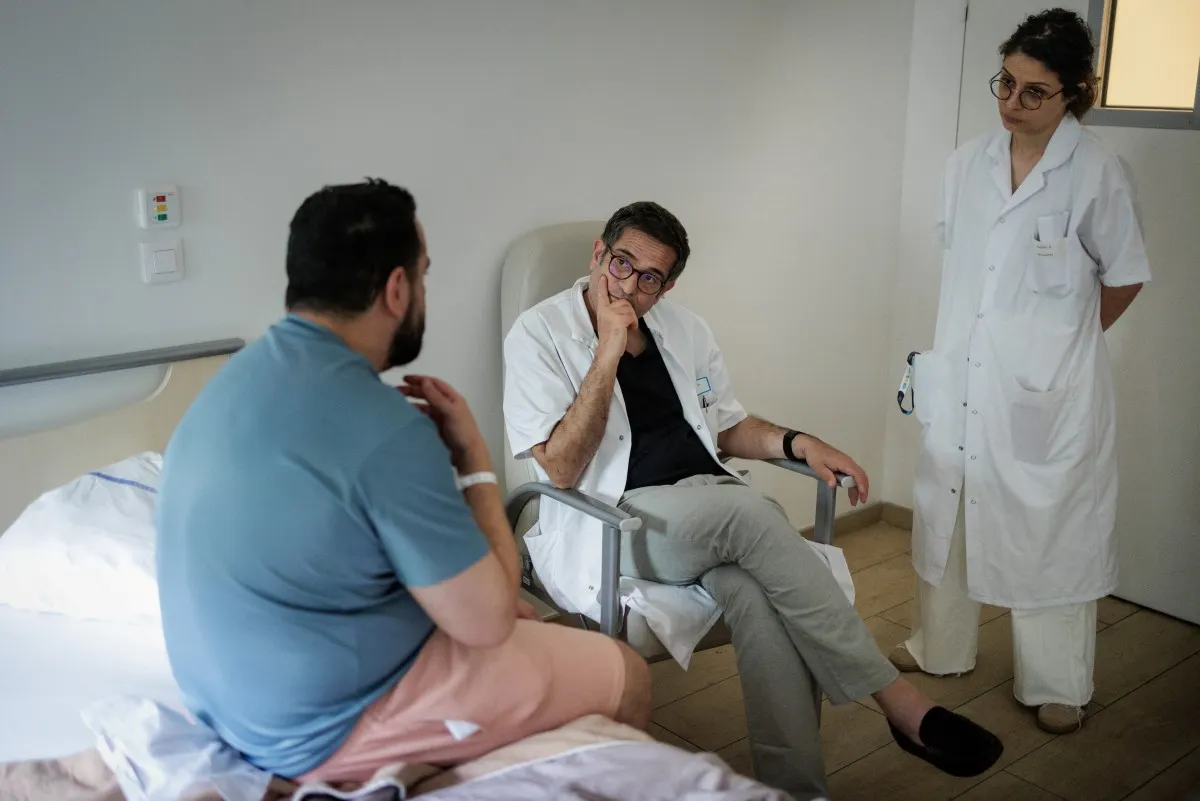
In this edition of Americans in Spain, we explain what to expect from the Spanish public and private healthcare systems, and speak to Americans already in the country about how they cover their medical needs as efficiently as possible.
For Americans moving to Spain, health coverage is often one of the biggest adjustments, usually for the better.
For private insurance, you may find yourself paying the same annual price in Spain as you would pay monthly in the US, and the public healthcare system is better than many weary Americans first assume.
But that doesn’t mean you won’t face an adjustment period as you navigate options and bureaucracy.
Depending on your situation as an American national who’s moved to Spain, you may need to start with private insurance, and then in some cases you can switch to or add public coverage.
Spain is known to have one of the best public medical systems in Europe, so should you stick with private or go public?
Here’s what you need to know.
Going Public
Once you’re contributing to the Spanish Social Security system, you can access the public health system.
If you’re in Spain on a work visa or register as autónomo, you can generally join the public healthcare system after registering with Spanish Social Security.
To do so, you’ll need to register with the Social Security system, then bring your registration documents, passport, and proof of address (empadronamiento) to your nearest local health centre (Centro de Salud) to be assigned a doctor and receive your health card.
The case may be different for Americans choosing a Non-Lucrative Visa (NLV) or a Digital Nomad Visa (DNV).
READ ALSO: What kind of health insurance qualifies for Spain’s non-lucrative visa?
The NLV prohibits work, meaning you’re generally not paying into the Spanish Social Security system.
For Digital Nomad Visa holders, eligibility depends on whether you’re contributing to the Spanish Social Security system or covered under an applicable international social security agreement.
READ ALSO: The reasons why Spain is a top choice for American digital nomads
There is a loophole, though — a very legal one. After one year of living in Spain, if you meet the eligibility requirements, you can buy into the public healthcare system.
The programme is called Convenio Especial and currently costs around €60 per month for people under 65 and about €157
per month for those 65 and older.
Private Insurance
Proof of private health insurance is required when applying for many Spanish visas and residency permits, and you’ll need an official certificate in Spanish provided by the insurer.
READ ALSO: Which Spanish work visas are Americans successfully applying for?
Ensuring you choose the right plan, which is valid from the moment you arrive and for the duration required by your visa or residency application, is crucial to setting up your next chapter in Spain.
The plan must:
- Provide comprehensive private health insurance with coverage equivalent to the Spanish public healthcare system, with no co-payments and no waiting periods if required for your visa application.
- Be issued by an insurer authorized to operate in Spain and offer nationwide coverage across Spanish territory.
- Meet the specific coverage requirements of the Spanish consulate or immigration authority handling your application, as these can vary.
- If moving as a family, each family member must have their own policy.
Student visas offer a bit more grace and require an insurance plan that covers the full duration of your study period, including repatriation to your home country.
The major health insurers in Spain include Sanitas, SegurCaixa Adeslas, Asisa, and DKV.
When choosing a plan, it’s worth considering cost, English-language options, access to care, and coverage outside of Spain.
Regarding cost, each option will be considerably less than private health insurance in the US. One of our American readers reports that one year of coverage with SegurCaixa Adeslas costs slightly more than a month of comparable coverage in the United States.
READ ALSO: Can you get private health insurance for a visa in Spain if you have pre-existing conditions?
For English language access, Sanitas is known to be one of the most American-friendly entry points. They have an easy-to-use app that lets you search for doctors based on specialty, location, and language.
There is also a dedicated English-speaking help line and a robust telehealth network.
I chose Sanitas, and it’s been a good experience; however, I was surprised by how many doctors within the system only speak Spanish.
For me, the advantages of Sanitas include a robust digital platform and accessibility to doctors without much hassle. For example, if I want to see an endocrinologist, I book an appointment through the app, without needing approval.
Now, the downside is that it can be too digital; at times, I’ve struggled to contact my doctor or the office directly.
Another downside to Sanitas is access to care; the network isn’t as wide as SegurCaixa Adeslas, which generally has the largest provider network in Spain.
So, if you’re moving to a smaller town in Spain and not settling in a major hub like Barcelona or Madrid, you may be better off choosing SegurCaixa Adeslas.
And don’t forget about coverage outside of Spain. I travel frequently for work and have relied on Sanitas for emergency coverage abroad several times.
My doctor’s office in Pittsburgh was surprised when a representative from Sanitas called them with credit card information to pay my bill in full on the spot. There is basically zero hassle involved.
That being said, coverage for medical emergencies abroad varies considerably between plans and insurers.
If you’re concerned about major costs back in the States, compare overseas emergency coverage limits carefully before choosing a plan or consider adding supplemental coverage if available.
Adeslas and Asisa generally offer less extensive emergency coverage abroad than some competing plans, making them better options for people planning to spend most of their time in Spain.
What’s right for you?
“Our family – a senior citizen, my wife and I, and our kid – used a variety of health services in five years in Spain,” Paul from Indiana told The Local.
“For private cover, we used DKV and Sanitas. I greatly preferred DKV. A little more, but worth it. Quick to pay claims, good network of doctors.
“We also did the public health plan, which is good. For your GP it can be fine. For some specialists there’s a terrible wait, for others it’s no wait at all, and this varies by locale.”
Most Americans The Local Spain spoke to opted into the public system when eligible and kept private insurance as well.
“We use private and public. Both have benefits,” added George from Pennsylvania.
This dual approach is common, but many Americans can struggle with the initial onboarding to the public healthcare system.
It may still be worth it though.
“The public health coverage here is far better than what was available in the US,” Craig from Missouri concludes.
For shorter wait times and more English-language options, private may be better, but for serious conditions, surgeries, and complex scenarios, the public healthcare system will offer a wider range of service providers and give you access to the country’s excellent medical services.
When choosing what’s right for you, consider how long you’ll stay in Spain, if you travel often, where you’ll live in Spain, and your price point.
I mentioned coverage outside of Spain, which is exactly what I just relied on from my private health insurance during my travel in Zanzibar and Tanzania .
I visited the hospital in both places. After traveling on a dirt road from a bungalow at the end of the island to a small emergency health clinic, Sanitas approved my treatment and paid in full.
There are cases where they are not accepted (like Tanzania’s mainland). In this case, they offer reimbursement.
Alone, covered in a rash and leaning against any wall I could find from the fatigue, I was relieved to know my insurance had my back (which is something I could never imagine saying in the US).
Days later, when I returned (the allergic attack worsened, and I managed to also step on a sea urchin), the company quickly covered the visit.
Lesson learned: get good insurance and avoid walking around the Indian Ocean at low tide.
READ ALSO: How to get healthcare in Spain as a tourist


