

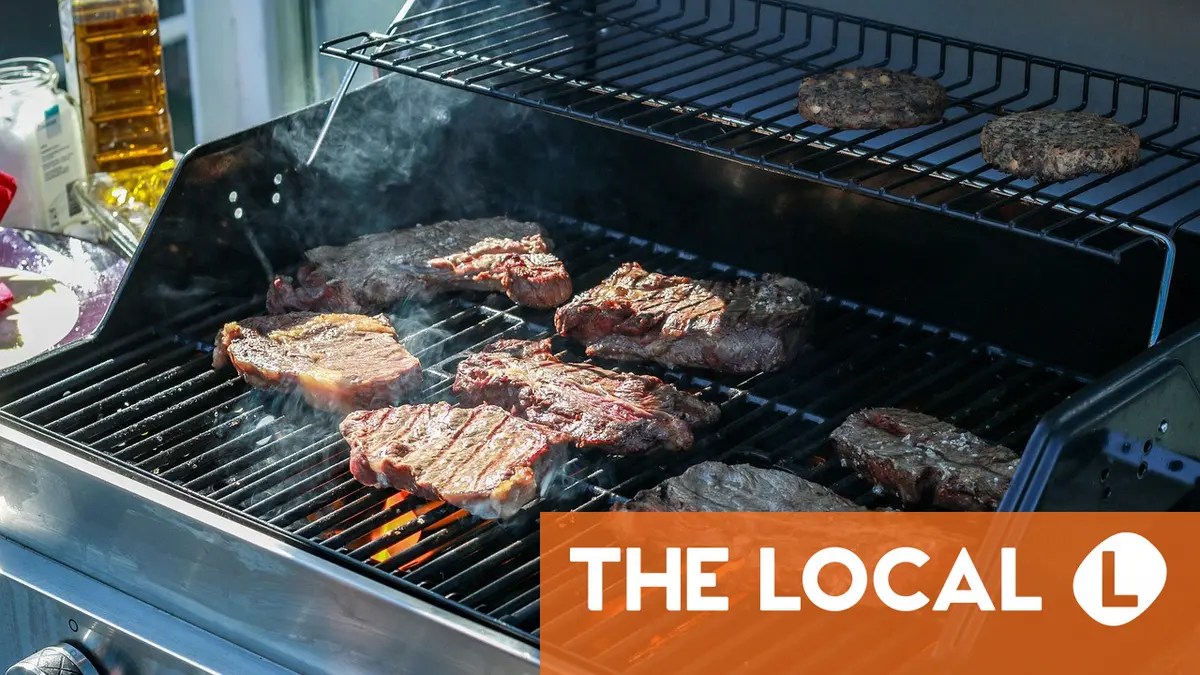
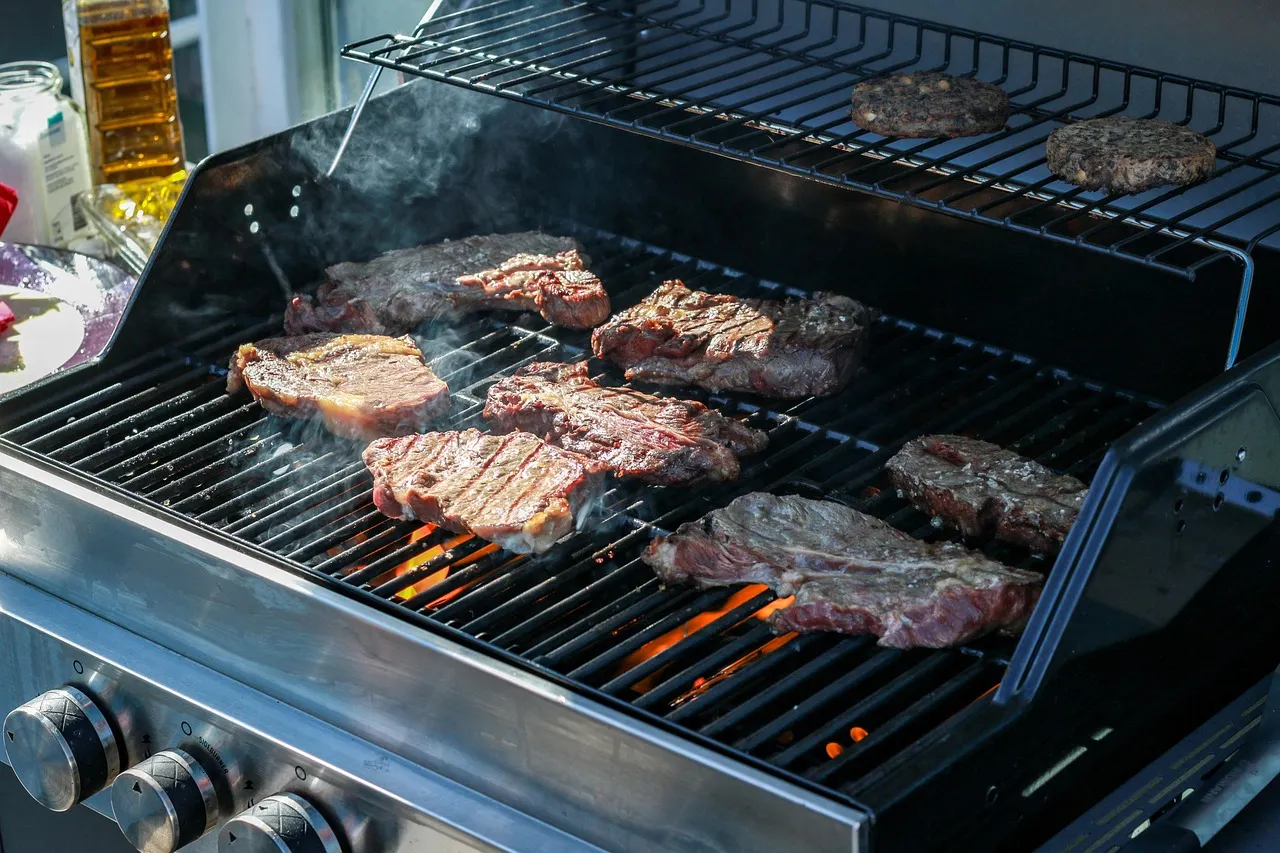
Firing up the barbecue outdoors, surrounded by spectacular Swiss nature, is one of the favoured summer activities for many people. But amid dire drought conditions, what are the rules this summer?
Given the persistent drought – with ‘high’ or ‘very high’ danger levels currently declared in most of Switzerland – more and more cantons are enacting a total fire ban, including on open-air barbecues.
The reason for this drastic measure is that barbecuing on dry grass, or else near (or in) arid forests, is extremely dangerous because just a single spark from the pit can set off wildfires.
READ MORE: What you need to know about wildfire risks in Switzerland this summer
Where is barbecuing banned right now?
Total fire bans (including barbecues) are currently in effect in Geneva, Valais, Fribourg, Zurich, Glarus, and Schwyz, though more cantons can prohibit this activity from one moment to another if drought worsens.
Additionally, even within a canton that doesn’t currently have a ban in place, individual municipalities can forbid barbecuing on their territory.
Also, the ban could be partial – that is, the use of some types of barbecues, such as gas or electric – could be permitted, while others not.
In Zurich, for instance, an absolute fire ban is in place.
This means that charcoal or disposable barbecues are prohibited within certain city limits.
What is clear is that you should follow the rules in your canton/community by checking their websites for fire alerts; non-compliance is not only dangerous from the fire-setting perspective, but it also makes you liable for hefty fines.
How much would you have to pay for breaking these rules?
If you are caught barbecuing despite a cantonal or municipal ban, you could be slapped with a fine of at least 100 francs.
But in some situations it could also be much more – into thousands, in more serious cases – depending on the canton and the declared wildfire danger in a given location.
What if you barbecue on your balcony rather than outdoors?
Theoretically at least, not setting your pit directly on dry grass or near arid vegetation carries less risk of setting a fire.
However, in this situation too you should follow local rules, as during extreme droughts, restrictions could be expanded to balconies as well.
READ MORE: Are you allowed to have a barbecue on your balcony in Switzerland?
But there is more…
This is a good time to heed this advice from the government on how NOT to ignite fires:
- Find out about the danger of fire locally if you intend to light a fire outdoors.
- Always comply with fire bans.
- Heed information provided on the internet, radio, television and in newspapers.
- Never light a fire outdoors in strong or gusty wind.
- Never throw away burning cigarettes or matches.
- Only barbecue food in permanent fire places (concrete base, for example, to avoid whenever possible camp fires directly on the ground).
- Keep an eye on the fire at all times and immediately extinguish any stray sparks.
- Do not leave barbecues/fire places and their vicinity until the fire has been completely extinguished.
- Fireworks are to be let off only in places expressly approved by the local authorities.


