


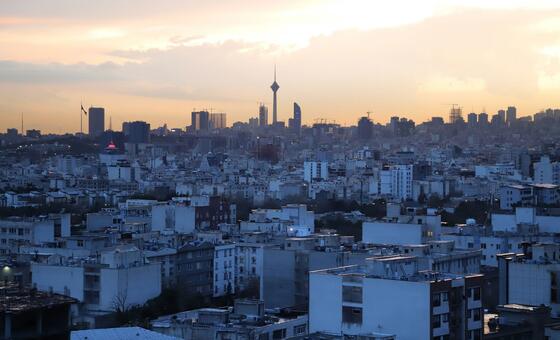
“We are indeed concerned by a resurgence of hostilities and renewed escalation across much of the region,” UN Spokesperson Stéphane Dujarric said on Monday in New York, stressing that “immediate de-escalation is essential.”
He noted that “as in any conflict, the protection of civilians and civilian objects is critical,” and the vital infrastructure they rely on to survive – including hospitals and water supplies – must be spared.
“All parties must respect their obligations under international humanitarian law, including the principles of distinction, proportionality and precaution,” he said.
Renewed threat out of Yemen
The Spokesperson added that the UN is also “very much concerned” over fresh threats by Houthi rebels in Yemen against Saudi Arabia and freedom of navigation in the crucial shipping lanes of the Red Sea along Yemen’s coast, underscoring the risk of an even wider regional escalation.
He again called for immediate de-escalation and urged all parties to address their differences through dialogue and diplomacy.
In response to a journalist’s question, Mr. Dujarric also expressed concern over the potential impact on humanitarian operations and global trade.
“We’ve seen the Red Sea already being choked off in the past. We don’t want to see a return to that,” he said.
“It will, of course, impact the flow of UN goods that are shipped, notably humanitarian goods and elements for peacekeeping. But much more worryingly, it will again have a negative impact on global commerce, on the trade in energy, and just commerce as a whole.”
This is unfolding when “we’re already seeing the impact of the near closure of the Strait of Hormuz, and what impact that is having on the global economy,” he said.
Fear and uncertainty
The renewed hostilities between the US and Iran, which initially began over control of the Strait, have dampened hopes for peace following the signing of a Memorandum of Understanding between Washington and Tehran in June.
The deal ought to end fighting that began in February with the US and Israel bombing Iran which in turn carried out retaliatory strikes on targets in several Gulf States and Jordan.
“Across the Middle East, civilians are once again living with the fear and uncertainty of repeated strikes, and health systems are being forced to manage the consequences,” said Dr. Hanan Balkhy, Regional Director for the World Health Organization (WHO), in an update on Monday.
The situation in Iran
She said Iranian health authorities report that 50 people have been killed this month, and more than 500 injured, with women and children among the casualties. Moreover, vital infrastructure has also been affected.
She pointed to a reported strike on a water desalination plant in Hormozgan province, located in the south of the country, that has disrupted safe drinking water supply for thousands.
Meanwhile, explosions near Baqaei Reference Hospital last week forced the precautionary evacuation of children receiving specialized cancer treatment.
Nuclear site reportedly struck
In other developments, the International Atomic Energy Agency (IAEA) said on Sunday that it was looking into reports of an overnight attack on the site of the Darkhovin nuclear power plant in Iran which is under construction.
The UN agency said the facility is still in the very early stages of construction and contained no nuclear material when inspectors last visited.
While the attack is not believed to pose any radiological risk, IAEA chief Rafael Mariano Grossi called for military restraint around all nuclear-related sites.
Fallout across Gulf States
WHO also highlighted incidents elsewhere, such as Qatar, where falling shrapnel injured five civilians.
Authorities in nearby Kuwait reported injuries and significant damage following a strike on an oil facility. Power and water desalination plants also sustained hits, causing one injury and the deactivation of several power generation units.
“These incidents are placing civilians and environmental health at growing risk, while putting sustained pressure on emergency responders and health services,” Dr. Balhky said about the overall situation.
In response, WHO has called for immediate de-escalation across the Middle East, as well as protection of civilians and healthcare, in line with international humanitarian law.


