


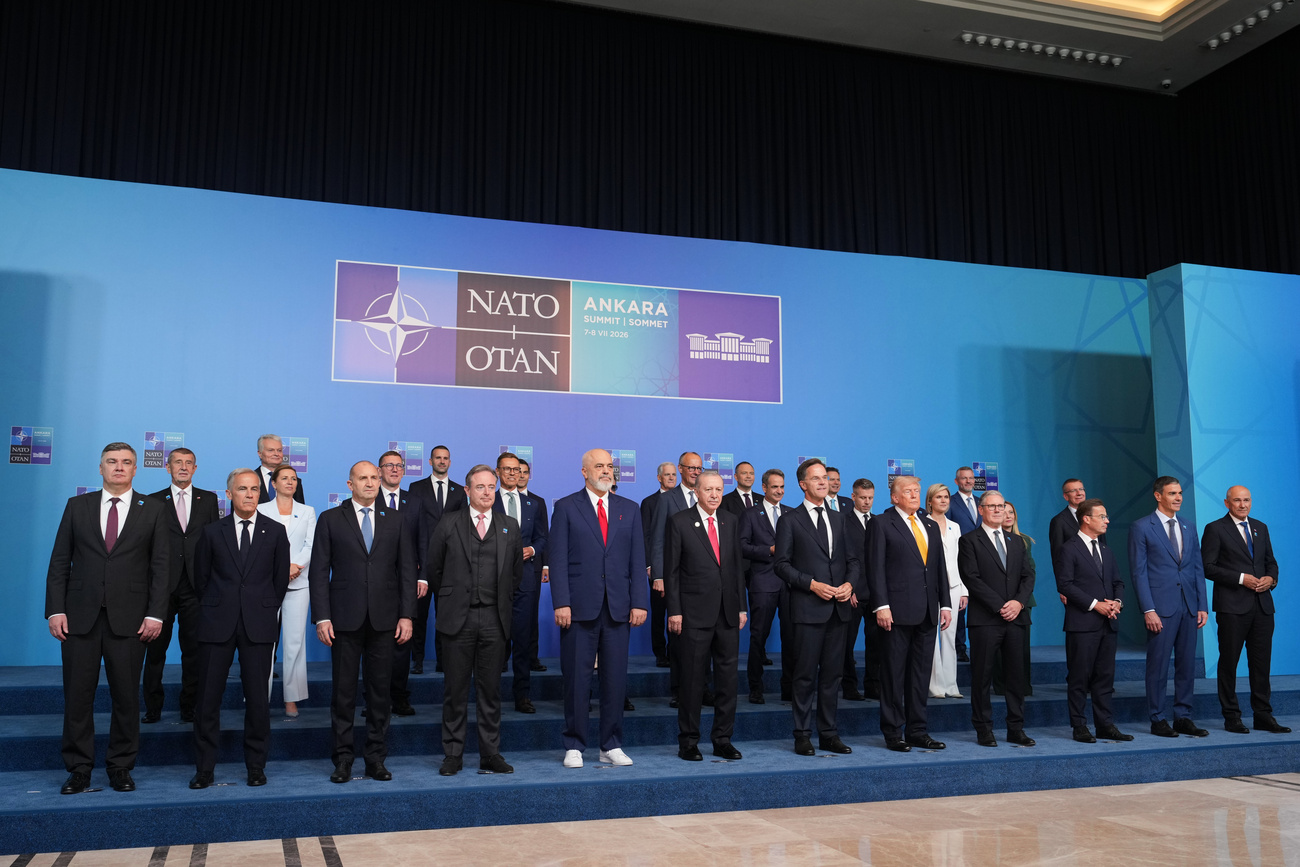
Four women, 29 men:
the group photo at the NATO summit of July 7-8 in Ankara, Turkey.
Copyright 2026 The Associated Press. All Rights Reserved
A quarter of a century after a UN resolution, women remain largely absent from peace negotiations. Yet studies show that their participation makes for more sustainable agreements.
In the group photo from the NATO summit on July 7-8 in Ankara, Turkey, only four women leaders were among the 29 men. It’s an imbalance which illustrates a wider reality: men start wars, and men negotiate peace.
Yet research carried out over the last 20 years shows that the more women participate in peace processes, the more sustainable the agreements are. Despite this evidence, women remain conspicuously absent from formal negotiations.
“In Sudan, not a single Sudanese woman took part in the peace negotiations,” said Sima Bahous, the Executive Director of UN Women, during a recent debate at the United Nations (UN). The same observation was true for Ukraine, Lebanon, Palestine, the Democratic Republic of the Congo and elsewhere, she added.
A resolution unheeded
Yet more than 25 years ago, the UN formally recognised the role of women in promoting peace. Resolution 1325External link, adopted on October 31, 2000, called on member states to “ensure that women are better represented at all levels […] in institutions and mechanisms […] for the prevention, management and resolution of conflicts”.
The aim was not merely a matter of promoting equality, but also a recognition of the reality on the ground: because of their place in society, women are on the front line when it comes to building a tangible and lasting peace. They are also, along with children, the main civilian victims of armed conflict, facing a greater risk of displacement, sexual violence, poverty and loss of access to healthcare.
More

More
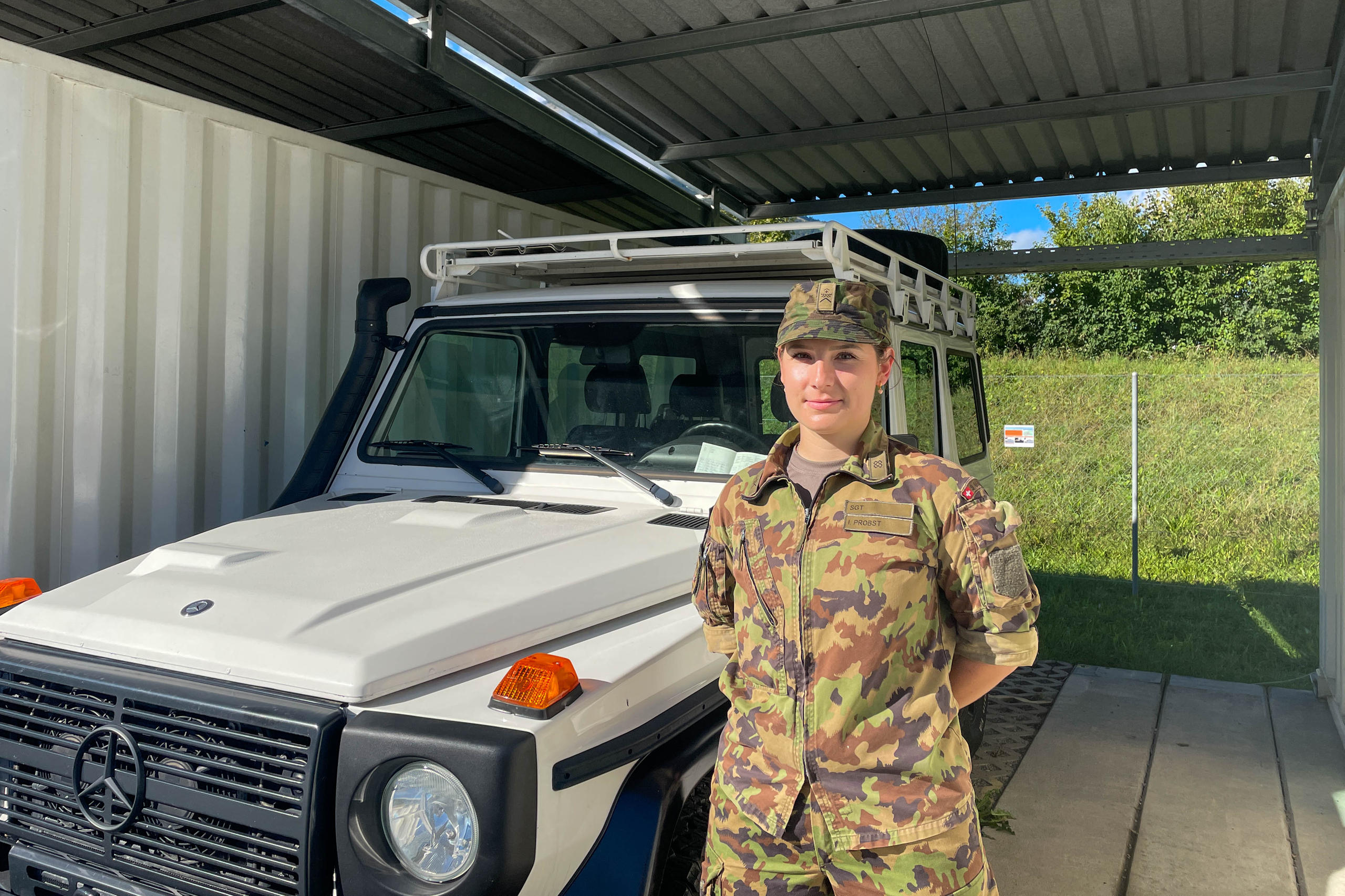
SWISSCOY: more female recruits for more peace
Valuable yet overlooked
Like other countries, Switzerland supports this UN resolutionExternal link calling for a more active participation of women in peace processes.
Sibylle Obrist, the deputy head of the foreign ministry’s peace and human rights division, highlights their specific expertise. “In most societies, it is women who organise daily life,” she says. “They look after social networks, care for the elderly and for children.” They thus have crucial information about the population’s real needs, she adds.
For example, during ceasefire talks in Sudan, which took place in Switzerland in 2024, a group of women identified a problem that no one had thought of before: access to telecoms infrastructure. Indeed, telecoms hubs were often occupied by armed groups who demanded sexual favours or money in exchange for access.
This issue could not ultimately be included in an agreement, as the negotiations failed to reach a conclusion. However, Switzerland incorporated it into its diplomatic advocacy.
The decline of multilateralism
Why is the situation not improved 25 years after the UN resolution? One reason is that negotiations are becoming increasingly opaque and transactional, and are now often held outside the multilateral framework of the UN. Yet it was the UN that had made efforts to include women in the first place.
Between 2019 and 2024, the UN achieved a female participation rate of between 16% and 23% – “a figure that is insufficient, but which nonetheless represents double the global average”, says Bahous of UN Women. But this progress is threatened by the slow marginalisation of the UN’s role. The organisation led only three peace processes last year; 15 years ago, it was 14, Bahous notes.
More
More
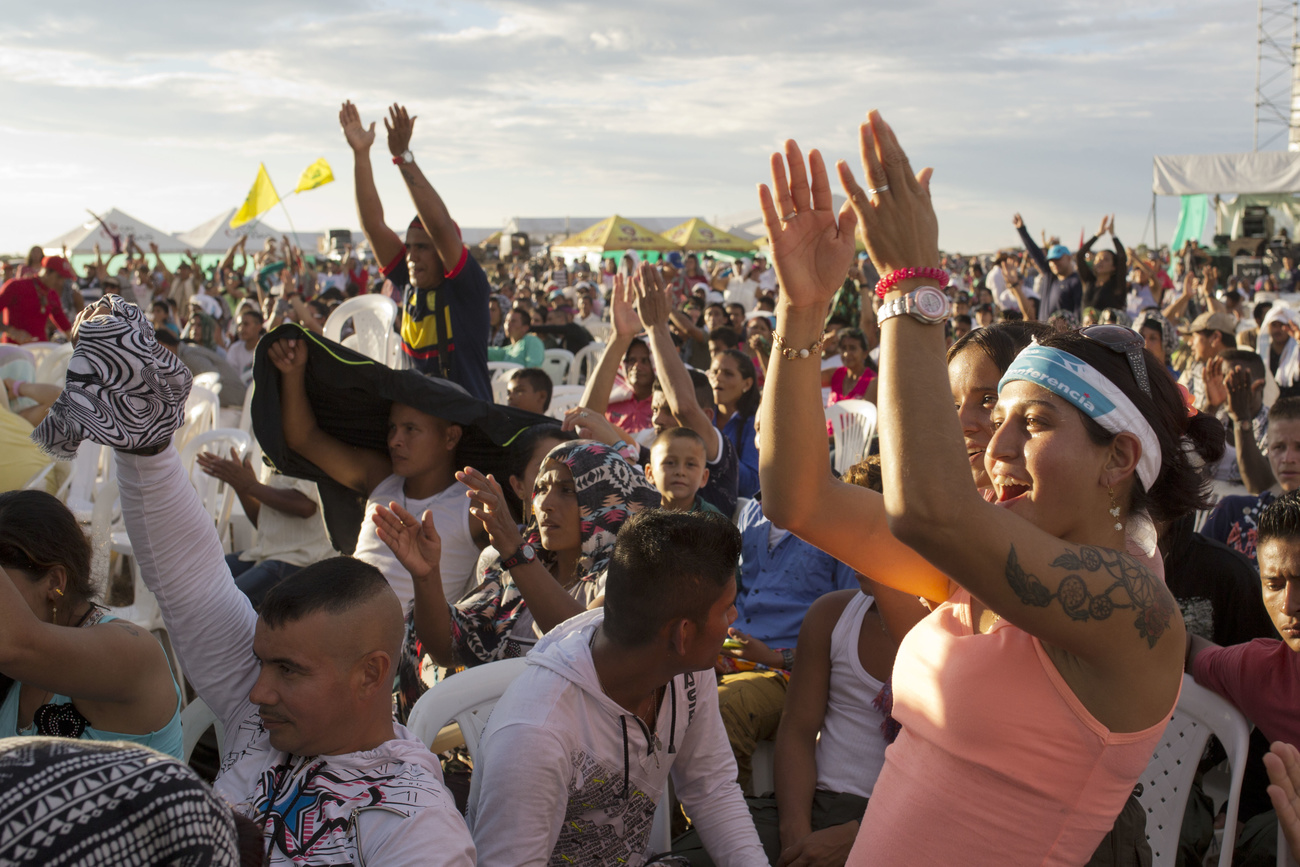
What is feminist foreign policy?
Invisible but essential work
Women are very active in peacebuilding, but they remain invisible during the formal, mediatised stages. “Most peace work takes place elsewhere,” says Liv Halpérin, chief adviser at the NGO PeaceWomen Across the Globe.
Before negotiations happen, women identify and prevent violence or negotiate humanitarian access. During talks, they take part in parallel sessions, proposing alternative visions of peace. After an agreement is reached, they continue to work for decades on issues like transitional justice, the reintegration of fighters, and rebuilding the social fabric. “This work remains less visible and receives far less financial support,” Halpérin says.
Derisory funding
Against a backdrop of militarisation, less than 0.5% of international development aid goes to women’s organisations in countries affected by conflict. “There is a general underfunding of peace work,” says Halpérin. She also believes the erosion of women’s rights, coupled with the rise to power of populist or far-right leaders, is creating a climate less open to participatory processes.
“There is a sense that everything must be resolved very quickly,” says Joëlle Germanier, director of the Centre of Competence on Humanitarian Negotiation in Geneva. Less attention is paid to details and implementation. But “if processes are not participatory, there is little chance of positive outcomes”, she points out.
For Halpérin, the work of these peacemakers on the ground is becoming more and more risky. At the same time, she adds, it is more necessary than ever.
Translated from French, sub-edited by Domhnall O’Sullivan


