


Locarno Festival Director speaks out against ‘elite’ cinema
Keystone-SDA
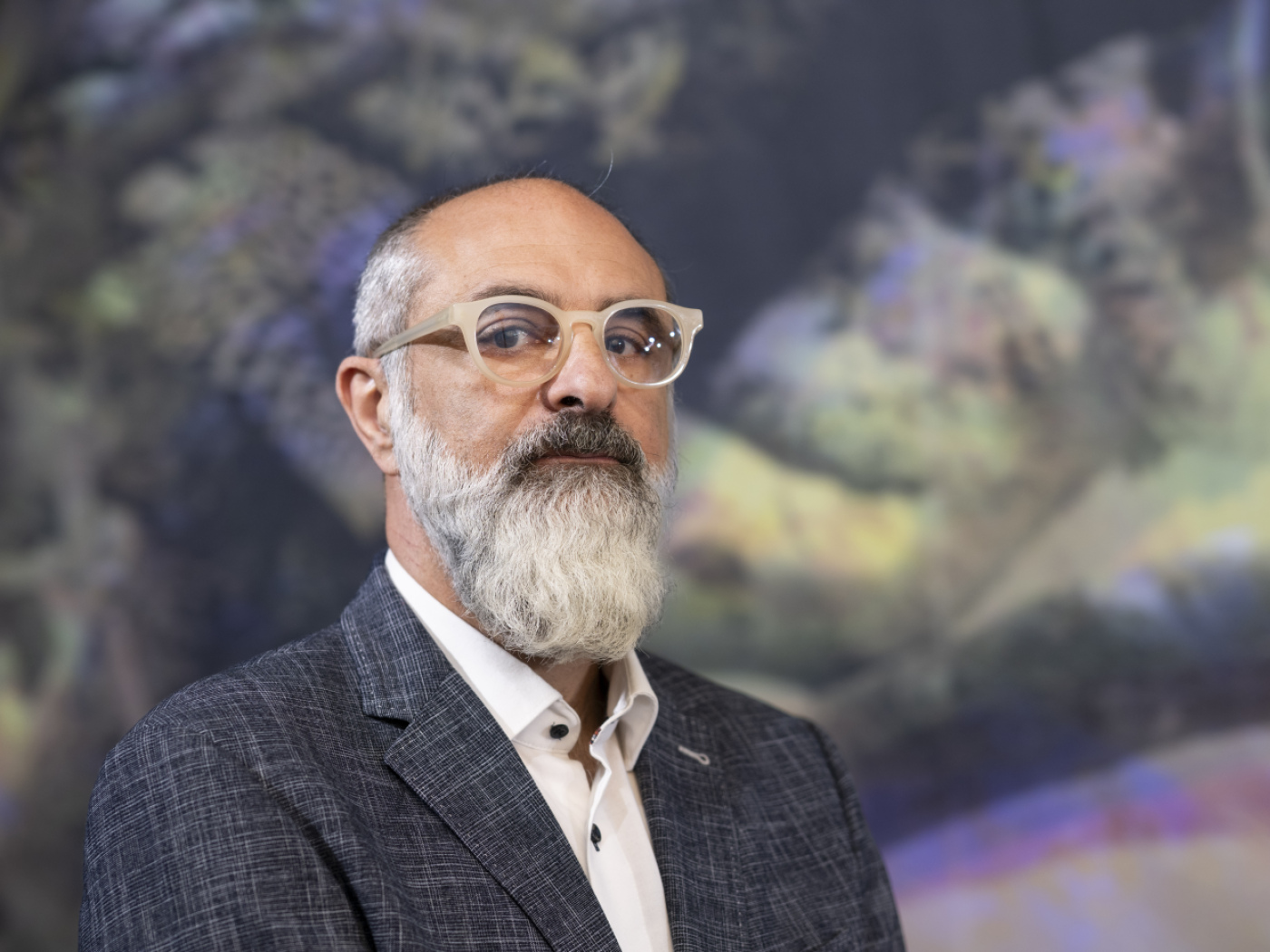
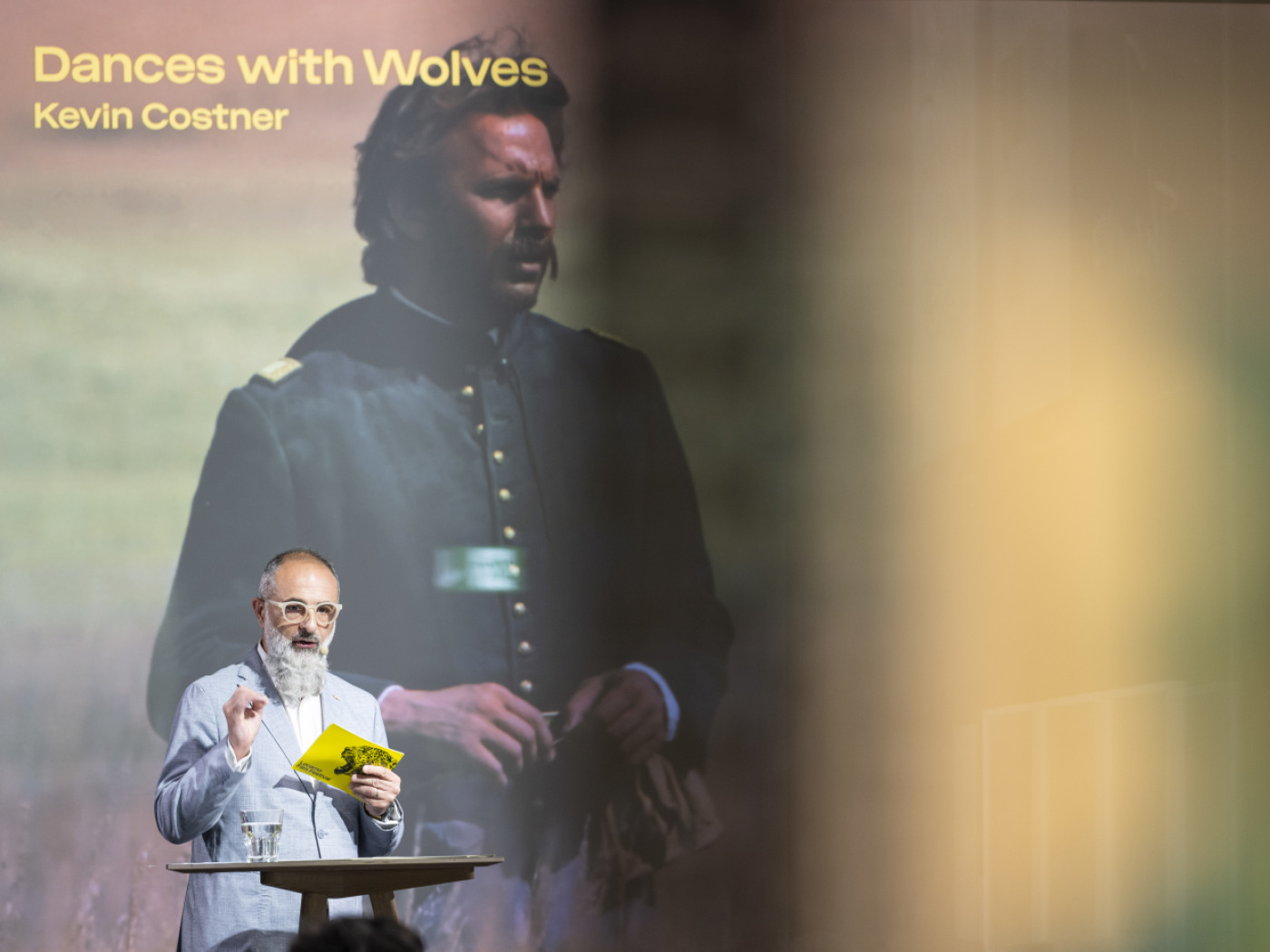
In the run-up to the Locarno Film Festival, its artistic director, Giona Nazzaro, has called for cinema to be accessible to the general public. There should be no divide between arthouse filmmakers and the wider audience, he says in an interview with the Keystone-SDA news agency.
The notion that the Locarno Festival is reserved solely for those in the know persists. Festival director Giona Nazzaro brushes it aside with a wave of his hand. The preconception that films from Locarno never make it beyond Chiasso is wrong, and has always been wrong, he asserts a few days before the opening of the 79th edition.
Films discovered in Locarno often go on to enjoy success far beyond the shores of Lake Maggiore, says Nazzaro. He cites as an example Blue Heron, the debut feature film by Canadian director Sophy Romvary, an intimate family chronicle that was acquired by the American distributor Janus Films following the festival.
He also mentions Gioia Mia by the Italian director Margherita Spampinato, a portrait of Italian youth shot on a shoestring budget, which became one of the season’s critical successes. “The problem isn’t that Locarno is losing influence in the eyes of film lovers. Rather, it is that distributors sometimes lack curiosity,” he says.
More
More
Locarno Film Festival to feature 103 world premieres
“We don’t select a film because we feel it will cause a stir,” Nazzaro emphasises. For him, there is no boundary between popular cinema and arthouse cinema. “Cinema is, by its very nature, always popular,” he says, echoing a statement by the French filmmaker Jean-Marie Straub, who claimed to be making “popular cinema for the working masses”.
In Nazzaro’s view, talk of “elitist” films is primarily “a concept of the market and money” aimed at pigeonholing certain directors into a category. His ideal lies elsewhere: to see a viewer switch, on the very same day, from a Straub film to a horror film and then to a Vietnamese documentary.
No fear of AI
Nazzaro does not harbour any fundamental aversion to artificial intelligence. Locarno has already screened Dracula by the Romanian director Radu Jude, which reinterprets the possibilities of AI-generated images, as well as Cartas Telepáticas by the Portuguese director Edgar Pêra – an imaginary exchange of letters between Fernando Pessoa and H.P. Lovecraft, which was conceived using these tools. A new film by Pêra, which utilises AI, is also featured in this year’s programme.
“We have no ideological prejudices whatsoever,” says Nazzaro. The real question, he says, is of a political nature. He refers to the encyclical on artificial intelligence recently published by Pope Leo XIV, which he describes as an “extraordinary text”. “The problem is not artificial intelligence in itself, but what we make of it.”
+ How we produce English news
Translated from French, reviewed by an English Department journalist.


