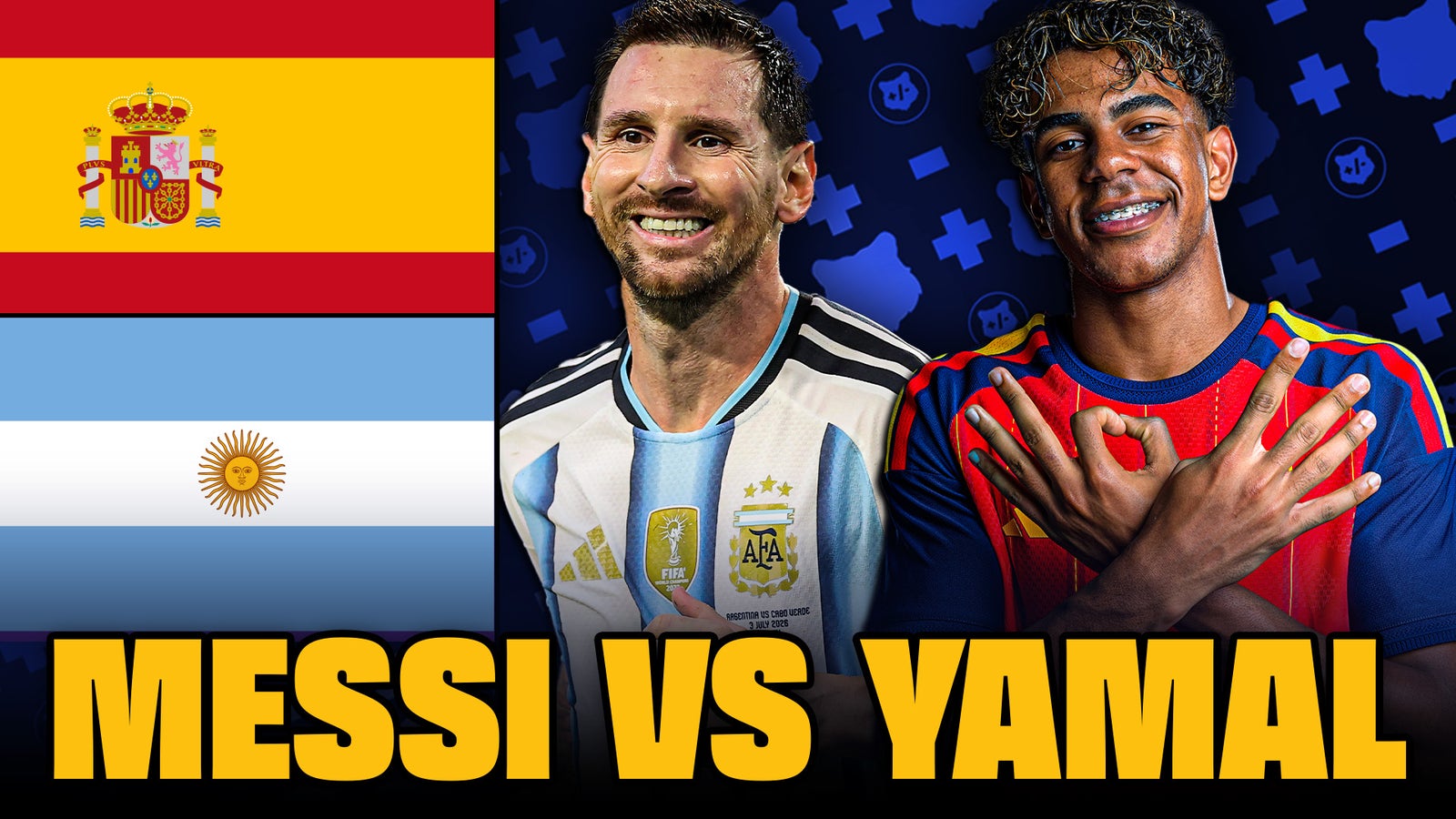
There may not be a clear favorite on Sunday when Spain and Argentina meet in the FIFA World Cup final, but there are very discernable differences in the way each team arrived at this point.
For Argentina, Lionel Messi is the star. He is the World Cup’s all-time leading scorer with 21 goals. In 2022, he was the tournament’s best player with seven goals and three assists. Entering Sunday, he has eight goals and four assists at this World Cup. Unquestionably, Messi has a supporting cast with Argentina that consists of global stars. But Messi is the star.
On the other side, it is a completely different approach.
For Spain, there are world-class players on the roster, but the team is the star. Even with a player such as Lamine Yamal, who was recently a finalist for the Ballon d’Or as an 18-year-old, no single player is above the team or its system. Instead, every player fills a role within that system and sticks to that role.
Former Paris Saint-Germain, AC Milan and Inter Milan star forward Zlatan Ibrahimović, now a FOX Sports analyst, put it succinctly immediately following Spain’s 2-0 win over France in the World Cup semifinal.
“If I speak about Spain, I don’t speak about one star,” Ibrahimović said. “The team is the star. When they shine, they shine collectively — even if you have Yamal. This is not a team that is dependent on one player. It is not an individual performance. It is a team performance. Everything they do is as a team.”
The Foundation Of Spain’s System
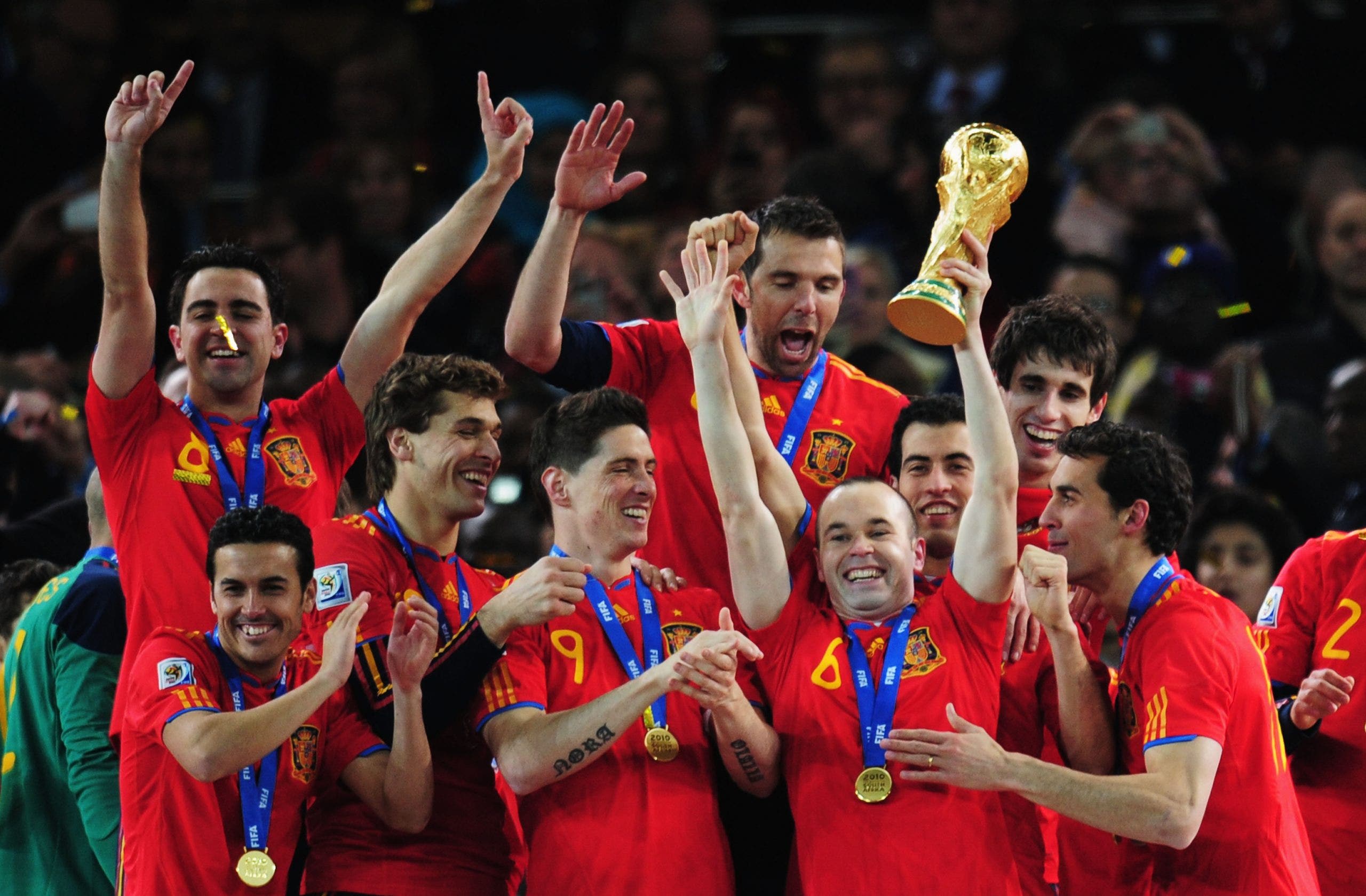
The 2010 World Cup champions (Photo by Shaun Botterill – FIFA/FIFA via Getty Images)
At the heart of this team is a system that has been evolving for many years. From 2004-2008, Spain was coached by Luis Aragonés. Then, from 2008-2016, La Roja were led by Vicente del Bosque. Those years saw Spain achieve unprecedented success, winning the Euros in 2008 and 2012, along with the World Cup in 2010. The teams were led by a wave of talent that included David Villa, Fernando Torres, Cesc Fàbregas, Andrés Iniesta, Gerard Piqué and Carles Puyol.
At that time, Spain (and Barcelona) developed and perfected the “tiki-taka” style of playing which featured constant short passes, players forming triangles to have multiple passing options and a heavy emphasis on possession with a high tempo. For that generation of players, it worked. But, like all things, it ultimately came to an end.
Replacing that generation was difficult, as Spain failed to get out of group play at the 2014 World Cup and then was bounced in the round of 16 in 2018 and 2022. But following the 2022 exit, Spain took huge steps in its evolution in hiring Luis de la Fuente to coach the first team.
It was a bold hire because, despite having gone three World Cups without winning a knockout game, Spain decided to remain on the same track and go with an insider.
De La Fuente’s Fresh Approach
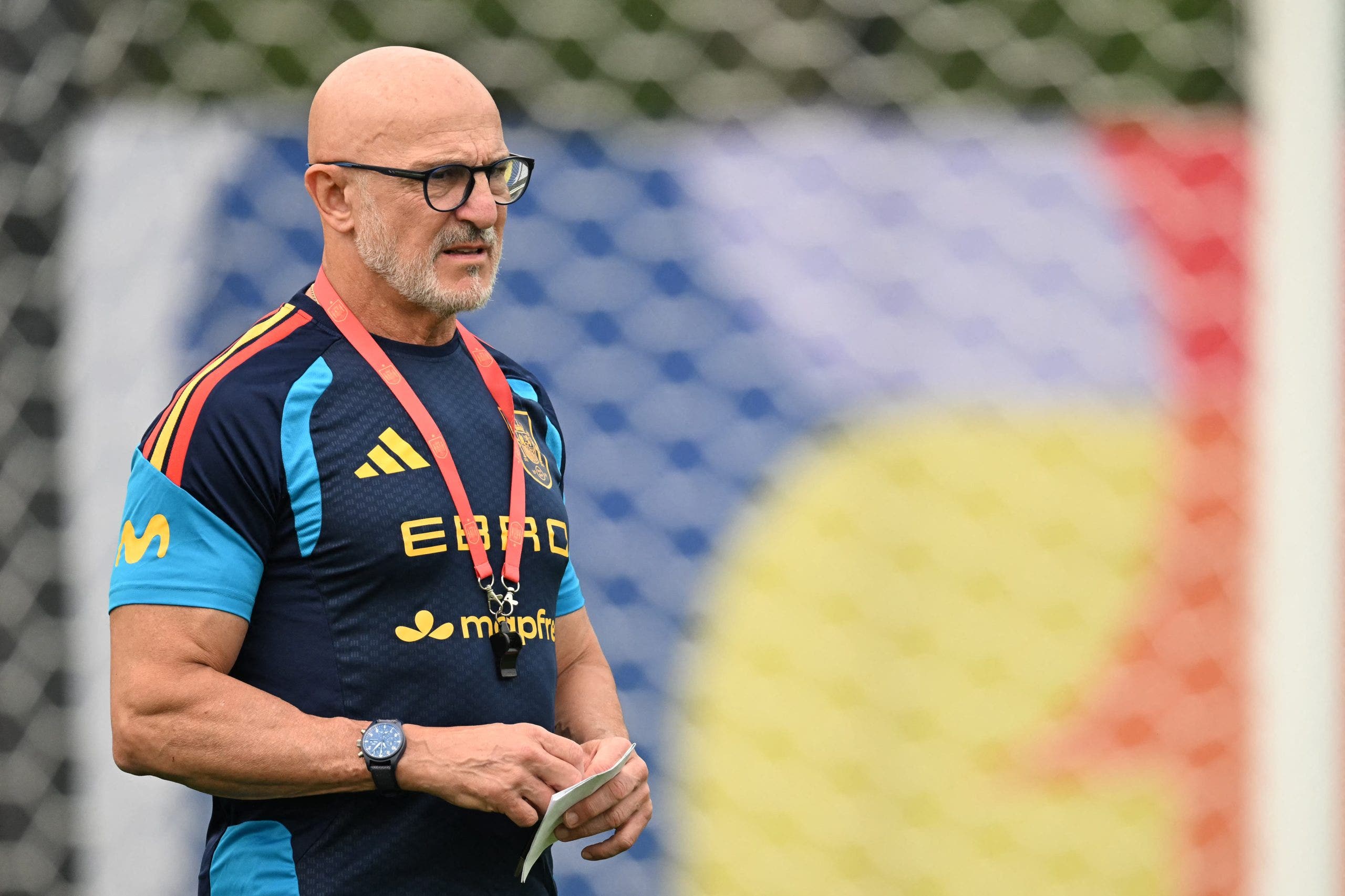
Luis de la Fuente is a longtime coach in Spain’s system. (Photo by MAURO PIMENTEL / AFP via Getty Images)
De la Fuente was promoted from within Spain after having successfully coached its youth teams since 2013. Prior to that, he had been unsuccessful in coaching stints at the club levels in Spain and Portugal.
But with Spain’s youth teams, de la Fuente had been building something special with a new generation of Spanish players. He won the Euro U-19 championship, and then he moved up an age group and led the U-21 team to the Euro U-21 championship. His last stop before the full national team was the 2020 Olympics (held in 2021) with the U-23 team, which he led to the silver medal after losing to Brazil in the final.
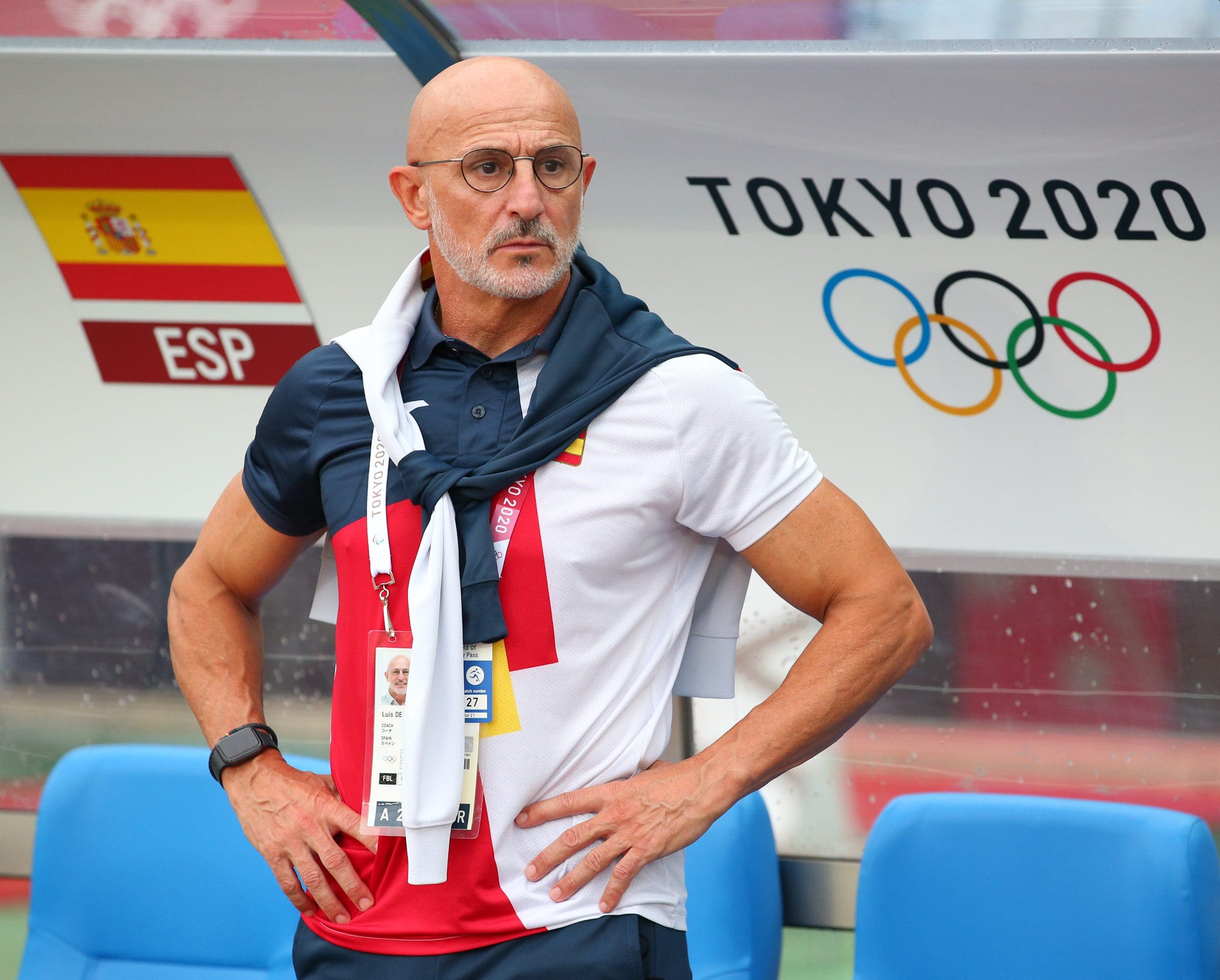
Luis de la Fuente as the Olympic coach in Tokyo. (Photo by Alex Livesey – FIFA/FIFA via Getty Images)
When he moved to the first team, he knew what was working. Despite him being an insider, he had his own ideas. He didn’t want to get rid of Spain’s high-tempo and speedy passing style, but instead wanted to breathe new life into it with tactical tweaks.
He had Spain be more direct and get the ball into the attacking third quicker. De la Fuente also wanted to create overloads centrally to open space up for wingers to have more room to operate in one-on-one situations. Then, on defense, he developed a commitment to the team’s shape to close space and win the ball back.
But de la Fuente has also not been acting alone. Other Spain youth national team managers during his time at the youth level were creating the same system. Just as the players worked together, the coaches were as well.
Santi Denia was also a Spanish youth national team coach during that era after being hired in 2010. When de la Fuente moved to the full team manager, Denia was hired to replace him with Spain’s U-21 team and the 2024 Olympic team.
The 2024 Spanish Summer
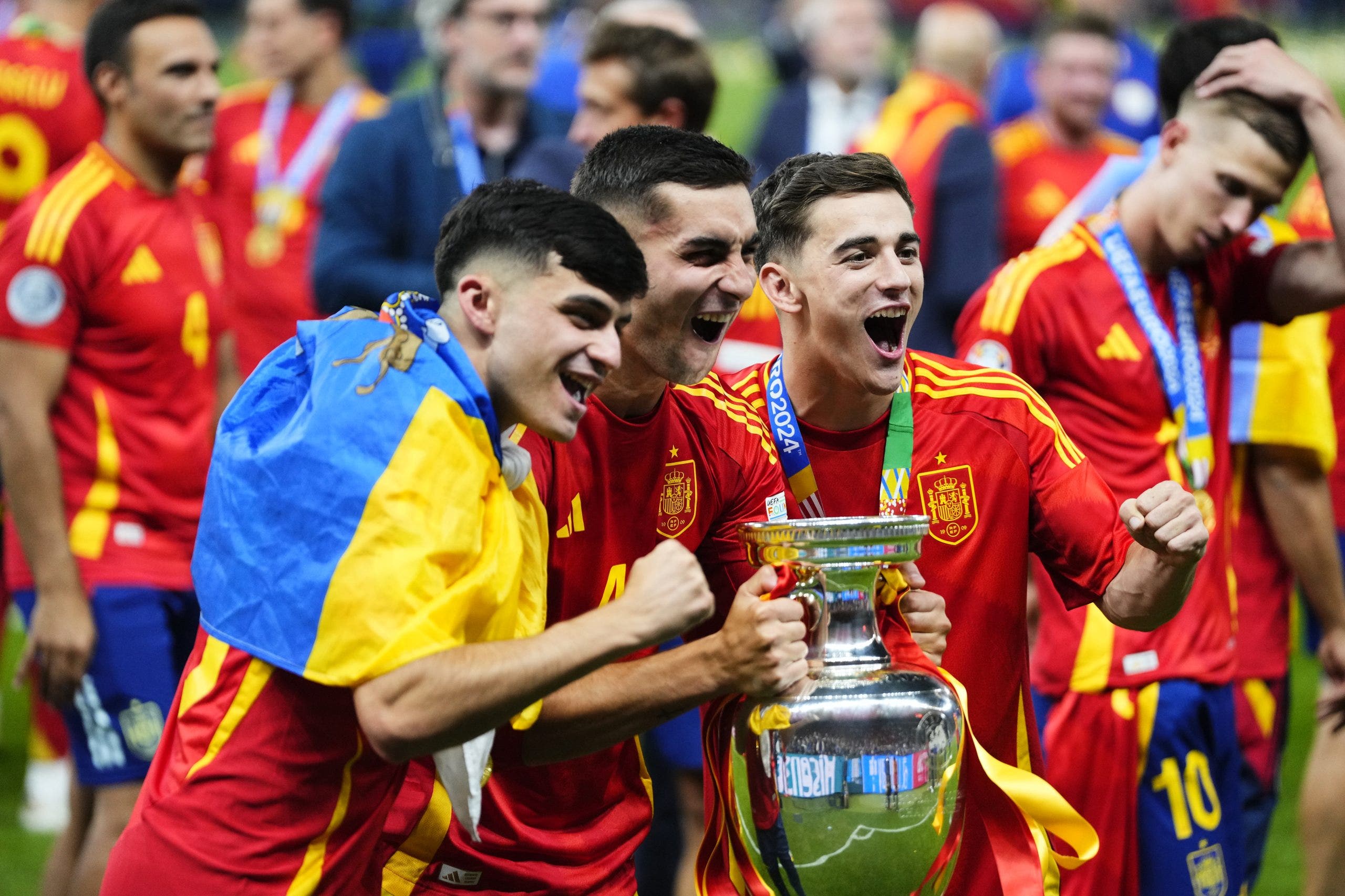
Spain won the 2024 Euro for the first time since 2012. (Photo by Jose Breton/Pics Action/NurPhoto via Getty Images)
Working in unison, de la Fuente and Denia created an incredible summer of 2024 for Spanish soccer.
First there was the full national team at Euro 2024, where de la Fuente’s team won all seven of its games to win the title. The road was extremely difficult. Spain won all three of its group stage games against Italy, Croatia and Albania without conceding a goal. Then, in the knockouts, it rolled past Georgia, hosts Germany, France and then England in the final.
As for the Olympic team, Denia won the gold medal playing essentially the same system. In the knockouts, Spain defeated Japan and Morocco and then France in the gold-medal game (in Paris).
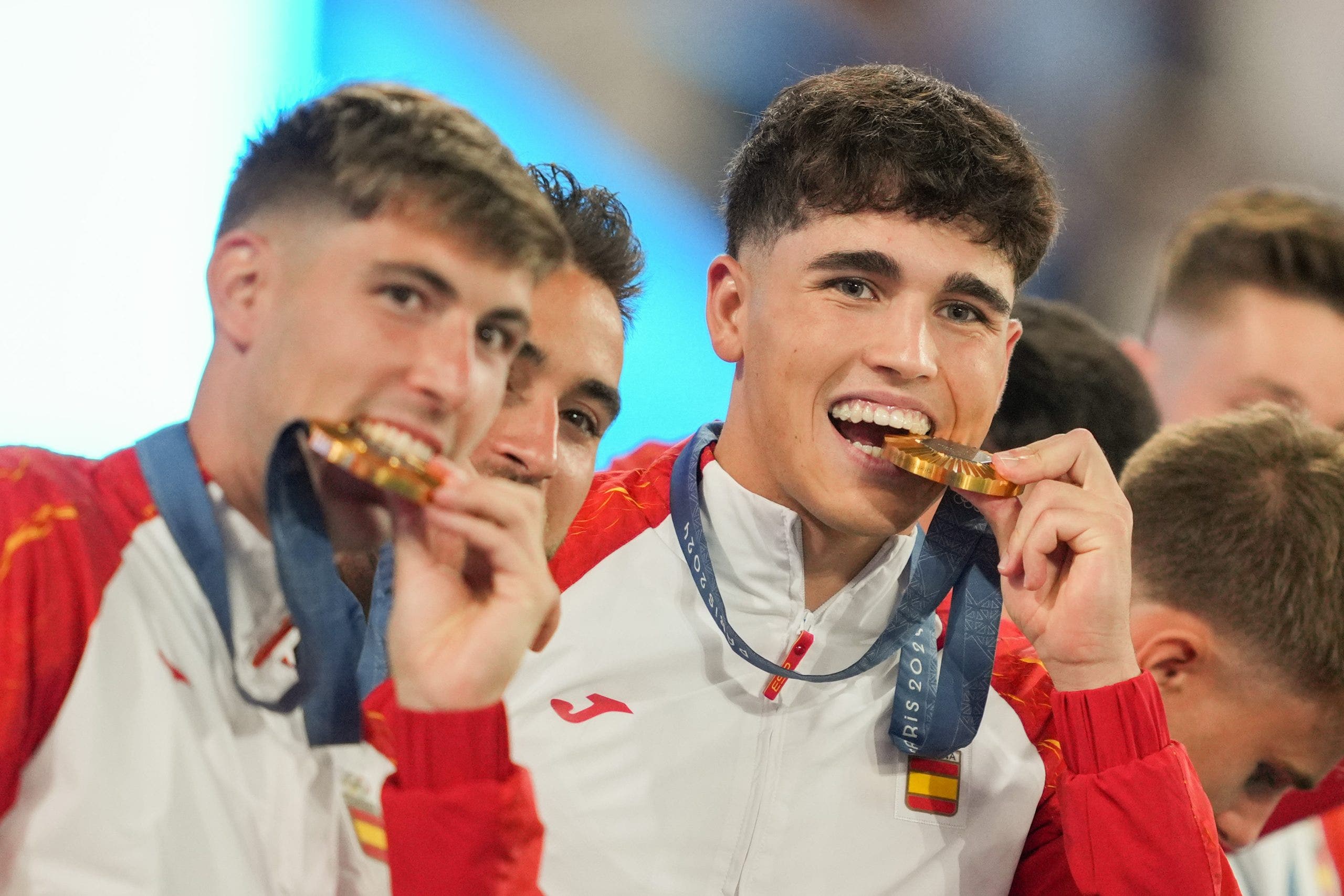
Spain won the Olympic gold medal at the Summer Games in 2024. (Photo by John Todd/ISI/Getty Images)
Just as important as winning the Euros and the Olympic gold medal were for Spain, Denia was able to develop players who made seamless transitions to the full team after playing the same system.
Five players from the Olympic gold-winning team made the World Cup squad, including key players Pau Cubarsí and Álex Baena. It would have been six if star forward Fermín López hadn’t suffered a broken foot just before the tournament.
“Luis is a master of managing a team,” Denia told FIFA recently. “He understands how players tick, he knows how to guide them, and he senses who should start each match. He adds his own twist to an established model, taking into account the players’ profiles. That has delivered results for the association in recent years and helped us win titles. We believe in that model, and Luis believes in it more than anyone.”
The 2026 World Cup Run
De la Fuente was able to help create and implement a new system and style of play that was consistent within Spain’s youth team and several of the country’s clubs. That helped to make it easier to name a roster for the 2026 World Cup.
But it was also not without controversy. When the roster was named, it did not consist of a single Real Madrid player. La Liga rival Barcelona, meanwhile, sent eight players onto the World Cup team.
In Spain, it was highly controversial and almost unthinkable to have Real Madrid absent from La Roja on the biggest stage. For de la Fuente, he said the roster was “perfect,” and that “it’s the 26 players we wanted.”
Once again, it was de la Fuente’s belief in the system.
“The best players aren’t just at Real Madrid, Barcelona or Atlético. There are very good players at other clubs,” de la Fuente explained before the tournament. “As we have a deep understanding of Spanish football, we pick the ones we believe best fit our system.”
The past two months have proven de la Fuente correct. In the first seven games of the World Cup, Spain has not lost and has shockingly conceded just one goal. Its only blemishes were a 0-0 draw against Cape Verde and a goal conceded in a 2-1 win over Belgium in the quarterfinal.
Former French World Cup winner Thierry Henry, who now serves as an analyst for FOX Sports, knows de la Fuente’s system well. He coached France’s U-23 team at the Olympics, which lost to Santi Denia and Spain in the gold-medal game.
“The Spanish team finds a way to be successful at every level,” Henry said after Spain defeated France. “Women’s football, youth tournaments, the Olympics — I lost a final against them — time and time again they are coming. Identity and philosophy, they all play the same way at every level. The coach was the youth team coach normally, but because he knows the system and all the players know the system, you can see that it is a team with stars in it. But first and foremost, it is a team effort. Today, we were not in the game because mainly because when the Spanish team gets the ball, they don’t give you the ball back.”
“I also want to give credit to the whole system of what they put in place,” Henry added. “Because Spain never used to win like that, and now they win at every level.”
Spain and its impressive system will now be put to the test — against a Messi-led Argentina side that is the reigning World Cup champion and a two-time defending Copa América champion. The ultimate system vs. the ultimate star.
Spain vs Argentina World Cup Final: The bet you CANNOT miss