


WASHINGTON — Senate Republican leadership has thrown its weight behind a renewed bipartisan push to impose sweeping new sanctions on Russia, with Majority Leader John Thune joining more than 60 lawmakers in cosponsoring legislation that supporters say marks the strongest congressional effort yet to increase economic pressure on Moscow over its war against Ukraine.
The formal introduction of the Lindsey O. Graham Sanctioning Russia Act of 2026 on July 16 marks a major political milestone after months of negotiations among Senate Republicans, Democrats, the White House, and Ukraine advocates.
While earlier versions of the legislation attracted broad bipartisan support, Senate aides said the latest rollout demonstrates that Republican leadership is now prepared to move the bill from a long-running policy effort toward legislative action.
“The bill always had substantial bipartisan support. Now it has leadership behind it,” one senior Republican Senate aide familiar with the discussions told RFE/RL on condition of anonymity because they were not authorized to speak publicly.
A Democratic Senate aide involved in the negotiations described the July 16 move as “a major step forward.”
“For months, lawmakers were building support while working through the details with the administration,” the aide said. “Introducing the bill with the majority leader as an original cosponsor sends a clear signal that Senate leadership is aligned behind the effort.”
Broad Bipartisan Coalition
The legislation was introduced by Republican Senators Roger Wicker of Mississippi, Darline Graham of South Carolina, and Democratic Senators Richard Blumenthal of Connecticut, and Jeanne Shaheen of New Hampshire.
It is backed by more than 60 senators, including Thune, Senate Democratic Whip Dick Durbin of Illinois, Senate Majority Whip John Barrasso of Wyoming, Foreign Relations Committee Chairman Jim Risch of Idaho, Judiciary Committee Chairman Chuck Grassley of Iowa, and Banking Committee Chairman Tim Scott of South Carolina, underscoring the breadth of bipartisan support.
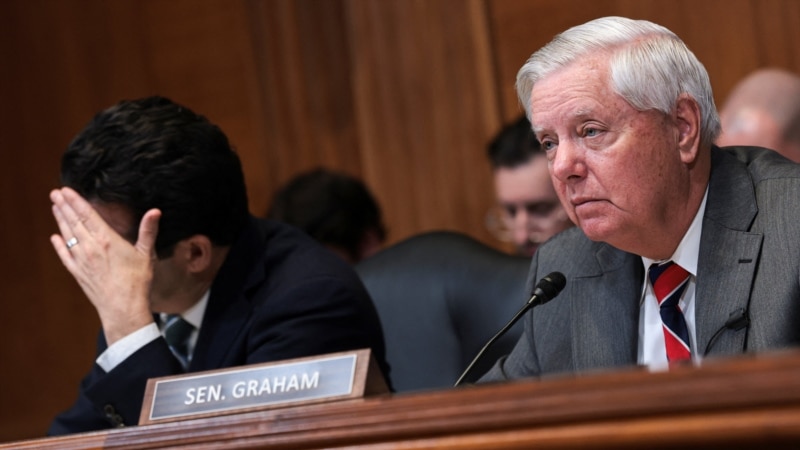
The measure is named after the late Senator Lindsey Graham, Republican of South Carolina, who spent more than a year building bipartisan backing for tougher sanctions on Russia.
According to the bill’s sponsors, Graham met Ukrainian President Volodymyr Zelenskyy shortly before his death and secured White House support for the legislation days earlier, making the sanctions package one of his final legislative priorities.
In announcing his support, Thune said the legislation would both honor Graham’s legacy and strengthen US efforts to end the war.
“Lindsey was a firm believer that the United States is a force for good around the world,” Thune said in a statement. “I’m proud to support this legislation that not only honors our friend and colleague, but will also promote peace by cutting off the funding fueling Russia’s war machine.”
The legislation would impose mandatory primary and secondary sanctions on Russia’s political leadership, financial institutions, energy sector and sanctions-evasion networks, including the so-called shadow fleet used to circumvent existing restrictions.
It would also authorize tariffs of up to 100 percent on imports from the world’s five largest purchasers of Russian crude oil and natural gas and on major facilitators of sanctions evasion, replacing an earlier proposal for blanket 500 percent tariffs with a more targeted framework negotiated over recent months.
Wicker said Congress should “exert maximum economic pressure on [Russian President Vladimir] Putin’s war machine,” while Blumenthal argued the legislation would provide President Donald Trump with additional leverage to push Russia toward peace negotiations as Ukraine gains momentum on the battlefield.
The bill’s next test will be when Senate Republican leadership brings it to the floor, where supporters believe its more than 60 cosponsors could provide a filibuster-proof majority.
If approved by the Senate, lawmakers would then need to align the measure with House-passed Ukraine legislation — or secure House passage of an identical version — before sending it to Trump for his signature or veto.
House Republicans Rally Behind Bill
Support for the legislation is also building in the House of Representatives.
Representative Michael McCaul, Republican of Texas and former chairman of the House Foreign Affairs Committee, urged Congress to approve the measure, saying lawmakers have an opportunity to honor Graham’s legacy while increasing pressure on the Kremlin as Ukraine gains momentum against Russian forces.
Ukraine advocacy organizations also welcomed the renewed push, arguing that Congress should seize the opportunity to increase pressure on Moscow.
“Every day that Russia is allowed to finance this war is another day that Ukrainian cities are bombed, children are abducted, and more innocent lives are lost,” said Melinda Haring, senior adviser at Razom for Ukraine.
“Congress must act now to impose maximum cost on Putin’s murderous regime. Economic pressure works, and by passing the Sanctioning Russia Act, Congress and the Administration would demonstrate their resolve to pursue a just and lasting peace for Ukraine.”
Razom said the legislation targets the financial sector, defense industrial base, shadow fleet, and the broader network sustaining Russia’s war machine, calling on Congress to move swiftly to pass the measure.
For supporters, the action represents more than the unveiling of another bipartisan foreign policy bill.
After more than a year of coalition-building, they argue the sanctions package has entered a new phase: one with broad bipartisan backing, explicit support from Senate leadership, and growing momentum in both chambers of Congress.


