


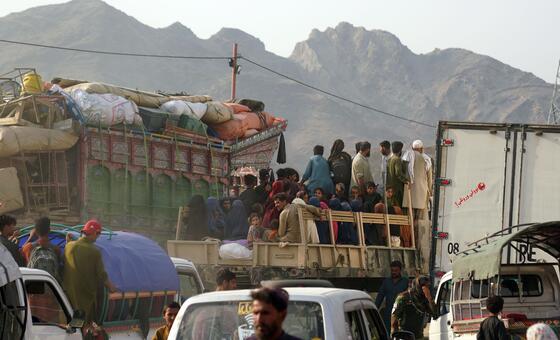
A fragile economy, four decades of war, 2.7 million returnees, worsening climate shocks and declining women’s participation are increasing pressure on livelihoods and services, according to the latest socioeconomic review by the UN Development Programme (UNDP) office in Afghanistan.
“In Afghanistan, crises rarely happen one at a time,” said UNDP chief Alexander De Croo, who is currently on a joint visit with the High Commissioner for Refugees Barham Salih to meet returnee communities, partners and authorities across the country, reaffirming a shared commitment to resilience and solutions.
In the last year alone, an earthquake destroyed many homes and livelihoods while poverty remains a crushing reality for most.
Three quarters lack the basics
At a time when 74 per cent of the population, or 29 million people, cannot meet basic needs, UNDP is currently supporting “displaced and host communities to rebuild together and move from return to real recovery”.
The joint visit took the UN agency chiefs to see some of the ongoing efforts in Jalalabad, where they met with earthquake-affected communities.
The pair also travelled into the Sutan Valley, an area that “tells a story of recovery”, Mr. De Croo said.
Recovering brick by brick
Hard hit by an earthquake, Sutan is already seeing the results of recovery efforts.
At flood protection and irrigation projects, one project included women crafting wire mesh and men making bricks to form a barrier to help reduce disaster risk, protect farmland and create income.
“Emergency aid saves lives,” Mr. De Croo said. “Development gives people their lives back.”
Change-making inroads
Indeed, UN agencies are working together towards these and other common goals. A UN Special Trust Fund for Afghanistan-supported initiative launched last year has been helping lay the foundation for durable solutions in north-eastern Afghanistan, preparing communities, supporting returnees and building the conditions for long-term recovery.
The Participatory action for integrated developmental assistance to areas of return project seeks to improve access to housing, essential services, economic opportunities and living conditions for hosts, returnees and internally displaced people (IDPs) in 69 displacement-affected communities across three districts of Kunduz and Baghlan provinces.
The project has already:
- Cleared 6,478 square metres of mine-contaminated land in 11 communities
- Prioritised 28 small-scale infrastructure projects, including protection walls, irrigation improvements and community access works
- Identified 425 households for permanent housing solutions in areas with high-density returnee populations
Read the full project report here.
The UN World Food Programme (WFP) operates school feeding programmes, including in Zabul province.
At the same time, the UN refugee agency, UNHCR, is taking a whole-of-route approach to reduce risks along mixed movement corridors and strengthen asylum systems.
With over 570,000 Afghans projected to need resettlement in 2026, the agency will push to increase opportunities and expand pathways such as education, labour mobility and family reunification.

