


June 30th marks the deadline for the mass regularisation of undocumented migrants in Spain, with the data suggesting that the total number of applicants will be far higher than the initial government estimate of 500,000.
Spain’s migrant amnesty comes to an end on Tuesday June 30th after two and a half months of processing.
The amnesty concludes with a total number of application that will almost certainly double initial projections, and which is between 300,000 and 400,000 higher than it was on June 15th, two weeks earlier.
The government ministries involved in the process are now estimating between 1.2 million and 1.3 million applications in total.
This is based on data from the Mercurio platform, the official online system for managing immigration procedures.
READ MORE: 900,000 undocumented migrants apply for Spain’s amnesty
When the Spanish government first announced that it would go ahead with the mass regularisation of migrants already living in the country, it estimated 500,000 would be regularised.
Police unions and Spanish think-tank Funcas refuted those claims early on, suggesting it would be closer to 800,000.
Now it’s emerged that the final figure is likely even higher than that.
There have been mass migrant amnesties on several occasions before in Spain, under both right-wing and left-wing governments, but this is the highest figure recorded for one regularisation.
READ ALSO: Will Spain’s amnesty cause a spike in irregular migration?
According to migration NGOs involved in the process, the final number of applications will likely be lower once duplicates are eliminated and applications that do not meet the requirements are reviewed.
Even so, everything indicates that this regularisation – the seventh since the 1980s – will be the largest to date.
Spanish Prime Minister Pedro Sánchez is expected to announce the official figure in parliament in the coming days.
“You only have to look at the figures that have come out, which show that there were many people who needed this process to take place because they were already living and, in many cases, working in our country ,” Pedro de Santiago, spokesperson for Accem, one of the nearly 500 organisations collaborating in this process, told new site 20minutos.
The process has not been without its difficulties. The first few weeks were marked by organisational chaos, a lack of information regarding the procedural requirements, and even scammers trying to capitalise on the desperation of migrants.
READ MORE: Spain’s ‘cita previa’ scams grow ahead of mass regularisation process
The offices tasked with the applications, which included Spain’s Correos postal service and the social security department, were overwhelmed.
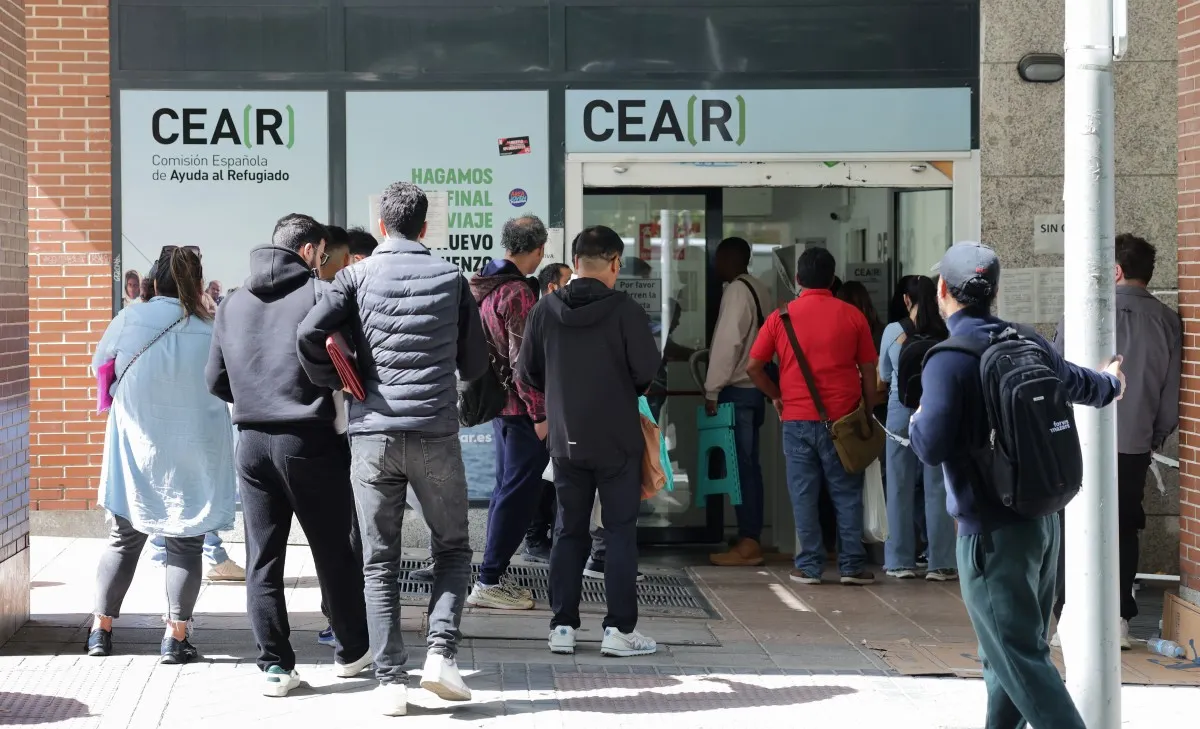
Long queues also formed at town halls, immigration offices, consulates and embassies as people waited to obtain registration certificates, criminal record checks, and other documentation required for migrants to gain the right to legally live and work in Spain.
READ ALSO: Which benefits will Spain’s ‘regularised’ migrants receive?
NGOs and migrant organisations have complained about a lack of clear information regarding the process from the central government, generating confusion among applicants and delaying the processing of many applications.
Some right-wing regional governments have also reproached Madrid for implementing the regularisation process without providing specific funding to address the population increase that will gain full access to public services such as healthcare, education, and social services.
Some of these communities have even appealed the decree to the Constitutional Court, which has not yet ruled on the merits of the case.
Q&A: How Spain’s mass regularisation of undocumented migrants will work
Approved in February 2026, Spain’s mass migrant amnesty established an exceptional pathway to grant a one-year residence and work permit to all immigrants who could prove they were already in Spain before January 1st 2026.
They’ve had to demonstrate that they had resided in the country for at least five months and prove they don’t have a criminal record.
In terms of the nationalities that have applied the most for mass regularisation, ministry data reveals that Colombians represent 30 percent of all applications, followed by Moroccans (14 percent), Venezuelans (10 percent), and Peruvians (9 percent).
READ ALSO: The myths surrounding Spain’s mass regularisation of migrants


